
IPT Global, the pioneer and recognized global leader in digital well assurance solutions and associated advisory services to the oil and gas industry, today announced that it has received official approval from the Bureau of Safety and Environmental Enforcement (BSEE) to serve as primary validation provider of inflow tests in the Gulf of America (GoA).
This approval is the first of its kind and marks a major milestone for IPT Global and the broader offshore industry.
The multi-year approval process included direct engagement with BSEE, detailed technical evaluations, and close collaboration with six offshore operators. As part of the validation pathway, IPT Global also completed a multi-month independent review conducted by DNV to support the use of SureTec® for inflow test validation. In addition, the IPT Global team conducted multiple training sessions with BSEE engineers and inspectors to ensure full alignment on procedures, regulatory expectations, and compliance requirements, reinforcing the technical rigor and transparency behind this approval.
This designation establishes IPT Global as the first approved provider for primary validation of inflow tests in the GoA, setting a new benchmark for independent validation and regulatory collaboration in offshore operations.
See our announcement in the May/June 2026 edition of Drilling Contractor Magazine.
For media enquiries or additional information about IPT Global, please contact [email protected].
In a controlled offshore field trial, a major operator evaluated two competing approaches to BOP pressure testing and well barrier verification on sister drillships in the Gulf of America. The objective: determine which solution delivered faster, more accurate validation of well control equipment performance.
Traditional predictive analysis methods, commonly used in pressure decline analysis, rely on assumed coefficients rather than actual test data. This introduces uncertainty in well barrier testing, especially in complex subsea environments.
Operators required a solution that could:
IPT Global deployed its SureTec® PressureTesting Solution, a digital pressure testing software with a patented advanced analysis engine that leverages thermally compensated leak detection (TCLD).
Unlike conventional methods, TCLD:
This approach aligns with modern barrier management software strategies and supports BOP real-time monitoring across offshore operations.
Field trial results confirmed a clear performance advantage:
The operator concluded that SureTec PressureTesting provided superior efficiency and assurance in subsea BOP testing and overall well control equipment performance. This resulted in the operator changing their digital pressure testing provider from a competing company to IPT Global across all offshore operations.
As the oil and gas industry moves toward digital transformation, relying on assumption-based models is no longer sufficient. Advanced analytics provided through IPT Global’s SureTec platform deliver:
For operators seeking to optimize bop testing, well barrier element pressure tests, and inflow pressure testing, adopting real-time, data-driven analysis is critical.
Predictive models estimate. IPT Global validates.
In offshore drilling, BOP testing is a critical component of well barrier assurance. However, inconsistent processes across rigs can lead to incorrect line-ups, missed tests, and operational risk. This case study examines how the IPT Global Service Delivery Team supported an operator to improve BOP testing performance across a five-rig fleet in the Gulf of Mexico using SureTec® PressureTesting.
Across a five-rig fleet operating in the Gulf of America, incorrect line-ups (sometimes known as misalignments) during BOP tests occurred up to 60% of the time. The potential of executing BOP pressure tests with these errors increased safety risk and decreased operational efficiencies. The difference across rigs wasn’t equipment or operator. It was the consistency of the application of the well barrier assurance testing process by rig crews. The operator requested IPT Global’s support across the fleet to ensure a common baseline performance level was maintained across the rigs.
In offshore drilling operations, performance gaps between similar rigs working together with the same operator are common. Crew experience, familiarity with procedures, and operational maturity all vary. What doesn’t vary, however, is the consequence of a missed well barrier test. Incorrect line-ups undetected during BOP testing can leave critical components untested, create regulatory and environmental exposure, and compound into costly rig downtime.
To help establish a standardized approach, the IPT Global Real-Time Operations Center (RTOC) conducted a fleet-wide analysis of all BOP pressure tests over the course of one year. The results illustrate both the scale of the problem and the value of a consistent, technology-backed assurance framework, regardless of individual rig performance.
A fleet-wide analysis of 76 BOP pressure tests highlights both the scale of incorrect line-ups and the impact on offshore drilling performance.
When results are broken down by rig, the variance is stark and highlights a critical point: performance is driven by the consistent application of robust processes and assurance.
| Rig | No. of BOP Tests | Tests with Incorrect Line-ups | Missed Incorrect Line-ups Detected by RTOC | Lost Time (min) |
| Rig A | 17 | 59% | 5 tests (29%) | 270 |
| Rig B | 18 | 56% | 3 tests (17%) | 165 |
| Rig C | 8 | 13% | — | 5 |
| Rig D | 20 | 5% | — | 8 |
| Rig E | 13 | 0% | — | 0 |
The rigs with the lowest incorrect line-up rates share a common thread: a standardized, familiar process developed or supported by the IPT Global Service Delivery Team. Rig C operates with a full-time IPT Global Field Advisor supporting BOP testing execution and well barrier assurance processes embedded with the crew. The one incorrect line-up it recorded during the year was caught immediately by that IPT Global team member. Rig D had IPT Global Field Advisors on location for an extended period who helped build simplified, consistent test plans; the crew became deeply familiar with those plans, and the data reflects it. Rig E recorded zero incorrect line-ups across all 13 tests.
Rigs A and B tell a different story. Rig A recorded a total of 15 incorrect line-ups during BOP testing operations. This was the highest in the fleet and impacted 59% of its BOP tests, with the frequency trending upward as the year progressed. Rig A’s crew had recently been blended from two different drilling contractors, introducing unfamiliarity. IPT Global Field Advisors were not present onboard for BOP testing, though the IPT Global Service Delivery Team remotely identified five incorrect line-ups that were undetected by rig personnel. This accounted for three and a half hours of intervention time that would otherwise have resulted in undetected deviations.
Rig B showed a persistent failure at a specific test step with incorrect line-ups occurring in 56% of all tests, traceable to an incorrect cementer line-up that went uncorrected over multiple test cycles.
This is not a story about which rigs have better crews or stronger safety cultures. It is a demonstration of what happens when a standardized well barrier assurance and BOP testing process is applied consistently across a fleet, and what happens when it isn’t.
Every rig has its own dynamics: crew experience, contractor mix, familiarity with test plans, and operational culture and tempo. IPT Global does not override these dynamics. Instead, the SureTec PressureTesting software provides a standardized well barrier assurance framework for BOP testing, combining real-time monitoring, structured verification processes, and field expertise that operates independently of them.
Where a rig is already performing well, this approach reinforces and documents the behavior. Where performance is inconsistent, it identifies deviations early, before they become compliance events, safety incidents, or compounding downtime.
The data makes this clear. The eight incorrect line-ups missed by onboard crew but detected through real-time monitoring and structured BOP testing verification via PressureTesting and the IPT Global RTOC were identified through a consistent, structured process combining volume benchmarking, step-by-step checklist verification, and direct communication protocols, applied consistently and independently of rig floor activity.
Operators managing multiple assets simultaneously in offshore drilling operations face these same challenges at a larger scale. Performance varies, crews turn over, and experience levels differ. While a fleet-wide assurance program like SureTec PressureTesting does not remove these variables, it does establish a consistent baseline, ensuring performance gaps do not go undetected.
The rigs that performed best were not immune to incorrect line-ups. They were simply better equipped through familiarity, simplified plans, and consistent oversight to prevent or catch them early. IPT Global’s role is to extend that level of performance across the entire fleet, not just to those that have benefited from time and continuity.
A standardized approach to well barrier assurance is not a substitute for good rig culture. It is the mechanism that ensures good practice is applied consistently, regardless of where any individual rig sits on the performance curve.
Looking to improve BOP testing performance or strengthen your well barrier assurance processes? Contact IPT Global to implement a standardized, pressure testing and real-time monitoring framework across your offshore drilling fleet.
Some digital pressure testing methods used in the oil and gas industry rely on predictive early data trends to draw conclusions about future performance. While these approaches may appear sophisticated, they often depend on assumptions that can be misleading. In safety-critical operations, the consequences of being wrong can be very dangerous.
At IPT Global, our approach is grounded in physics: how equipment actually behaves under pressure and an array of thermal variables. Our SureTec® PressureTesting Solution focuses on measurable system behavior rather than early-time trends and predictions, which provides greater assurance, protecting people, assets, and the environment.
During well control equipment pressure testing, a pressure decline can result from three distinct causes:
Why is this a problem? Because all three occur at the same time, and their combined effects appear as a single pressure curve making interpretation more challenging than it first appears.
Many digital pressure testing tools attempt to determine a pass or fail by observing how pressure decline slows over time. However, thermal and elastic effects naturally dominate early behavior and always attenuate. This early stabilization can create the appearance of improvement even when a real leak is present.
In short, early-time prediction alone does not confirm integrity, but rather introduces uncertainty at precisely the point where certainty is required.
Rather than predicting what might happen, IPT Global’s PressureTesting Solution models how a leak-free system should behave. We account for normal pressure changes caused by temperature and equipment expansion, establish a physics-based fingerprint for a healthy system, and evaluate subsequent tests against that baseline to identify true integrity failures.
Our focus is on delivering accurate, objective digital pressure testing results. In practice, that means fewer assumptions and clearer answers during the test itself. Instead of relying on trend-based prediction, we ask a more fundamental question: Does the observed behavior match that of a leak-free system?
A major offshore operator evaluated IPT Global’s physics-based PressureTesting Solution against a competing predictive pressure testing solution using real subsea BOP test data, including tests with confirmed visible leaks.
IPT Global correctly identified every known failure. The predictive solution, however, incorrectly passed multiple tests, including some with confirmed visible leaks.
A false pass, indicating equipment integrity when a failure exists, can expose operations to safety risks, environmental damage, unplanned downtime, and reputational harm.
Ultimately, when people, assets, and the environment are on the line, uncertainty should never be mistaken for insight. Physics-based analysis replaces assumption with understanding and delivers the confidence that safety-critical decisions demand.
If we all had one magical wish, many of us would choose the ability to see into the future—pick the right lottery numbers, avoid costly mistakes, or prevent accidents before they happen. But we don’t have that luxury. We never have.
Yet in well control equipment pressure testing, the industry relies on methods that attempt to predict future outcomes based on early-time trends. That raises an important question: why would we base assurance of critical safety barriers on a guess?
During BOP and Well Barrier Element (WBE) pressure tests, pressure decline is driven by three distinct physical mechanisms:
Only one of these—the integrity failure—is the condition we are trying to detect. The other two are benign, expected behaviors.
Mathematically, the observed pressure change can be expressed as:
ΔPObserved = ΔPThermal + ΔPElastic Expansion + ΔPIntegrity Failure
Each mechanism produces a unique pressure signature. In real operations, these signatures are superimposed, producing the single pressure curve we observe during a test. Accurately interpreting that curve requires understanding—and accounting for—these physical effects, not overlooking them.
Predictive analysis methods attempt to assess whether pressure loss is attenuating toward a leak-free system. The flaw is fundamental: thermal and elastic effects always dominate early-time behavior, and they always attenuate.
As a result, predictive methods often interpret early attenuation as improvement—creating a false sense of confidence. In early pressure test time, predictive analysis is not insight; it is inference based on incomplete physics.
There is no crystal ball. Early-time pressure test prediction is, by definition, a guess.
IPT Global does not attempt to predict the future. Instead, our PressureTesting solution with Thermally Compensated Leak Detection (TCLD) applies physics-based algorithms to establish a leak-free fingerprint for a specific BOP test configuration.
That fingerprint reflects the expected thermal and elastic response of the system. Subsequent tests on similar systems are then evaluated against this baseline to identify true integrity failures—quickly, objectively, and without relying on trend prediction.
So which approach would you trust: a black-box predictive trend or physics grounded in real behavior?
A major offshore operator compiled a dataset of more than 20 subsea BOP pressure tests from actual operations. The dataset included confirmed leaking tests—some identified visually by rig crews—and was used to evaluate both IPT Global’s PressureTesting and a competing predictive digital pressure testing solution.
The results were unambiguous:
Read that again. Predictive analysis passed tests that had already failed in the field, some with confirmed visual leaks.
These were not marginal cases or subjective interpretations. They were verified integrity failures that predictive software missed entirely—the exact outcome digital pressure testing is meant to prevent.
This is not an isolated result. Time and again, IPT Global’s physics-based PressureTesting solution has demonstrated superior accuracy by grounding interpretation in measurable system behavior rather than early-time trend speculation.
When IPT Global issues a pressure test pass, you can trust that your well control equipment or well barrier element is performing as intended.
When IPT Global issues a fail, you know you’ve identified a real problem—before it becomes a larger one.
The cost of a false pass is not just deferred downtime. It is a risk to people, assets, the environment, and the reputation of the operation itself.
SureTec PressureTesting reveals true leak signatures efficiently and objectively by isolating the physical behaviors that matter. This is not forecasting. It is physics-based, mathematically rigorous, and proven in the field where real consequences exist.
In digital pressure testing of Well Barrier Elements and Well Control Equipment, uncertainty should never be mistaken for insight. Predictive methods rely on early-time trends dominated by thermal and elastic effects, creating the illusion of improvement that disappears in late time.
IPT Global’s PressureTesting solution removes this ambiguity by accounting for all contributors to pressure decay in your specific system from the beginning of the test. The result is earlier, more reliable decisions based on understanding and proof—not a guess.
IPT Global: Industry leaders in digital pressure test accuracy and well barrier assurance.
Managed Pressure Drilling (MPD) systems operate under demanding conditions, where small deviations in pressure or hydraulic behavior can escalate into equipment failure, unplanned non-productive time (NPT), and increased well control risk. Traditional well control equipment testing often depends on manual interpretation, delayed reporting, and limited visibility into early degradation trends.
In this analysis of MPD equipment failure, we examine how a major offshore operator used MPD control system data and IPT Global’s Equipment Health Monitoring solution to identify the deviation pattern that preceded a Slimline Annular (SLA) element failure. The analysis shows how automated MPD failure analysis and equipment health workflows can reveal early indicators of annular wear long before visible damage.
The operator experienced an unexpected failure of the Slimline Annular (SLA) element on the Integrated Rise Joint (IRJ) after less than two months of deployment and only 13 closures. During retrieval, the rig team discovered large pieces of degraded rubber in the trip tank and on top of the wear bushing.
The failure resulted in more than 250 hours of NPT. While the root cause was established through a lengthy investigation by the Original Equipment Manufacturer (OEM), the operator wanted to determine whether early indicators were present in the MPD control system data and if digital analysis could have detected the problem sooner.
This case raises two key questions for the operator:
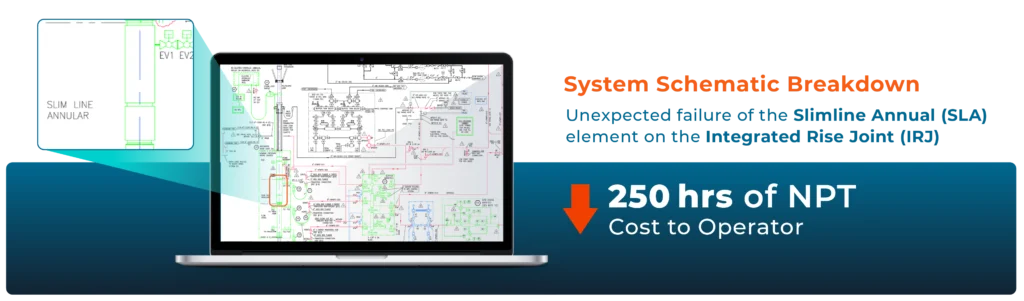
Figure 1. IPT Global’s MPD Equipment Health Monitoring dashboard enabled the operator to analyze annular pressure response trends and identify early signs of Slimline Annular (SLA) element degradation ahead of failure.
During a technology review, the operator approached IPT Global to evaluate whether digital real-time and MPD integrity management analytics could better support early detection of equipment degradation. They tested whether IPT Global’s Equipment Health Monitoring HealthAnalytics module could analyze MPD control data without context, manual tagging, or event descriptions.
To create a blind test, the operator provided a set of sanitized CSV files from the Transocean drillship MPD system; the files contained only raw time-series data from the SLA subsystem. Using this data set, IPT Global evaluated whether HealthAnalytics could pinpoint the failure window and detect the signal patterns that occurred beforehand.
IPT Global prepared the files, reformatted them, and ingested them into the Equipment Health Monitoring system. This software uses model-driven workflows designed for well control equipment testing, MPD failure analysis, and condition-based monitoring. It evaluates pressure response, hydraulic behavior, and closure performance to identify changes that indicate abnormal equipment performance or early-stage degradation.
Within minutes of data ingestion, the system flagged unusual pressure and hydraulic patterns inconsistent with expected annular behavior. IPT Global engineers ran multiple analysis modes over the next 48 to 72 hours to validate the signal patterns. Ultimately, the results consistently pointed to the same failure window later confirmed by the operator and the OEM.
Key outcomes
The analysis identified a distinct deviation in the annular element’s pressure and hydraulic response with progressive wear. Importantly, this pattern was detectable days before the failure became visible.
“With IPT Global’s Equipment Health Monitoring, we saw in two days what took months to uncover,” said the operator’s Senior Advisor of Rig Systems. “That’s the kind of insight that changes how you think about equipment monitoring.”
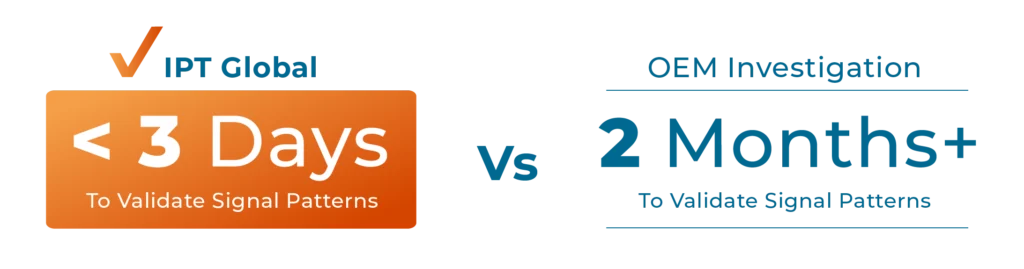
Figure 2. IPT Global’s MPD integrity workflows support proactive, data-driven condition monitoring that reduces NPT and improves equipment assurance.
This case demonstrates how digital MPD integrity management testing can improve operational reliability and reduce NPT. By tracking baseline trends and small deviations, operators can detect MPD equipment wear early and improve maintenance and risk decisions.
IPT Global continues to expand its condition-based monitoring and predictive analytics for MPD systems, strengthening well control readiness, accelerating fault detection, and supporting a more proactive approach to equipment assurance.