
One Test Plan Review Saved a Supermajor Operator Over $40,000 per BOP Test; Projected Savings Over $700,000 a Year Based on 21-Day Test Requirements and Similar Test Parameters
Blowout preventer (BOP) testing, the pressure testing process that verifies well control equipment can hold and seal against design pressures, is a recurring, non-negotiable requirement for every offshore drilling operation, mandated by the Bureau of Safety and Environmental Enforcement (BSEE) in U.S. Gulf of America waters under 30 CFR Part 250, governed by API Standard 53 internationally, and enforced by host-country regulators like Brazil’s ANP (Agência Nacional do Petróleo, Gás Natural e Biocombustíveis). These regulations define minimum test frequencies, pressure requirements, hold times, and documentation standards. Frequency varies by jurisdiction: Gulf of America operations are required to test every 21 days; offshore programs in Guyana and much of South America typically test monthly.
What’s consistent across all jurisdictions is the cost exposure. Offshore rig spread rates—encompassing the drilling unit, support vessels, helicopter logistics, and contracted services—routinely exceed $500,000 per day and can surpass $1 million per day for deepwater and ultra-deepwater operations. At a $1 million/day spread rate, a single hour of rig time carries a value of about $41,667. Every inefficient step in a BOP test procedure converts directly into non-productive time (NPT) and measurable budget exposure.
| At a $1 million/day spread rate, one hour of rig time represents over $41,000 in operational cost. Across a multi-year drilling program with recurring BOP tests, even marginal inefficiencies compound into significant budget exposure. |
The best place to find savings is the critical path: the sequence of steps in the test procedure where any delay directly extends total test duration and, consequently, rig cost. Optimizing these steps by eliminating redundancies, resequencing activities, and removing steps that add no regulatory or operational value is the most impactful intervention available to the engineering team.
A Supermajor operator conducting offshore drilling operations in South America engaged IPT Global’s Real-Time Operations Center (RTOC) to conduct a comprehensive review and optimization of the rig’s existing BOP test plan. The RTOC team employed SureTec® PressureTesting’s TestPlanner module to carry out the analysis, pairing the platform’s automated capabilities with hands-on engineering expertise.
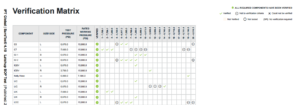
TestPlanner gives engineers a smart, interactive P&ID environment purpose-built for pressure testing and well control equipment. Its built-in PressurePath logic dynamically visualizes how pressure moves through the system and flags trapped pressure zones, while engineers configure valve line-ups and pressure sources in real time. Automated compliance coverage analysis confirms that every component is tested to the correct pressure requirement, surfacing exactly where a test plan can be safely streamlined.
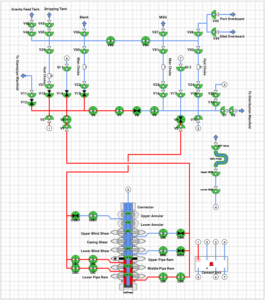
Drawing on this analysis and on decades of hands-on experience across deepwater and shelf programs, multiple rig classes, and regulatory jurisdictions worldwide, the IPT Global RTOC engineering team applied TestPlanner’s findings to identify precisely where test procedures could be optimized, without compromising well control integrity or compliance.
The optimization followed a structured methodology:
Throughout the process, TestPlanner’s compliance coverage analysis (validated by the RTOC engineering team) maintained strict alignment with applicable regulatory standards, ensuring every modification preserved full compliance while eliminating procedural steps that added time without adding safety or regulatory value.
| “I didn’t think this plan had room to tighten up, but IPT Global’s TestPlanner and their RTOC team found two critical path steps we could cut with no impact to testing the integrity of our well control equipment. This was a big win for us.” – Wells Operations Supervisor |
The IPT Global RTOC team’s use of TestPlanner produced measurable results realized immediately upon test execution. Most notably, eliminating two critical path steps without compromise to regulatory compliance or well control integrity.
| >30 Min
Avg. Step Duration |
14 → 12
Critical Path Steps Reduced |
>1 Hour
Critical Path Time Saved |
>$40,000
Rig Time Cost Savings Per Test |
A one-time optimization delivers recurring returns. Because BOP tests are mandated at regular intervals, the savings realized on the first execution of the revised plan repeat with every subsequent test on the same rig, effectively delivering a perpetual return on a single optimization engagement.
Testing frequency amplifies the impact. The table below applies the per-test savings across the testing schedules most common in two of the industry’s most active offshore markets:
| Region / Frequency | Tests Per Year | Estimated Annual Savings |
| Gulf of America (every 21 days) | 17 | Over $700,000 |
| Guyana / South America (monthly) | 12 | Over $500,000 |
These projections assume a consistent $1 million/day spread rate and apply directly to any drilling program operating under a similar test plan. The optimization investment is made once; the return is realized on every test thereafter.
| 1 | Immediate and Recurring Value
The Supermajor operator realized over $40,000 in rig time savings on the first execution of the optimized test plan. Because BOP tests are recurring events, this benefit is not a one-time gain…it replicates across every subsequent test on this rig under similar circumstances. At Gulf of America testing frequency (every 21 days), that compounds to over $700,000 annually. For monthly testing programs such as those in Guyana, the figure exceeds $500,000 per year. |
| 2 | Compliance Without Compromise
Every modification to the test plan was validated against applicable regulatory requirements. The optimization eliminated procedural redundancy without sacrificing regulatory rigor, ensuring the rig continues operating with full confidence that its BOP testing program remains compliant with BSEE, API Standard 53, ANP, and all applicable governing standards. |
| 3 | A Software-enabled Service That Transfers Across Basins and Rig Classes
The analytical framework built into SureTec PressureTesting’s TestPlanner module, applied with IPT Global RTOC engineering support, is not specific to a single rig, operator, or basin. It applies across rig classes, water depths, regulatory jurisdictions, and geographic regions, including deepwater, shelf, and land-based surface BOP programs. Any operator conducting BOP tests is a candidate for this service, and the economics are most visible where spread rates are highest. |
Ready to recover rig time on your next BOP test? Contact IPT Global to learn how we can help you reduce NPT and drive measurable cost savings across your BOP testing program.
In offshore drilling, blowout preventer (BOP) testing is a critical component of well barrier assurance. However, inconsistent processes across rigs can lead to incorrect line-ups, missed tests, and operational risk. This case study examines how the IPT Global Service Delivery Team supported an operator to improve BOP testing performance across a five-rig fleet in the Gulf of America using SureTec® PressureTesting.
Across a five-rig fleet operating in the Gulf of America, incorrect line-ups (sometimes known as misalignments) during BOP tests occurred up to 60% of the time. The potential of executing BOP pressure tests with these errors increased safety risk and decreased operational efficiencies. The difference across rigs wasn’t equipment or operator. It was the consistency of the application well barrier assurance testing process by rig crews. The operator requested IPT Global’s support across the fleet to ensure a common baseline performance level was maintained across the rigs.
In offshore drilling operations, performance gaps between similar rigs working together with the same operator are common. Crew experience, familiarity with procedures, and operational maturity all vary. What doesn’t vary, however, is the consequence of a missed well barrier test. Incorrect line-ups undetected during BOP testing can leave critical components untested, create regulatory and environmental exposure, and compound into costly rig downtime.
To help establish a standardized approach, the IPT Global Real-Time Operations Center (RTOC) conducted a fleet-wide analysis of all BOP pressure tests over the course of one year. The results illustrate both the scale of the problem and the value of a consistent, technology-backed assurance framework, regardless of individual rig performance.
A fleet-wide analysis of 76 BOP pressure tests highlights both the scale of incorrect line-ups and the impact on offshore drilling performance.
When results are broken down by rig, the variance is stark and highlights a critical point: performance is driven by the consistent application of robust processes.
| Rig | No. of BOP Tests | Tests with Incorrect Line-ups | Lost Time (min) |
|---|---|---|---|
| Rig A | 17 | 59% | 270 |
| Rig B | 18 | 56% | 165 |
| Rig C | 8 | 13% | 5 |
| Rig D | 20 | 5% | 8 |
| Rig E | 13 | 0% | 0 |
The rigs with the lowest incorrect line-up rates share a common thread: a standardized, familiar process developed or supported by the IPT Global Service Delivery Team. Rig C operates with a full-time IPT Global Field Advisor supporting BOP testing execution and well barrier assurance processes embedded with the crew. The one incorrect line-up it recorded during the year was caught immediately by that IPT Global team member. Rig D had IPT Global Field Advisors on location for an extended period who helped build simplified, consistent test plans; the crew became deeply familiar with those plans, and the data reflects it. Rig E recorded zero incorrect line-ups across all 13 tests.
Rigs A and B tell a different story. Rig A recorded a total of 15 incorrect line-ups during BOP testing operations. This was the highest in the fleet and impacted 59% of its BOP tests, with the frequency trending upward as the year progressed. Rig A’s crew had recently been blended from two different drilling contractors, introducing unfamiliarity. IPT Global Field Advisors were not present onboard for BOP testing, though the IPT Global Service Delivery Team remotely identified five incorrect line-ups that were undetected by rig personnel. This accounted for three and a half hours of intervention time that would otherwise have resulted in undetected deviations.
Rig B showed a persistent failure at a specific test step with incorrect line-ups occurring in 56% of all tests, traceable to an incorrect cementer line-up that went uncorrected over multiple test cycles.
This is not a story about which rigs have better crews or stronger safety cultures. It is a demonstration of what happens when a standardized well barrier assurance and BOP testing process is applied consistently across a fleet, and what happens when it isn’t.
Every rig has its own dynamics: crew experience, contractor mix, familiarity with test plans, and operational culture and tempo. IPT Global does not override these dynamics. Instead, the SureTec PressureTesting software provides a standardized well barrier assurance framework for BOP testing, combining real-time monitoring, structured verification processes, and field expertise that operates independently of them.
Where a rig is already performing well, this approach reinforces and documents the behavior. Where performance is inconsistent, it identifies deviations early, before they become compliance events, safety incidents, or compounding downtime.
The data makes this clear. The eight incorrect line-ups missed by onboard crew but detected through real-time monitoring and structured BOP testing verification via SureTec PressureTesting and the IPT Global RTOC were identified through a consistent, structured process combining volume benchmarking, step-by-step checklist verification, and direct communication protocols, applied consistently and independently of rig floor activity.
Operators managing multiple assets simultaneously in offshore drilling operations face these same challenges at a larger scale. Performance varies, crews turn over, and experience levels differ. While a fleet-wide assurance program like SureTec PressureTesting does not remove these variables, it does establish a consistent baseline, ensuring performance gaps do not go undetected.
The rigs that performed best were not immune to incorrect line-ups. They were simply better equipped through familiarity, simplified plans, and consistent oversight to prevent or catch them early. IPT Global’s role is to extend that level of performance across the entire fleet, not just to those that have benefited from time and continuity.
A standardized approach to well barrier assurance is not a substitute for good rig culture. It is the mechanism that ensures good practice is applied consistently, regardless of where any individual rig sits on the performance curve.
Looking to improve BOP testing performance or strengthen your well barrier assurance processes? Contact IPT Global to implement a standardized, pressure testing and real-time monitoring framework across your offshore drilling fleet.
Subsea blowout preventer (BOP) soak testing is a long-standing part of pre-deployment programs. However, it remains one of the least consistently executed aspects of BOP control system evaluation. While teams perform the test routinely, they often overlook insight into stabilized pressure behavior.
Once a subsea BOP stack is deployed offshore, limited access significantly increases the cost of uncertainty. In 2023, IPT Global collaborated with Seadrill on an article published by Drilling Contractor examining the operational value of standardizing BOP soak testing and proposing a structured framework aligned with the American Petroleum Institute’s (API) Standard 53.
A subsea BOP soak test is a pressure stabilization procedure. Rigs perform it during pre-deployment testing to evaluate the integrity of the BOP control system under sustained pressure conditions. Unlike dynamic testing, soak testing allows pressures to stabilize and the system to settle into equilibrium.
During this stabilized period is when that behavior often emerges. Gradual pressure decay or inconsistent regulator response become apparent once transient effects dissipate. These conditions are not always obvious but can directly influence stack readiness and long-term system reliability.
Identifying these issues before deployment allows for investigation with limited operational impact. When teams do not identify these behaviors, they often surface during operations. At that stage, troubleshooting options are fewer and consequences are more costly.
Despite the importance of well control assurance, subsea BOP soak testing still varies across rigs, fleets, and regions. Common differences include test duration, applied pressure, acceptance criteria, and documentation practices.
In practice, this variability rarely reflects a lack of focus on safety. In IPT Global’s experience supporting pre-deployment testing, variability most often reflects legacy practices, differing OEM guidance, and misaligned acceptance thresholds. Over time, these inconsistencies make results difficult to compare and increase reliance on interpretation rather than data-driven evidence.
Standardizing subsea BOP soak testing does not mean removing operational judgment or imposing rigid procedures across all systems. Instead, it establishes a shared baseline that supports clearer execution and more consistent interpretation of results.
In the article, we discussed the operational value of more structured subsea BOP soak testing, aligned with API Standard 53. The intent was to reduce unnecessary variability while preserving flexibility across different BOP configurations.
Soak testing offers a rare opportunity to observe control system behavior once transient pressure effects have stabilized. When teams miss or inconsistently execute that opportunity, they overlook meaningful indicators of system health. API Standard 53 already serves as the foundation for subsea BOP equipment system requirements. Expanding guidance to clearly address soak testing would strengthen consistency while preserving flexibility across different system designs and operating environments.
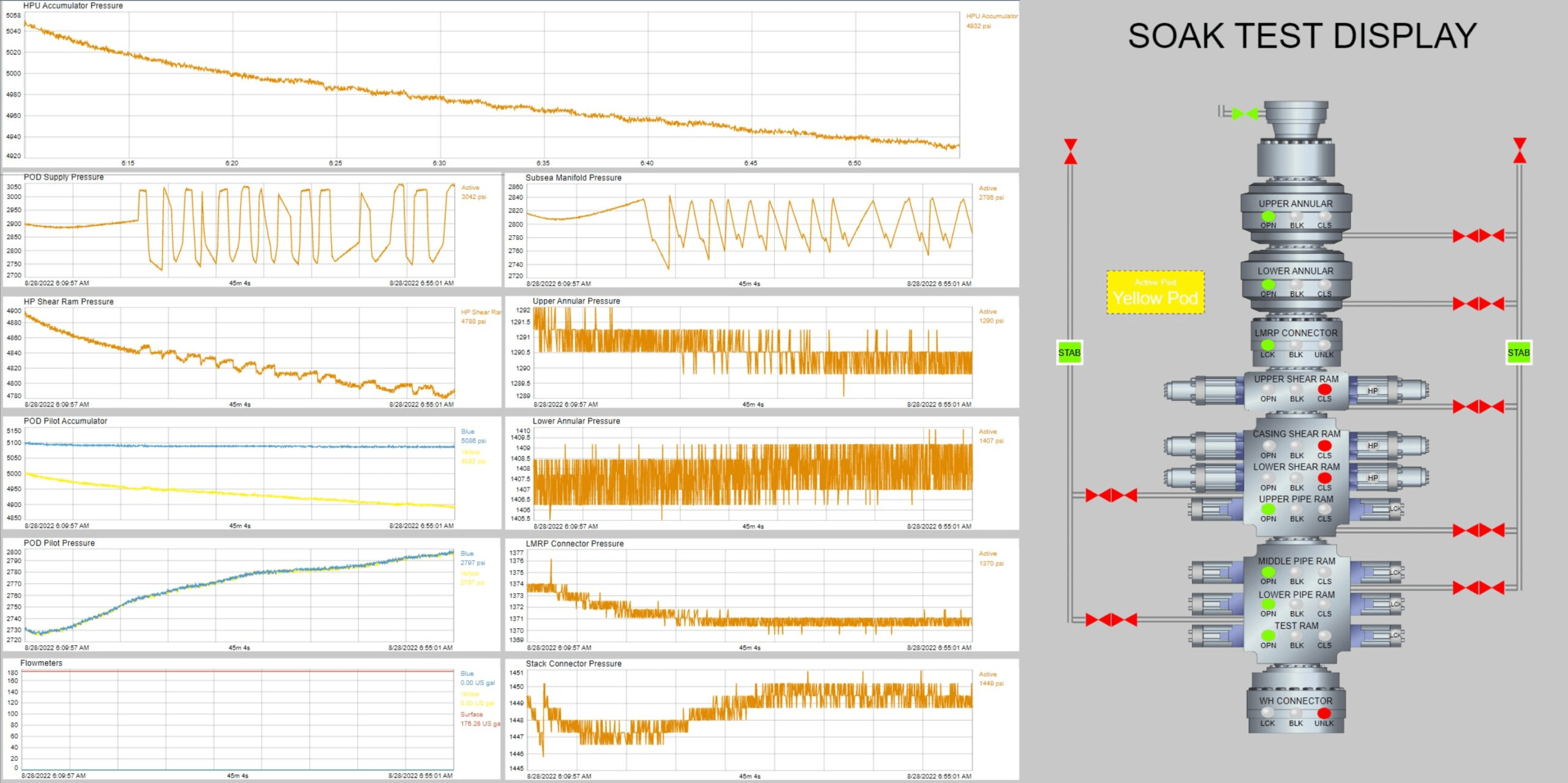
Digital pressure data enables teams to review stabilization trends directly, revealing gradual decay, irregular stabilization, and repeatable anomalies across tests.
With IPT Global’s SureTec® Equipment Health Monitoring HealthAnalytics software and Monitoring service, digital diagnostics capture high-resolution pressure behavior during soak testing, enabling objective, contextual evaluation of subtle trends. Engineers in IPT Global’s Real-Time Operations Center (RTOC) monitor test data in real time and support decision-making during pre-deployment activities.
Together, our HealthAnalytics and Monitoring modules strengthen engineering judgment rather than replace it. Objective data provides a common reference point, improves alignment between operators, drilling contractors, and OEMs, and supports more confident decisions related to deployment readiness and pre-deployment assurance.
Subsea BOP soak testing delivers value through how teams evaluate results and act on them. Programs that consistently derive data-driven insight approach soak testing as part of a broader assurance process.
As subsea systems continue to increase in complexity, the ability to reduce uncertainty before deployment becomes increasingly important. Subsea BOP soak testing remains one of the few opportunities to observe control system behavior under stabilized pressure conditions.
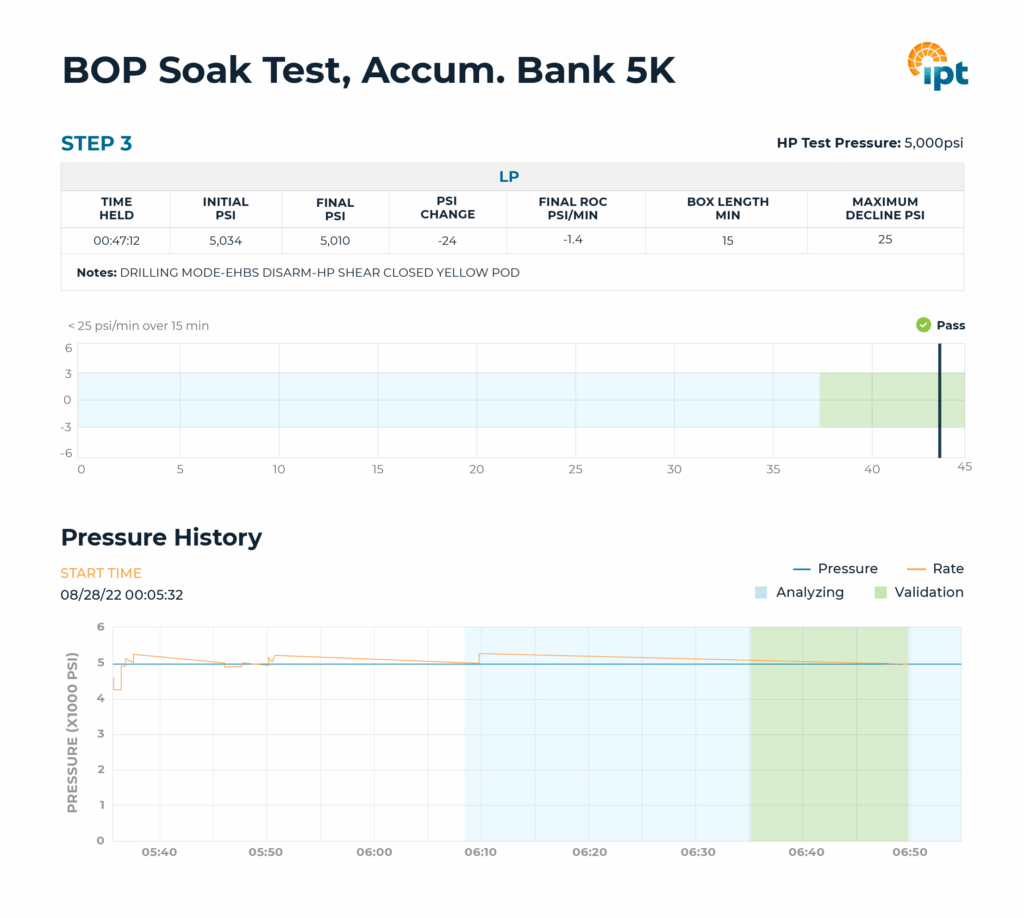
Through the SureTec Equipment Health Monitoring solution, IPT Global applies a consistent, data-driven approach to subsea BOP soak testing during pre-deployment operations. By focusing on how control systems behave under stabilized pressure conditions, teams gain clearer insight into system performance before deployment decisions are made.
As subsea systems continue to grow in complexity, the way soak testing is executed and interpreted matters more than ever. Aligning practices with API Standard 53 provides a common framework for evaluating control system behavior, reducing unnecessary variability, and strengthening well control assurance across fleets. When teams pair that framework with objective pressure data and structured evaluation, soak testing becomes less about confirming pressure holds and more about understanding what the system is communicating before it goes offshore.
Looking ahead, IPT Global continues to advance digital software integrations that support consistent application of subsea BOP testing practices and ongoing improvement across the testing lifecycle.
For additional context, read the full article published in Drilling Contractor: Standardizing subsea BOP soak testing: overview of value and recommended best practices – Drilling Contractor by Patrick Hillard and Leonard Childers, IPT Global; and Ahmed Omar, Seadrill.
When the operator introduced a new rig into the region, they quickly identified a performance gap in blowout preventer (BOP) testing. Rigs with several years of experience using IPT Global’s SureTec® PressureTesting solution consistently delivered faster and more reliable results. The new rig had not yet adopted the standardized digital pressure testing workflow required to achieve comparable performance.
The operator’s objective was to bring the new rig up to mature BOP testing performance as quickly as possible while maintaining verifiable well barrier integrity. Achieving this required shifting from variable manual processes to a consistent, documented digital pressure testing approach that reduced risk, minimized inefficiencies, and supported better operational decisions across the fleet.
IPT Global partnered with the operator to implement its PressureTesting solution, provide hands-on coaching, and establish standardized workflows. The result was a rapid improvement in safety and efficiency, with 210 documented pressure tests over the course of 14 months and significant reductions in critical path time early in the campaign.
Each well is unique, making direct comparisons in well barrier testing difficult. BOP testing provided the most practical benchmark because of its central role in safety and operational efficiency. The operator sought two outcomes: absolute confidence in barrier integrity and a reduction in high-pressure test times to minimize operational exposure and risk.
In addition, they wanted a consistent, documented pressure testing practice across the fleet, along with improved transparency between onshore support engineers and offshore execution teams. This was essential to minimize invisible lost communication time during a compressed drilling program.
IPT Global’s leading digital pressure testing software delivers accuracy, efficiency, and consistent assurance across every pressure test.
Adopting new technology requires the right expertise and support. IPT Global ensures customers maximize the value of our solutions through a unique blend of operational experience and data science. Our team combines direct rig experience with specialized software and analytics knowledge, applying technical excellence with practical execution.
IPT Global deployed field coaches to train crews in real operating conditions and ensure consistent, effective use of the software. Once training was complete, our 24/7 Real-Time Operations Center (RTOC) provided continuous support for planning, execution, and oversight. IPT Global also supported the operator by embedding advisors within the wells team and providing real-time visibility across rigs, shore bases, and headquarters.
A key component of the solution was IPT Global’s PressureTesting TestPlanner module – a verification matrix developed alongside drilling engineers as they designed the test plan. TestPlanner provides assurance that every valve and component is tested to the correct pressure. Presented in a clear matrix format, it enables easy identification of optimization opportunities, such as removing unnecessary test steps and ensuring each barrier element is tested in the most efficient sequence.
All 210 pressure tests executed through the wells campaign were documented in standardized format, inclusive of all formation integrity tests (FIT) / Leak off tests (LOT), BOP tests, inflow tests, and completions testing.
Within the PressureTesting solution, pressure data can be captured from existing infrastructure such as cement units, IWOCS, or ROV systems and automatically integrated into the SureTec platform. The PressureTesting DigitalApprovals module removes the inefficiencies of chasing post-test wet signatures or waiting for email confirmations. Our RemoteView module bridges the gap between offshore execution and onshore approval, giving onshore teams real-time transparency into critical wellbore barrier verification. And with the ComplianceReporting module, each test is compiled into an auditable documentation report that can be shared with regulators and incorporated into end-of-well reporting.
A function that sets IPT Global’s SureTec platform apart is its WellSchematic solution, which provides the ability to generate wellbore and barrier schematics, providing offshore teams with clear, visual representations of the well configuration. For years, describing well configurations relied on complex plans and written instructions. IPT Global streamlines this by automatically importing data from industry-standard well planning software and offering drag-and-drop options. Through the BarrierManagement module, primary and secondary barriers can be assigned, making it easy to visualize which barrier envelope is being tested at each stage, reducing confusion and enhancing operational efficiency offshore.
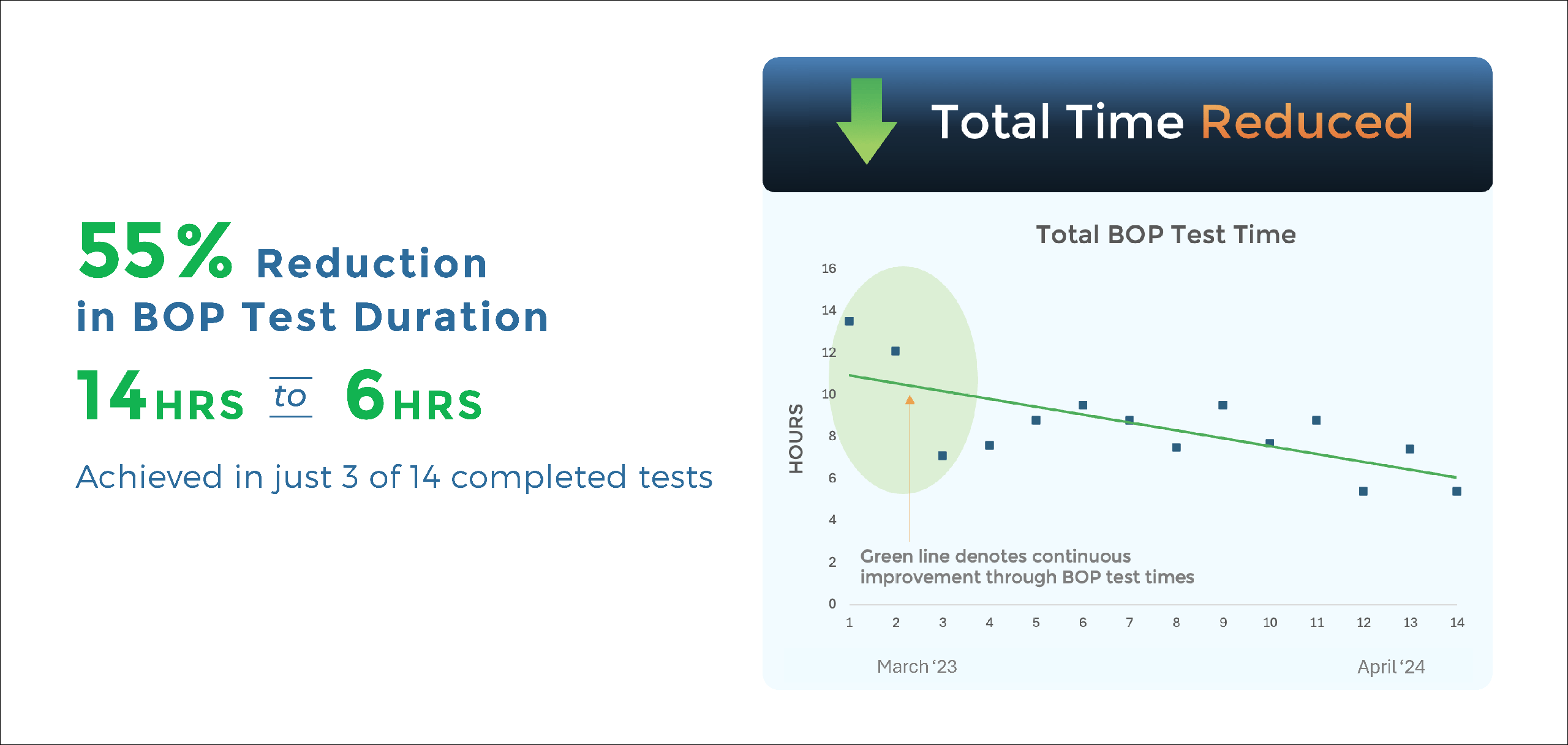
The most significant achievement was the reduction of the overall BOP test sequence from approximately 14 hours to just six hours, and this was achieved after only three BOP tests out of the 14 completed during the campaign. These improvements were driven by a combination of IPT Global’s technology, coaching, and the visual clarity provided by our software solutions.
At the core of this success was our advanced, physics-based analysis, which reduced individual BOP test steps from 17 minutes to eight minutes, delivering more than a 50 percent saving per step. These gains were further supported by TestPlanner, which optimized test planning through our verification matrix, WellSchematic, and BarrierManagement, as well as efficiency improvements achieved through crew training and real-time operational support.
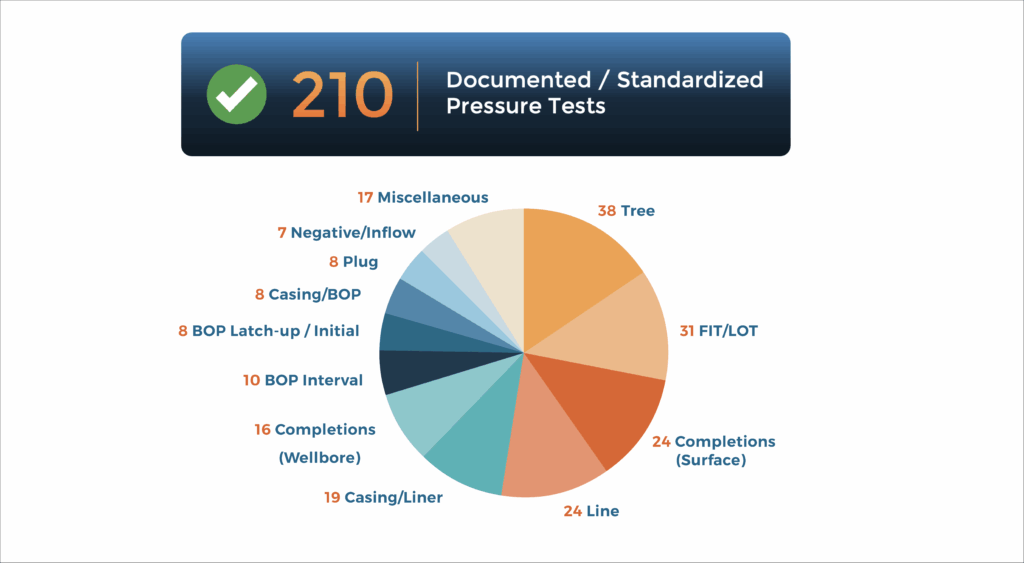
All tests were documented in easy-to-audit reports, ensuring compliance and transparency. While the time savings highlighted here focuses on BOP digital pressure testing, the campaign included 210 documented pressure tests covering the full cycle of drilling and completing these wells.
Importantly, IPT Global’s field coaches were removed from the rig after initial training, with the offshore crew fully supported remotely by our RTOC. This demonstrated that solution adoption and consistent high performance were embedded in the crew and sustained throughout the campaign.
IPT Global provides confidence in every test for every well by applying stringent in-house criteria, delivering faster results than traditional methods, and working collaboratively with customers to drive operational safety and efficiency. Our software ensures information flows seamlessly to the right people at the right time, while WellSchematic and BarrierManagement allow safe planning and execution ahead of operations. All of this is supported by real-time oversight from our RTOC.
Looking ahead, IPT Global will continue to advance well assurance intelligence and software integrations to make our solutions even more accessible and valuable for end users. Contact us to learn how IPT Global digital solutions can help improve your operational efficiencies.
Blowout preventer (BOP) testing is a critical-path operation in drilling programs, but for this major onshore operator, it had become a persistent bottleneck. Average test durations exceeded six hours per BOP test, increasing non-productive time (NPT) and creating schedule challenges.
Beyond timing, the operator’s legacy methods, including circular chart recorders and outdated digital systems, made improving BOP testing efficiency increasingly difficult. These outdated tools often failed to capture complete assurance data, leaving quality issues undetected and complicating BOP testing compliance with API Standard 53.
The operator needed a digital solution to reduce BOP test time, improve BOP testing accuracy, and provide complete traceability across its rig fleet while supporting safer and more reliable well operations.
To address these challenges, the operator implemented IPT Global’s SureTec platform and its PressureTesting digital solution, designed to improve BOP testing workflows across its onshore rig fleet. Third-party testing companies used SureTec laptops at the rig site, while IPT Global’s Real-Time Operations Center (RTOC) in Houston provided remote technical support as needed. The solution’s high-resolution, real-time pressure data replaced manual readings and outdated tools to eliminate uncertainty and mitigate human error.
Automated validation and digital reporting streamlined the entire process, producing faster, more accurate, and fully verifiable results.
By digitizing and automating pressure test workflows with PressureTesting, the operator achieved a measurable step-change in operational efficiency. The solution replaced manual data capture and outdated systems with precise, real-time pressure data and automated validation tools. This transformation directly translated into faster test cycles, reduced rig downtime, and measurable gains in BOP testing efficiency.
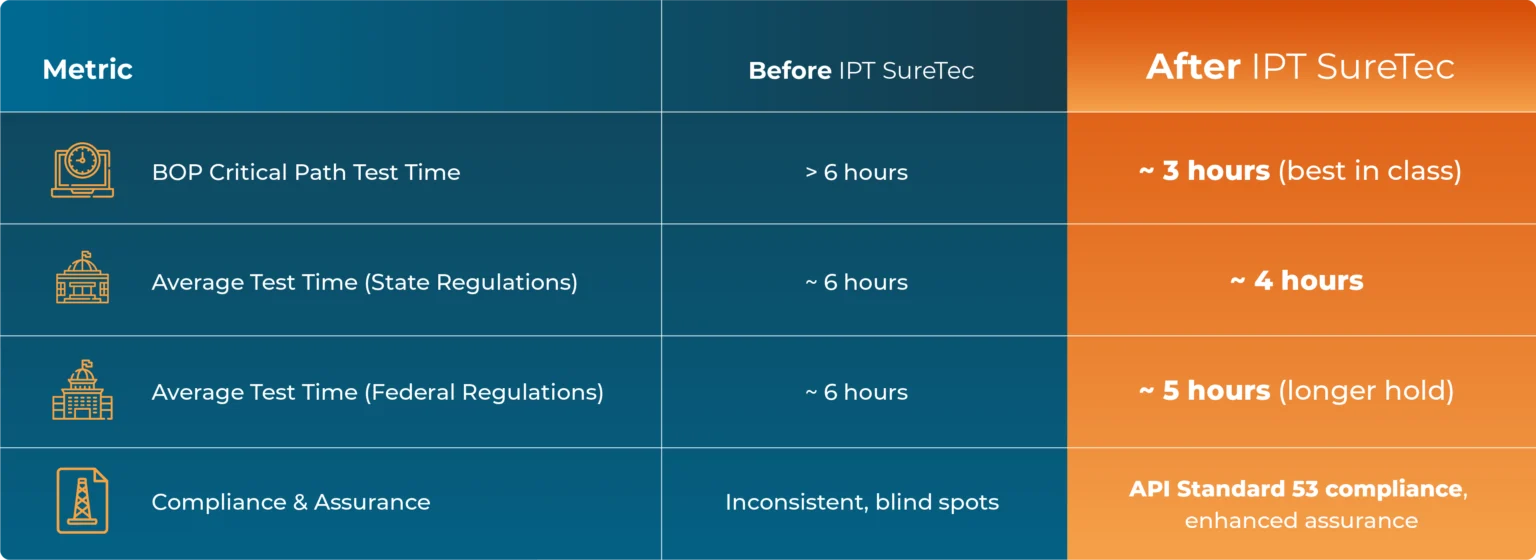
This performance represents a best-in-class reduction in test duration, significantly cutting overall BOP testing duration and improving rig uptime.
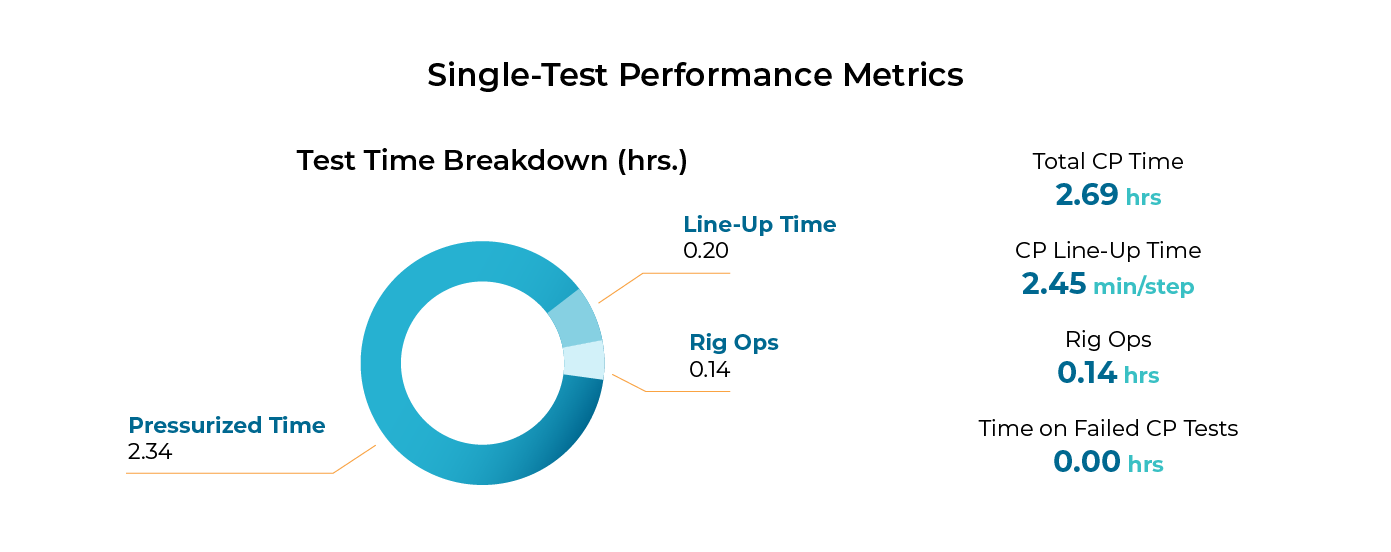
The charts below indicate a decreasing trend over a 4-year period for Total Test Time, Line-Up Time, and Rig Ops Time as a result of optimized BOP testing and learnings from the implementation of PressureTesting. The continued improvement is indicative of the ongoing value and effectiveness of IPT Global’s digital solutions.
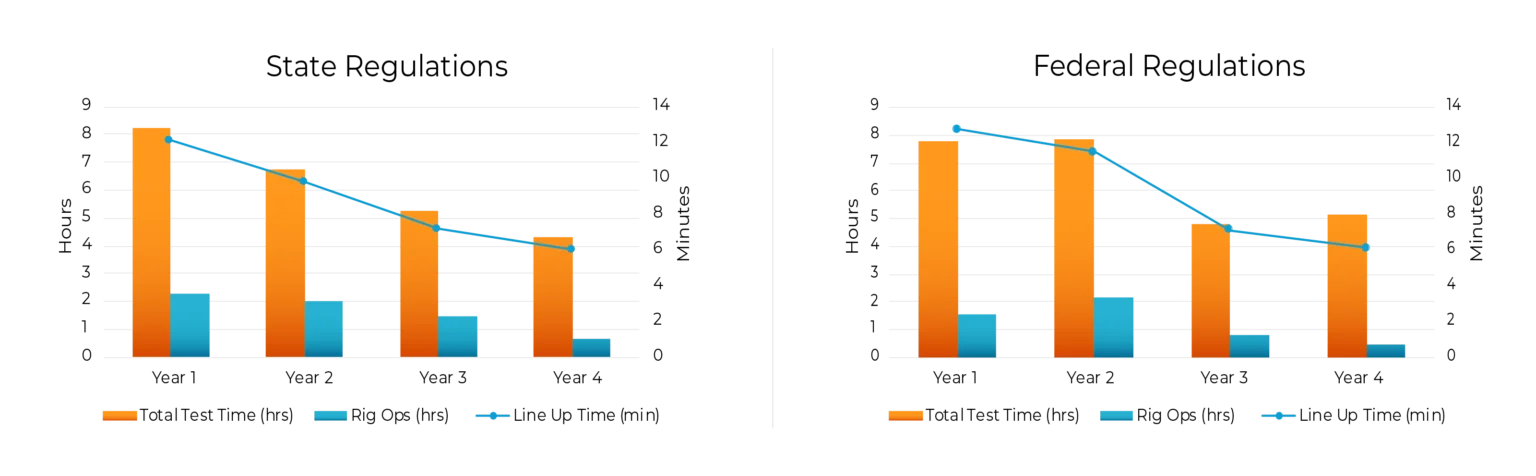
Consistent, verifiable test data and analysis is critical for maintaining compliance and preventing quality issues. With PressureTesting, the operator gained full traceability into every test event, allowing early identification of irregularities and ensuring that every BOP test aligned with API Standard 53 requirements.
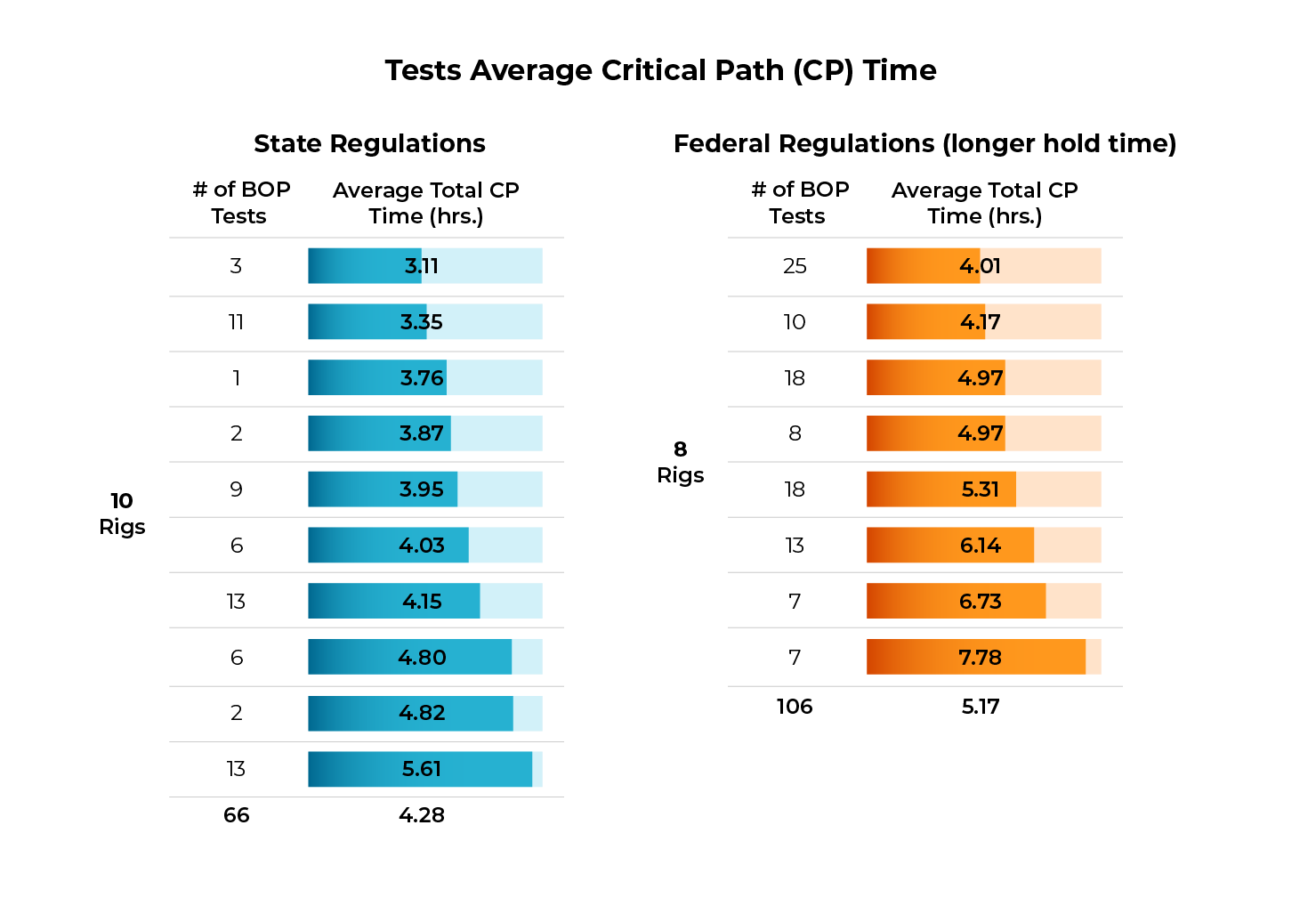
The chart below compares average BOP critical path test times for rigs under state and federal regulations. Despite longer federal hold requirements, SureTec’s PressureTesting maintained shorter average times and tighter variability, demonstrating consistent performance under all compliance conditions.
SureTec’s centralized digital test records allowed the operator to monitor trends, analyze test performance, and make real-time data-driven decisions faster than ever before. Over time, this capability improved its well integrity management program and established a culture of continuous improvement across rigs and over multiple years of operation.
What began as an effort to reduce BOP test time resulted in a transformation of the operator’s BOP testing workflow. With SureTec PressureTesting, the operator not only achieved faster testing but also improved quality control, regulatory compliance, and data visibility, which improved well integrity management across its entire rig fleet.
Today, IPT Global’s SureTec PressureTesting solution is setting the benchmark for improving BOP testing efficiency and helping operators reduce BOP test time across both onshore and offshore environments. The digital solution continues to set the standard for BOP testing accuracy and assurance, enabling operators worldwide to improve efficiency in BOP testing operations. Contact us today to schedule a PressureTesting demo.
The oil and gas (O&G) industry generates vast amounts of data at every stage of the well lifecycle: exploration, drilling, completion, production, and decommissioning. Yet much of it remains siloed and underutilized. The Open Subsurface Data Universe (OSDU™) addresses this challenge by providing a common framework for storing, accessing, and exchanging information across workflows.
At IPT Global, we believe the future of well assurance depends on combining advanced digital solutions with industry-wide standards. By aligning well integrity and operational data with these standards, operators gain new ways to improve efficiency, ensure compliance, and strengthen safety.
The OSDU Forum, launched by The Open Group, provides a neutral space where operators, service companies, and technology providers can standardize the way subsurface and operational data is structured, accessed, and shared. The Forum’s goal is to establish a common data platform that removes silos and promotes interoperability across digital tools.
Through this collaboration, the Forum unites operators, service companies, and software providers to create shared standards and reference implementations, forming the foundation for managing and exchanging energy data.
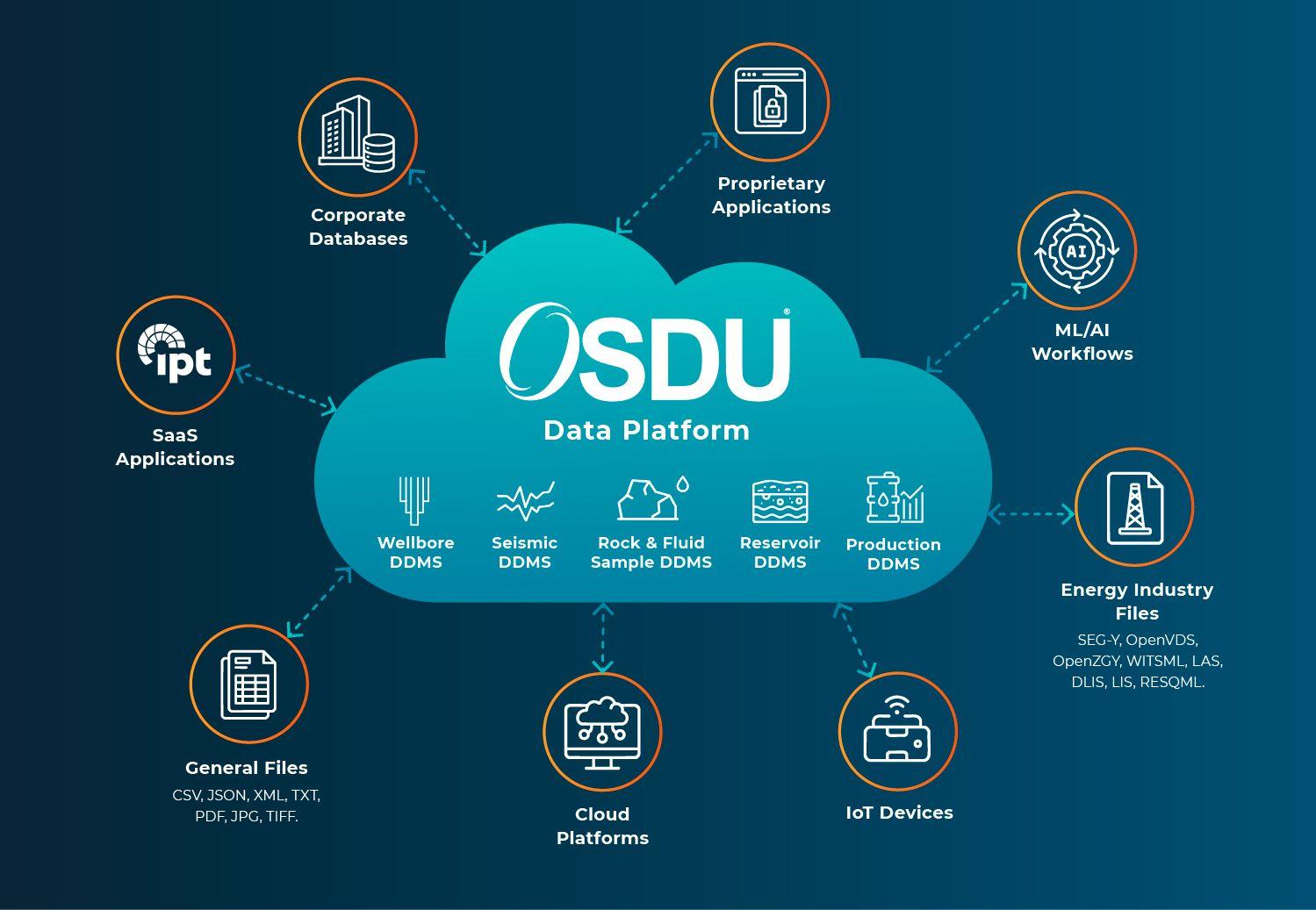
The OSDU Data Platform is an open-source, technology-agnostic environment created to eliminate silos and establish a single source of truth for subsurface, well, and operational data.
By providing a secure, scalable foundation, the framework makes information more accessible to operators, service companies, and regulators. This integration drives collaboration, speeds decision-making, and enables advanced digital solutions at scale.
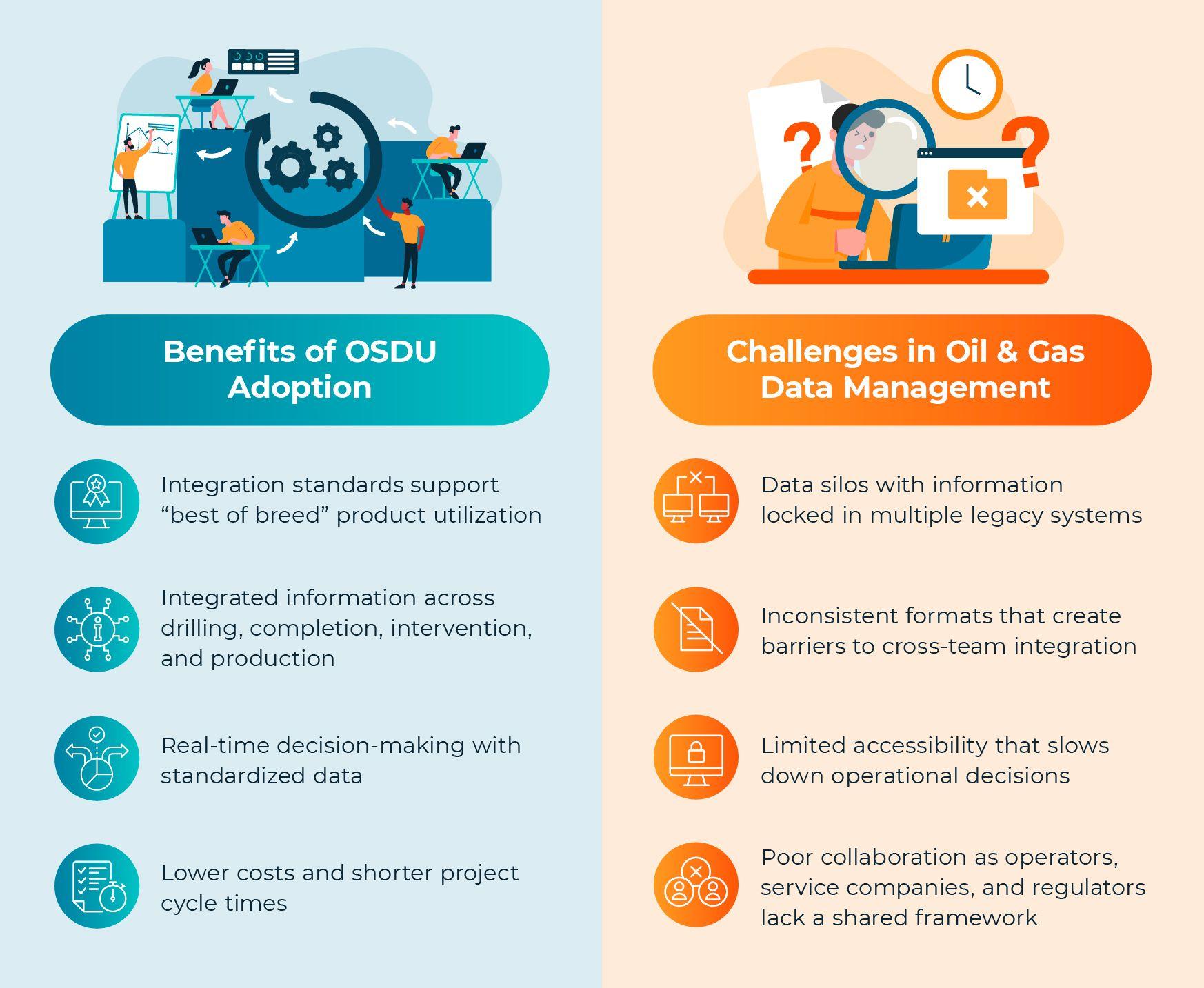
Oil and gas companies face persistent data management challenges, including siloed information, inconsistent formats, limited accessibility, and difficulties collaborating across operators, service companies, and regulators.
The OSDU data platform addresses these challenges by providing standardized frameworks and integration across workflows. Adoption of OSDU enables better data accessibility, faster decision making, lower costs, and a foundation for advanced analytics like AI and machine learning.
The strength of OSDU lies in its reference architecture and standardized data schema. These define how subsurface and operational information is structured, ensuring it can flow seamlessly between different software and workflows.
At IPT Global, we actively contribute to this effort. Our teams have shaped the schemas for Well Barrier Element (WBE) and Well Control Equipment (WCE) Pressure Tests and Well Schematic Diagrams, which are now part of the OSDU reference implementation. This work standardizes well integrity data and contextualizes it for use across drilling, completion, and abandonment workflows.
By working within the OSDU architecture, IPT Global eliminates inefficiencies of custom integrations and positions data for advanced analytics and automation.
As an active member of the OSDU Forum, IPT Global collaborates with industry leaders, technology providers, and regulators to advance open data standards. Together with other OSDU members, we contribute expertise in well assurance, pressure testing, wellbore schematics and barrier management to shape how operational data is stored and exchanged.
This role delivers IPT Global clients access to data models designed with real-world assurance workflows in mind, allowing them to adopt OSDU more efficiently and with greater value.
Our standards-based approach extends into IPT Global technology. Through secure application programming interfaces (APIs), we integrate well data, incorporate pressure test results, and connect with cloud-based data lakes. Built on service bus architecture, these integrations deliver information that is consistent, traceable, and actionable across planning, execution, and real-time operations.
By aligning our well integrity and barrier management solutions with the OSDU platform, IPT Global makes assurance data practical and accessible across day-to-day workflows.
The OSDU standard is transforming how oil and gas companies manage and use operational data. By replacing fragmented systems with a unified platform, operators can unlock greater value from their information and more effectively adopt advanced digital technologies.
At IPT Global, we put these standards into action. From structuring assurance data and standardizing formatting to embedding well integrity information into daily workflows, we provide the expertise and tools for end-to-end assurance.
Ensuring well integrity throughout a well’s lifecycle is essential for maintaining safe and efficient operations in the oil and gas industry. Effective annular casing pressure (ACP) management is key to preventing problems with well barrier elements (WBEs) such as casing leaks, sustained casing pressure (SCP), and subsea safety valve (SSV) malfunctions.
Implementing a structured ACP monitoring and reporting system ensures transparency during operational handovers and provides an auditable record for forensic analysis if required. Without effective integrity management, operators risk unnecessary well shut-ins and costly interventions.
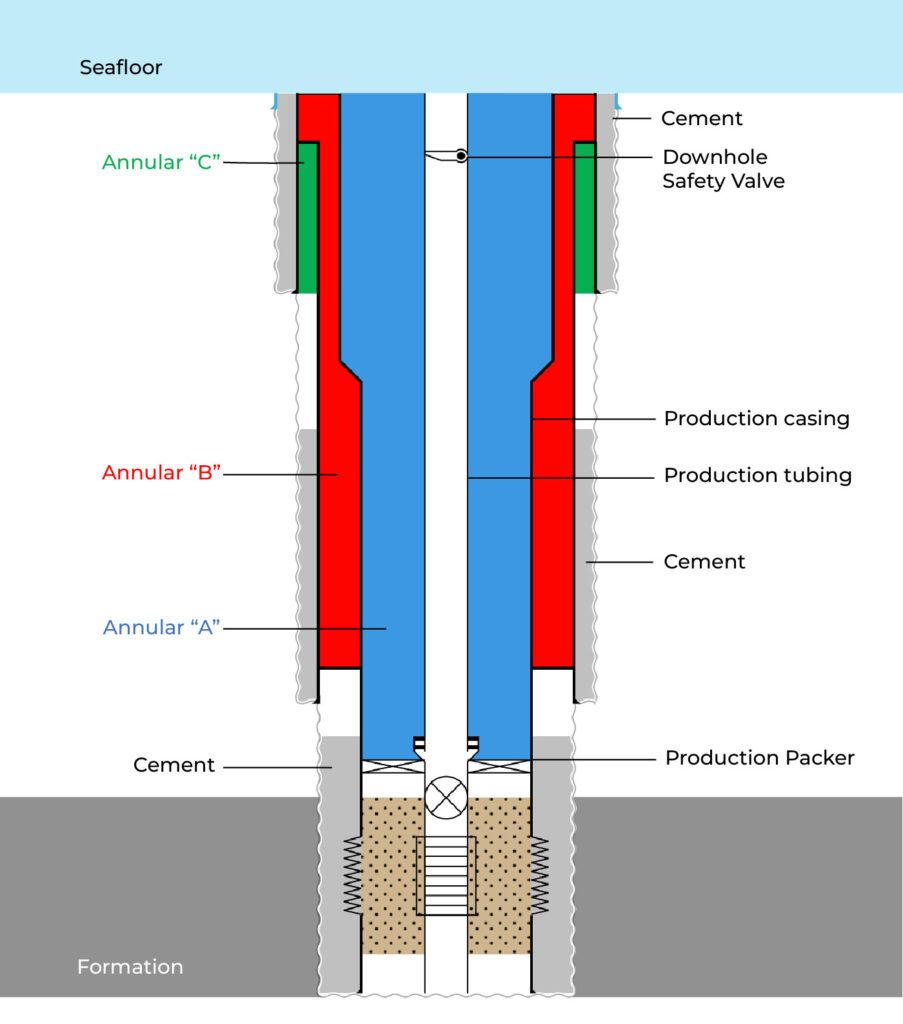
The illustration below shows the standard designations for the “A”, “B”, and “C” annuli in a subsea well. The “A” annulus is the void between the production tubing and the smallest casing string, while the “B” and “C” annuli are the voids between the successive outer casing strings.
The sealed annuli contain trapped fluids that later become heated by the high flow rate of formation fluids during production. The hotter fluids expand, causing an increase in the annulus pressure on the well. Eliminating any pressure fluctuations due to thermal effects, a pressure change in the “A” annulus, is an indication of a leak. The pressure measured at the wellhead in the “A” annulus, or in the other annuli that terminate at the wellhead, is called the annular casing pressure (ACP).
Annular casing pressure (ACP) is a primary indicator to detect leaks within the barrier envelope. Deviations in pressure within the “A” annulus may indicate leaks in one of the barrier elements, excluding the Downhole Safety Valve (DHSV). Troubleshooting involves adjusting pressure in the adjacent “B” annulus and the production tubing to identify the failing barrier element. The rate of pressure change can help assess well integrity risk levels.
A production packer anchors the tubing string and isolates the “A” annulus from both the formation and the tubing’s interior. Leaks in these seals or any connections can lead to SCP within the “A” annulus. For subsea wells, only the pressure in the “A” annulus can be monitored and bled down, while surface and land wells allow monitoring and bleeding at the wellhead.
API Recommended Practice (RP) 90-1 identifies three sources of annular casing pressure:
Of the three pressure sources, SCP is the only one that will rebuild once bled off. SCP may result from communication with a pressurized formation or from a barrier that inadvertently creates a flow path. The following potential communication paths can affect the “A” annulus and the “B” and “C” annuli.
“A” Annulus Flow Paths:
“A” Annulus Annular Paths:
“B” and “C” Annuli Risks:
The occurrence of SCP tends to increase throughout a well’s lifecycle, from drilling to abandonment. Continuous monitoring of ACP is therefore considered best practice.
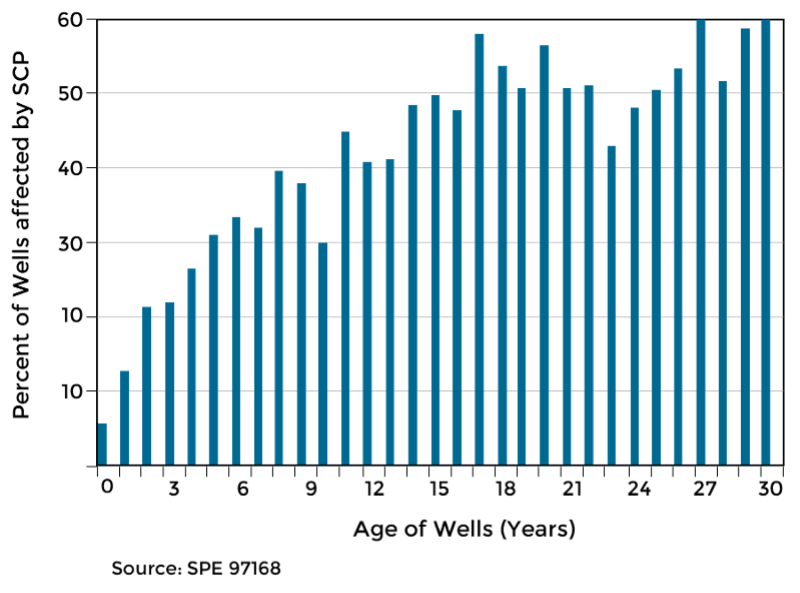
API RP 90-1 Section 9 outlines recommended procedures for monitoring ACP in offshore wells. It highlights the importance of equipping all accessible annuli with the ability to monitor pressure, perform bleed-offs, and inject fluids when necessary. Initial pressure testing should be conducted to establish baseline values and identify any existing ACP resulting from operational conditions. IPT Global’s SureTec® PressureTesting solution, including the TestEngine module, supports this process by helping operators establish and track baseline pressure values consistently across wells.
Regular monitoring is essential, with operators responsible for setting a minimum frequency to ensure pressure remains within diagnostic limits. The section distinguishes between operator-imposed and thermally induced pressures and emphasizes the need for close observation following any operational changes.
When SCP is detected outside of acceptable thresholds, the frequency of monitoring should be increased. For inaccessible annuli, a formal risk assessment is required to determine the feasibility of restoring monitoring capabilities and to assess the implications of any pressure sources.
Overall, this section offers a comprehensive framework to support safe and effective ACP management and ensure long-term well integrity.
Annular casing pressure management is a critical component of well integrity management. By understanding the causes of ACP fluctuations, implementing best practices, and leveraging solutions like SureTec PressureTesting, operators can proactively prevent integrity failures, minimize costly interventions, and enhance operational safety. Standardized reporting, automated data collection, and routine diagnostics ensure regulatory compliance and long-term sustainability. Investing in a structured ACP management strategy ultimately protects assets, personnel, and the environment.
For more information on how SureTec PressureTesting can enhance your well integrity management, contact IPT Global today.
IPT Global and Horizon56 have collaborated to deliver an integration designed to enhance efficiency and assurance during operations. With the integration of IPT Global’s SureTec® Platform and Horizon56’s RigFlow, operators can now visualize live pressure tests in real time alongside other critical operations, all within a single, streamlined platform.
The integration of IPT Global’s SureTec PressureTesting solution within Horizon56 RigFlow transforms the way operators view and manage their operations. With PressureTesting’s RemoteView module (one of six within the PressureTesting solution) connected to RigFlow, users can monitor integrity assurance tests while executing Drilling Operations Plans (DOPs)—all from a single screen. Gone are the days of switching between platforms to access critical operational data.
This integration provides a holistic view of your operations, allowing operators to watch live pressure tests as they take place, check plan steps, and add comments in real time. By combining these capabilities into a single interface, Horizon56 and IPT Global make it easier than ever to ensure efficiency, accuracy, and smooth communication throughout the operation.
Real-Time Pressure Test Monitoring
Watch live pressure tests as they occur within the broader scope of your operations. Stay updated in real time without switching between multiple systems or platforms.
Streamlined Communication
Add comments and check off plan steps as they are completed, all within the same interface. The ability to communicate directly on each step enhances clarity and reduces the risk of miscommunication.
Full Process Visualization
Operators and rig crews can visualize every step of the process in real time, ensuring that all operations are being carried out in the correct order.
Efficiency Gains
By consolidating rig operations across different software platforms into one interface, this integration significantly reduces inefficiencies, helping to improve workflow and reduce errors.
One of the biggest challenges in operations is managing different processes tracked across various platforms. This can lead to gaps in communication, errors, and inefficiencies. The integration of IPT Global’s SureTec platform and PressureTesting solution with Horizon56’s RigFlow addresses this issue by providing a seamless, real-time view of all critical operations.
With Horizon56 and IPT Global, you can be assured that your team has access to all necessary information for efficient well operations, whether it’s pressure test results, operational steps, or direct communication with your crew.
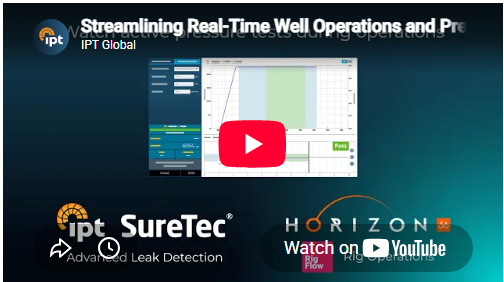
If you’re ready to take your operations to the next level with real-time insights and a unified platform, contact us today to learn more about the integration between IPT Global’s SureTec and Horizon56 RigFlow.
A major operator invited IPT Global and another pressure testing company to a head-to-head trial on sister drillships in the Gulf of America. The trial aimed to evaluate the effectiveness and efficiency of each participant’s pressure testing application.
IPT Global analyzed the pressure tests using its patented advanced algorithms, while the competitor used “predictive” analysis, a form of standard decline analysis. Based on the results of these field trials, the operator deemed IPT Global’s SureTec® PressureTesting solution 20% more efficient than its predictive counterpart. Testing details and results are outlined below.
IPT Global delivers the most efficient and accurate pressure testing solution in the industry. Using proprietary physics-based algorithms, it’s the only method available on the market that delivers objective, unambiguous pass/fail test results based on real data. This enables IPT Global to routinely validate tests more efficiently than “predictive” competitors that are validating based on arbitrary coefficients and no data.
Employing physics-based algorithms, IPT Global’s PressureTesting solution can detect any deviations from expected test results, ensuring even subtle leaks are identified. This is achieved by comparing the results of similar pressure, volume, and temperature systems. These are critical variables that must be accounted for when predicting test results.
The head-to-head field trial took place on two sister drillships with similar BOP designs, operating in similar water depths with compatible wellbore designs. Both pressure testing companies performed a BOP latch-up test and two BOP interval tests using their respective analysis methods.
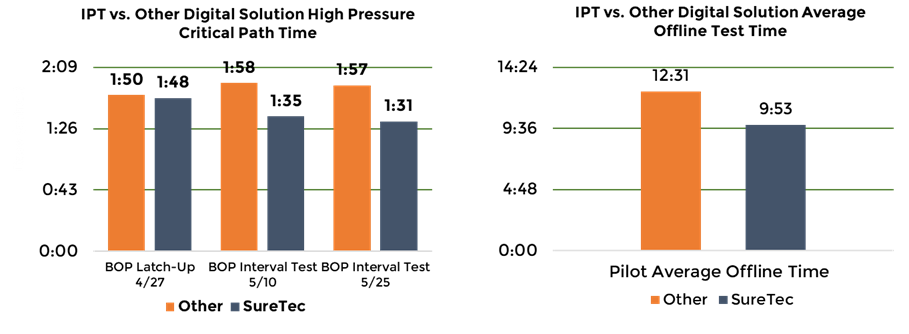
The results of the tests were gathered by the operator and presented to both parties (Figure 1). According to the operator, tests performed using SureTec PressureTesting were 20% faster than those using predictive methods. In addition to faster test validation, IPT Global provided a high level of integrity assurance using PressureTesting’s patented algorithms.
Ensure your testing on integrity-critical equipment and well barrier elements is accurate and effective with advanced leak detection from IPT Global’s SureTec PressureTesting solution. Our physics-based analysis validates results against real test data, rather than assumptions, so you get pressure testing results you can trust the first time.
Contact us today to see how PressureTesting can strengthen your next test program.
Operators need support that matches how their operations actually run: around the clock, and not always with someone available on-site. IPT Global’s industry experts close that gap, pairing remote assurance and support with Field Advisors, Performance Advisors, and BOP Compliance Surveyors who work alongside clients wherever the job takes them.
Remote assurance and support are available 24/7 for test plan generation and optimization, performance analysis, and remote workflow consulting. Our Real-Time Operations Center (RTOC) is easily accessible by email or phone to assist with troubleshooting and answer any questions that might arise during operations. We also provide an extra set of eyes to monitor all testing activities to identify and reduce the chance of misalignments.
IPT Global Field Advisors work in collaboration with the client for on-site test coordination. Clients value these services, especially to ensure success in high-volume test applications such as completions projects. Our Field Advisors provide optimization and efficiency consultation to continuously improve test performance and ensure the SureTec® platform–our software platform that connects well design, barrier management, pressure testing, equipment health monitoring, and compliance activities into a continuous assurance workflow–is being used to its full potential.
Having a Field Advisor onboard delivers an additional layer of assurance that all tests are conducted properly, and it removes the workload from rig personnel to finalize reports. IPT Global field personnel also act as champions in health, safety, and environmental leadership to produce the perfect balance of safety and efficiency in well integrity and assurance. They participate in all rig-based safety programs, along with an internally shared safety network that highlights lessons learned and helps reduce the chance of incidents.
Performance Advisors provide expert advice to streamline application across operations. Our continuous improvements and testing insights drive process standardization, which leads to increased efficiency and sustainability. We utilize big data to customize performance reports and convert results into actionable insights. KPI metrics are generated and tailored for the customer, along with after action reviews (AAR) to present growth opportunities through applied learning. Our Performance Advisors also work closely with stakeholders to achieve workflow regimens and continuous improvement by performing AARs and streamlining test plans. This collaborative effort drives optimized assurance, performance, and compliance.
BOP Compliance Surveyors provide third-party equipment inspection and auditing by using objective documentation, which allows IPT Global to provide consistent results to customers. Recommended survey and inspection practices are derived from original equipment manufacturers (OEMs), operations and maintenance manuals, regulatory guidance, and API standards. In accordance with all regulatory compliance, our detailed inspection checks the blowout preventer (BOP) stack and associated well control equipment and documentation. Surveyors ensure integrity-critical equipment stays compliant and track meaningful equipment data throughout its lifecycle for condition-based maintenance.
IPT Global’s industry experts support your well integrity management program throughout the well’s lifecycle, whether that’s a Field Advisor on-site for every test or remote assurance troubleshooting an issue in real time. To learn more about how we can help, contact us today.