
One Test Plan Review Saved a Supermajor Operator Over $40,000 per BOP Test; Projected Savings Over $700,000 a Year Based on 21-Day Test Requirements and Similar Test Parameters
Blowout preventer (BOP) testing, the pressure testing process that verifies well control equipment can hold and seal against design pressures, is a recurring, non-negotiable requirement for every offshore drilling operation, mandated by the Bureau of Safety and Environmental Enforcement (BSEE) in U.S. Gulf of America waters under 30 CFR Part 250, governed by API Standard 53 internationally, and enforced by host-country regulators like Brazil’s ANP (Agência Nacional do Petróleo, Gás Natural e Biocombustíveis). These regulations define minimum test frequencies, pressure requirements, hold times, and documentation standards. Frequency varies by jurisdiction: Gulf of America operations are required to test every 21 days; offshore programs in Guyana and much of South America typically test monthly.
What’s consistent across all jurisdictions is the cost exposure. Offshore rig spread rates—encompassing the drilling unit, support vessels, helicopter logistics, and contracted services—routinely exceed $500,000 per day and can surpass $1 million per day for deepwater and ultra-deepwater operations. At a $1 million/day spread rate, a single hour of rig time carries a value of about $41,667. Every inefficient step in a BOP test procedure converts directly into non-productive time (NPT) and measurable budget exposure.
| At a $1 million/day spread rate, one hour of rig time represents over $41,000 in operational cost. Across a multi-year drilling program with recurring BOP tests, even marginal inefficiencies compound into significant budget exposure. |
The best place to find savings is the critical path: the sequence of steps in the test procedure where any delay directly extends total test duration and, consequently, rig cost. Optimizing these steps by eliminating redundancies, resequencing activities, and removing steps that add no regulatory or operational value is the most impactful intervention available to the engineering team.
A Supermajor operator conducting offshore drilling operations in South America engaged IPT Global’s Real-Time Operations Center (RTOC) to conduct a comprehensive review and optimization of the rig’s existing BOP test plan. The RTOC team employed SureTec® PressureTesting’s TestPlanner module to carry out the analysis, pairing the platform’s automated capabilities with hands-on engineering expertise.
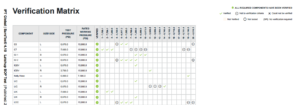
TestPlanner gives engineers a smart, interactive P&ID environment purpose-built for pressure testing and well control equipment. Its built-in PressurePath logic dynamically visualizes how pressure moves through the system and flags trapped pressure zones, while engineers configure valve line-ups and pressure sources in real time. Automated compliance coverage analysis confirms that every component is tested to the correct pressure requirement, surfacing exactly where a test plan can be safely streamlined.
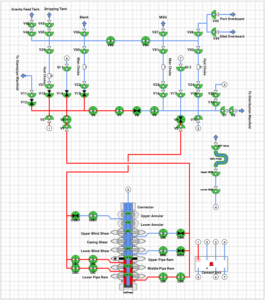
Drawing on this analysis and on decades of hands-on experience across deepwater and shelf programs, multiple rig classes, and regulatory jurisdictions worldwide, the IPT Global RTOC engineering team applied TestPlanner’s findings to identify precisely where test procedures could be optimized, without compromising well control integrity or compliance.
The optimization followed a structured methodology:
Throughout the process, TestPlanner’s compliance coverage analysis (validated by the RTOC engineering team) maintained strict alignment with applicable regulatory standards, ensuring every modification preserved full compliance while eliminating procedural steps that added time without adding safety or regulatory value.
| “I didn’t think this plan had room to tighten up, but IPT Global’s TestPlanner and their RTOC team found two critical path steps we could cut with no impact to testing the integrity of our well control equipment. This was a big win for us.” – Wells Operations Supervisor |
The IPT Global RTOC team’s use of TestPlanner produced measurable results realized immediately upon test execution. Most notably, eliminating two critical path steps without compromise to regulatory compliance or well control integrity.
| >30 Min
Avg. Step Duration |
14 → 12
Critical Path Steps Reduced |
>1 Hour
Critical Path Time Saved |
>$40,000
Rig Time Cost Savings Per Test |
A one-time optimization delivers recurring returns. Because BOP tests are mandated at regular intervals, the savings realized on the first execution of the revised plan repeat with every subsequent test on the same rig, effectively delivering a perpetual return on a single optimization engagement.
Testing frequency amplifies the impact. The table below applies the per-test savings across the testing schedules most common in two of the industry’s most active offshore markets:
| Region / Frequency | Tests Per Year | Estimated Annual Savings |
| Gulf of America (every 21 days) | 17 | Over $700,000 |
| Guyana / South America (monthly) | 12 | Over $500,000 |
These projections assume a consistent $1 million/day spread rate and apply directly to any drilling program operating under a similar test plan. The optimization investment is made once; the return is realized on every test thereafter.
| 1 | Immediate and Recurring Value
The Supermajor operator realized over $40,000 in rig time savings on the first execution of the optimized test plan. Because BOP tests are recurring events, this benefit is not a one-time gain…it replicates across every subsequent test on this rig under similar circumstances. At Gulf of America testing frequency (every 21 days), that compounds to over $700,000 annually. For monthly testing programs such as those in Guyana, the figure exceeds $500,000 per year. |
| 2 | Compliance Without Compromise
Every modification to the test plan was validated against applicable regulatory requirements. The optimization eliminated procedural redundancy without sacrificing regulatory rigor, ensuring the rig continues operating with full confidence that its BOP testing program remains compliant with BSEE, API Standard 53, ANP, and all applicable governing standards. |
| 3 | A Software-enabled Service That Transfers Across Basins and Rig Classes
The analytical framework built into SureTec PressureTesting’s TestPlanner module, applied with IPT Global RTOC engineering support, is not specific to a single rig, operator, or basin. It applies across rig classes, water depths, regulatory jurisdictions, and geographic regions, including deepwater, shelf, and land-based surface BOP programs. Any operator conducting BOP tests is a candidate for this service, and the economics are most visible where spread rates are highest. |
Ready to recover rig time on your next BOP test? Contact IPT Global to learn how we can help you reduce NPT and drive measurable cost savings across your BOP testing program.
HOUSTON, Texas – March 2, 2026 – IPT Global, the pioneer and recognized global leader in digital well assurance solutions and associated advisory services to the oil and gas industry, today announced that it has received official approval from the Bureau of Safety and Environmental Enforcement (BSEE) to serve as the primary validation provider of inflow tests in the Gulf of America (GoA).
This approval is the first of its kind and marks a major milestone for IPT Global and the broader offshore industry.
The multi-year approval process included direct engagement with BSEE, detailed technical evaluations, and close collaboration with six offshore operators. As part of the validation pathway, IPT Global also completed a multi-month independent review conducted by DNV to support the use of SureTec® for inflow test validation. In addition, the IPT Global team conducted multiple training sessions with BSEE engineers and inspectors to ensure full alignment on procedures, regulatory expectations, and compliance requirements, reinforcing the technical rigor and transparency behind this approval.
This designation establishes IPT Global as the first approved provider for primary validation of inflow tests in the GoA, setting a new benchmark for independent validation and regulatory collaboration in offshore operations.
See our announcement in the May/June 2026 edition of Drilling Contractor Magazine.
IPT Global is the pioneer and recognized global leader in digital pressure testing, trusted by major operators worldwide to deliver critical well barrier assurance with unmatched efficiency, reliability, and safety. For more than 15 years, IPT Global has set the standard for well lifecycle barrier management, completing more than 300,000 pressure tests globally and supporting rig operations in over 25 countries. Its advanced, field-proven technology enables operators to execute critical path operations with maximum efficiency while upholding the highest standards of well barrier integrity, helping reduce risk, enhance personnel safety, and protect the environment. IPT Global also provides asset health monitoring solutions and 24/7 real-time support, ensuring continuous barrier surveillance and immediate expert assistance to maintain safe, reliable operations at every stage of the well lifecycle.
In offshore drilling, blowout preventer (BOP) testing is a critical component of well barrier assurance. However, inconsistent processes across rigs can lead to incorrect line-ups, missed tests, and operational risk. This case study examines how the IPT Global Service Delivery Team supported an operator to improve BOP testing performance across a five-rig fleet in the Gulf of America using SureTec® PressureTesting.
Across a five-rig fleet operating in the Gulf of America, incorrect line-ups (sometimes known as misalignments) during BOP tests occurred up to 60% of the time. The potential of executing BOP pressure tests with these errors increased safety risk and decreased operational efficiencies. The difference across rigs wasn’t equipment or operator. It was the consistency of the application well barrier assurance testing process by rig crews. The operator requested IPT Global’s support across the fleet to ensure a common baseline performance level was maintained across the rigs.
In offshore drilling operations, performance gaps between similar rigs working together with the same operator are common. Crew experience, familiarity with procedures, and operational maturity all vary. What doesn’t vary, however, is the consequence of a missed well barrier test. Incorrect line-ups undetected during BOP testing can leave critical components untested, create regulatory and environmental exposure, and compound into costly rig downtime.
To help establish a standardized approach, the IPT Global Real-Time Operations Center (RTOC) conducted a fleet-wide analysis of all BOP pressure tests over the course of one year. The results illustrate both the scale of the problem and the value of a consistent, technology-backed assurance framework, regardless of individual rig performance.
A fleet-wide analysis of 76 BOP pressure tests highlights both the scale of incorrect line-ups and the impact on offshore drilling performance.
When results are broken down by rig, the variance is stark and highlights a critical point: performance is driven by the consistent application of robust processes.
| Rig | No. of BOP Tests | Tests with Incorrect Line-ups | Lost Time (min) |
|---|---|---|---|
| Rig A | 17 | 59% | 270 |
| Rig B | 18 | 56% | 165 |
| Rig C | 8 | 13% | 5 |
| Rig D | 20 | 5% | 8 |
| Rig E | 13 | 0% | 0 |
The rigs with the lowest incorrect line-up rates share a common thread: a standardized, familiar process developed or supported by the IPT Global Service Delivery Team. Rig C operates with a full-time IPT Global Field Advisor supporting BOP testing execution and well barrier assurance processes embedded with the crew. The one incorrect line-up it recorded during the year was caught immediately by that IPT Global team member. Rig D had IPT Global Field Advisors on location for an extended period who helped build simplified, consistent test plans; the crew became deeply familiar with those plans, and the data reflects it. Rig E recorded zero incorrect line-ups across all 13 tests.
Rigs A and B tell a different story. Rig A recorded a total of 15 incorrect line-ups during BOP testing operations. This was the highest in the fleet and impacted 59% of its BOP tests, with the frequency trending upward as the year progressed. Rig A’s crew had recently been blended from two different drilling contractors, introducing unfamiliarity. IPT Global Field Advisors were not present onboard for BOP testing, though the IPT Global Service Delivery Team remotely identified five incorrect line-ups that were undetected by rig personnel. This accounted for three and a half hours of intervention time that would otherwise have resulted in undetected deviations.
Rig B showed a persistent failure at a specific test step with incorrect line-ups occurring in 56% of all tests, traceable to an incorrect cementer line-up that went uncorrected over multiple test cycles.
This is not a story about which rigs have better crews or stronger safety cultures. It is a demonstration of what happens when a standardized well barrier assurance and BOP testing process is applied consistently across a fleet, and what happens when it isn’t.
Every rig has its own dynamics: crew experience, contractor mix, familiarity with test plans, and operational culture and tempo. IPT Global does not override these dynamics. Instead, the SureTec PressureTesting software provides a standardized well barrier assurance framework for BOP testing, combining real-time monitoring, structured verification processes, and field expertise that operates independently of them.
Where a rig is already performing well, this approach reinforces and documents the behavior. Where performance is inconsistent, it identifies deviations early, before they become compliance events, safety incidents, or compounding downtime.
The data makes this clear. The eight incorrect line-ups missed by onboard crew but detected through real-time monitoring and structured BOP testing verification via SureTec PressureTesting and the IPT Global RTOC were identified through a consistent, structured process combining volume benchmarking, step-by-step checklist verification, and direct communication protocols, applied consistently and independently of rig floor activity.
Operators managing multiple assets simultaneously in offshore drilling operations face these same challenges at a larger scale. Performance varies, crews turn over, and experience levels differ. While a fleet-wide assurance program like SureTec PressureTesting does not remove these variables, it does establish a consistent baseline, ensuring performance gaps do not go undetected.
The rigs that performed best were not immune to incorrect line-ups. They were simply better equipped through familiarity, simplified plans, and consistent oversight to prevent or catch them early. IPT Global’s role is to extend that level of performance across the entire fleet, not just to those that have benefited from time and continuity.
A standardized approach to well barrier assurance is not a substitute for good rig culture. It is the mechanism that ensures good practice is applied consistently, regardless of where any individual rig sits on the performance curve.
Looking to improve BOP testing performance or strengthen your well barrier assurance processes? Contact IPT Global to implement a standardized, pressure testing and real-time monitoring framework across your offshore drilling fleet.
Subsea blowout preventer (BOP) soak testing is a long-standing part of pre-deployment programs. However, it remains one of the least consistently executed aspects of BOP control system evaluation. While teams perform the test routinely, they often overlook insight into stabilized pressure behavior.
Once a subsea BOP stack is deployed offshore, limited access significantly increases the cost of uncertainty. In 2023, IPT Global collaborated with Seadrill on an article published by Drilling Contractor examining the operational value of standardizing BOP soak testing and proposing a structured framework aligned with the American Petroleum Institute’s (API) Standard 53.
A subsea BOP soak test is a pressure stabilization procedure. Rigs perform it during pre-deployment testing to evaluate the integrity of the BOP control system under sustained pressure conditions. Unlike dynamic testing, soak testing allows pressures to stabilize and the system to settle into equilibrium.
During this stabilized period is when that behavior often emerges. Gradual pressure decay or inconsistent regulator response become apparent once transient effects dissipate. These conditions are not always obvious but can directly influence stack readiness and long-term system reliability.
Identifying these issues before deployment allows for investigation with limited operational impact. When teams do not identify these behaviors, they often surface during operations. At that stage, troubleshooting options are fewer and consequences are more costly.
Despite the importance of well control assurance, subsea BOP soak testing still varies across rigs, fleets, and regions. Common differences include test duration, applied pressure, acceptance criteria, and documentation practices.
In practice, this variability rarely reflects a lack of focus on safety. In IPT Global’s experience supporting pre-deployment testing, variability most often reflects legacy practices, differing OEM guidance, and misaligned acceptance thresholds. Over time, these inconsistencies make results difficult to compare and increase reliance on interpretation rather than data-driven evidence.
Standardizing subsea BOP soak testing does not mean removing operational judgment or imposing rigid procedures across all systems. Instead, it establishes a shared baseline that supports clearer execution and more consistent interpretation of results.
In the article, we discussed the operational value of more structured subsea BOP soak testing, aligned with API Standard 53. The intent was to reduce unnecessary variability while preserving flexibility across different BOP configurations.
Soak testing offers a rare opportunity to observe control system behavior once transient pressure effects have stabilized. When teams miss or inconsistently execute that opportunity, they overlook meaningful indicators of system health. API Standard 53 already serves as the foundation for subsea BOP equipment system requirements. Expanding guidance to clearly address soak testing would strengthen consistency while preserving flexibility across different system designs and operating environments.
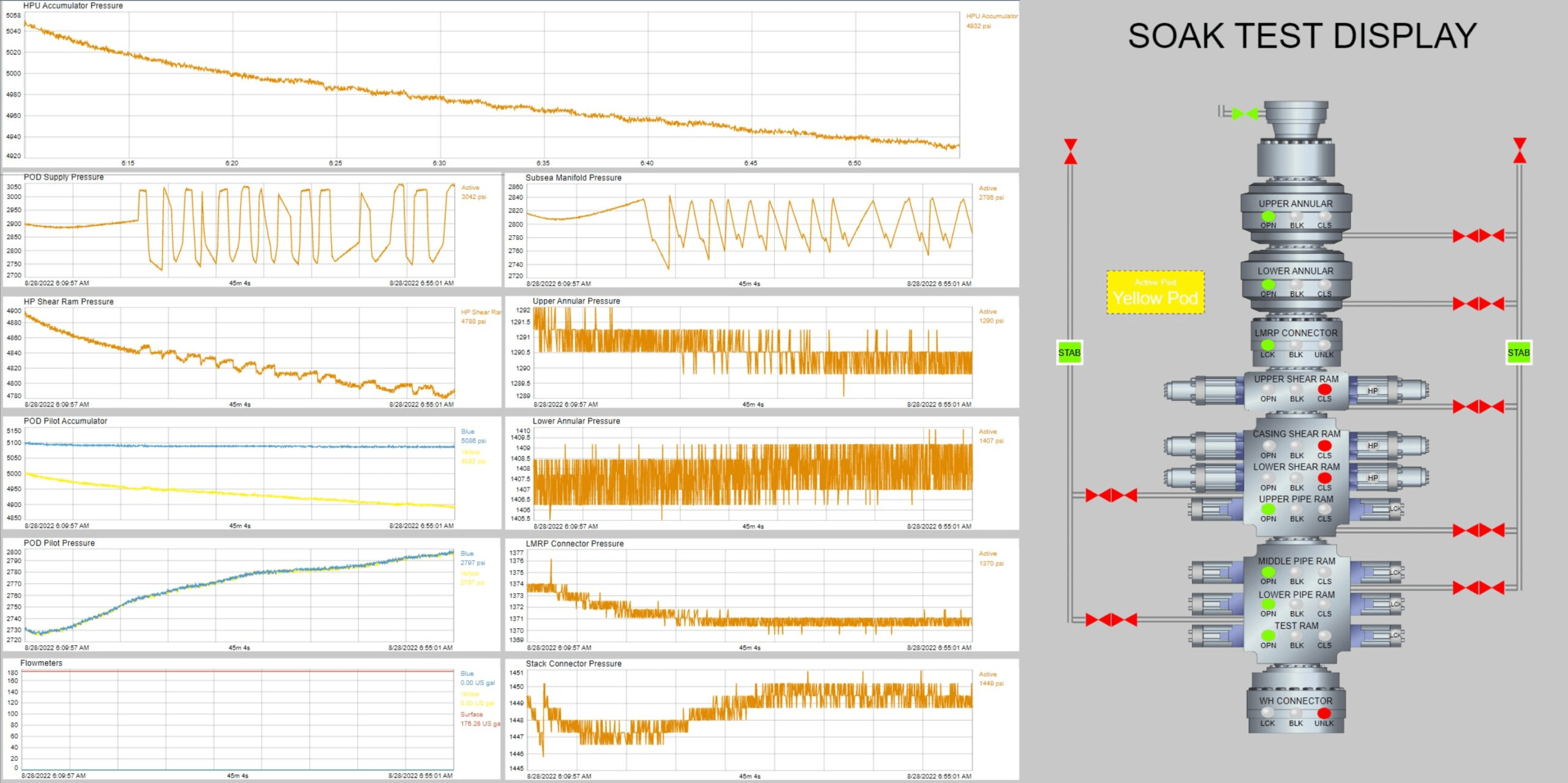
Digital pressure data enables teams to review stabilization trends directly, revealing gradual decay, irregular stabilization, and repeatable anomalies across tests.
With IPT Global’s SureTec® Equipment Health Monitoring HealthAnalytics software and Monitoring service, digital diagnostics capture high-resolution pressure behavior during soak testing, enabling objective, contextual evaluation of subtle trends. Engineers in IPT Global’s Real-Time Operations Center (RTOC) monitor test data in real time and support decision-making during pre-deployment activities.
Together, our HealthAnalytics and Monitoring modules strengthen engineering judgment rather than replace it. Objective data provides a common reference point, improves alignment between operators, drilling contractors, and OEMs, and supports more confident decisions related to deployment readiness and pre-deployment assurance.
Subsea BOP soak testing delivers value through how teams evaluate results and act on them. Programs that consistently derive data-driven insight approach soak testing as part of a broader assurance process.
As subsea systems continue to increase in complexity, the ability to reduce uncertainty before deployment becomes increasingly important. Subsea BOP soak testing remains one of the few opportunities to observe control system behavior under stabilized pressure conditions.
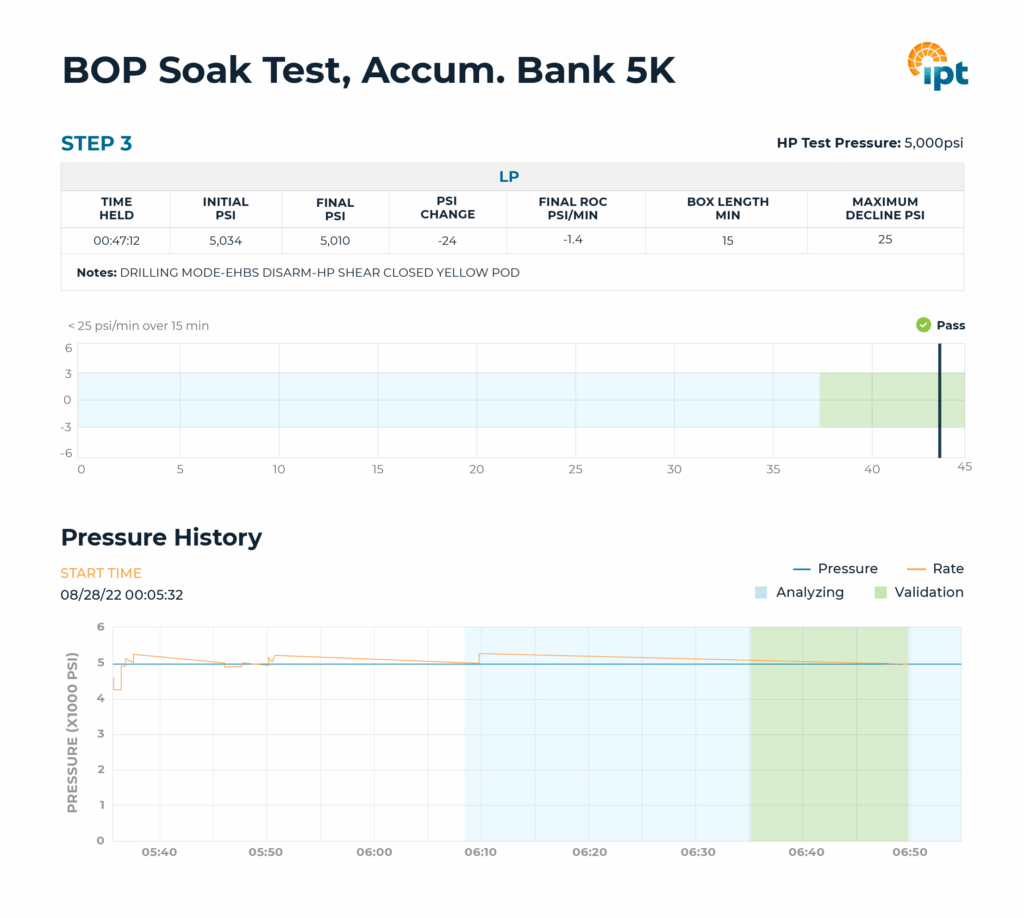
Through the SureTec Equipment Health Monitoring solution, IPT Global applies a consistent, data-driven approach to subsea BOP soak testing during pre-deployment operations. By focusing on how control systems behave under stabilized pressure conditions, teams gain clearer insight into system performance before deployment decisions are made.
As subsea systems continue to grow in complexity, the way soak testing is executed and interpreted matters more than ever. Aligning practices with API Standard 53 provides a common framework for evaluating control system behavior, reducing unnecessary variability, and strengthening well control assurance across fleets. When teams pair that framework with objective pressure data and structured evaluation, soak testing becomes less about confirming pressure holds and more about understanding what the system is communicating before it goes offshore.
Looking ahead, IPT Global continues to advance digital software integrations that support consistent application of subsea BOP testing practices and ongoing improvement across the testing lifecycle.
For additional context, read the full article published in Drilling Contractor: Standardizing subsea BOP soak testing: overview of value and recommended best practices – Drilling Contractor by Patrick Hillard and Leonard Childers, IPT Global; and Ahmed Omar, Seadrill.
Managed Pressure Drilling (MPD) systems operate under demanding conditions, where small deviations in pressure or hydraulic behavior can escalate into equipment failure, unplanned non-productive time (NPT), and increased well control risk. Traditional well control equipment testing often depends on manual interpretation, delayed reporting, and limited visibility into early degradation trends.
In this analysis of MPD equipment failure, we examine how a major offshore operator used MPD control system data and IPT Global’s SureTec® Equipment Health Monitoring solution to identify the deviation pattern that preceded a Slimline Annular (SLA) element failure. The analysis shows how automated MPD failure analysis and equipment health workflows can reveal early indicators of annular wear long before visible damage.
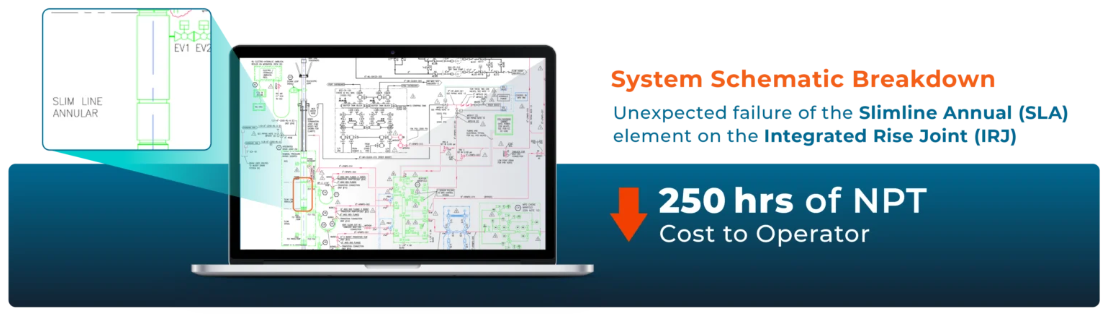
The operator experienced an unexpected failure of the Slimline Annular (SLA) element on the Integrated Rise Joint (IRJ) after less than two months of deployment and only 13 closures. During retrieval, the rig team discovered large pieces of degraded rubber in the trip tank and on top of the wear bushing.
The failure resulted in more than 250 hours of NPT. While the root cause was established through a lengthy investigation by the Original Equipment Manufacturer (OEM), the operator wanted to determine whether early indicators were present in the MPD control system data and if digital analysis could have detected the problem sooner.
During a technology review, the operator approached IPT Global to evaluate whether digital real-time and MPD integrity management analytics could better support early detection of equipment degradation. They tested whether IPT Global’s Equipment Health Monitoring HealthAnalytics module could analyze MPD control data without context, manual tagging, or event descriptions.
To create a blind test, the operator provided a set of sanitized CSV files from the Transocean drillship MPD system; the files contained only raw time-series data from the SLA subsystem. Using this data set, IPT Global evaluated whether HealthAnalytics could pinpoint the failure window and detect the signal patterns that occurred beforehand.
IPT Global prepared the files, reformatted them, and ingested them into the Equipment Health Monitoring system. This software uses model-driven workflows designed for well control equipment testing, MPD failure analysis, and condition-based monitoring. It evaluates pressure response, hydraulic behavior, and closure performance to identify changes that indicate abnormal equipment performance or early-stage degradation.
Within minutes of data ingestion, the system flagged unusual pressure and hydraulic patterns inconsistent with expected annular behavior. IPT Global engineers ran multiple analysis modes over the next 48 to 72 hours to validate the signal patterns. Ultimately, the results consistently pointed to the same failure window later confirmed by the operator and the OEM.
The analysis identified a distinct deviation in the annular element’s pressure and hydraulic response with progressive wear. Importantly, this pattern was detectable days before the failure became visible.
“With IPT Global’s Equipment Health Monitoring, we saw in two days what took months to uncover,” said the operator’s Senior Advisor of Rig Systems. “That’s the kind of insight that changes how you think about equipment monitoring.”
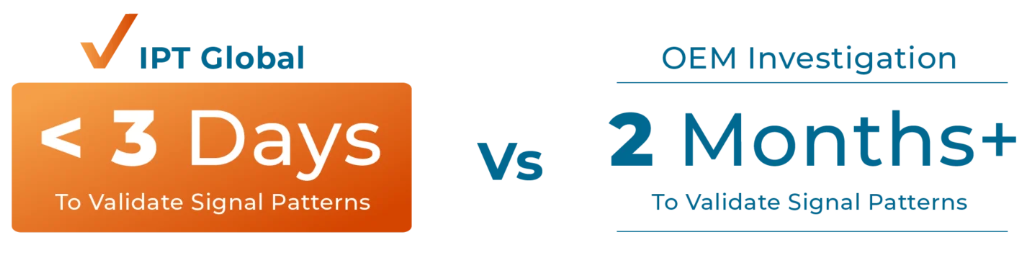
This case demonstrates how digital MPD integrity management testing can improve operational reliability and reduce NPT. By tracking baseline trends and small deviations, operators can detect MPD equipment wear early and improve maintenance and risk decisions.
IPT Global continues to expand its condition-based monitoring and predictive analytics for MPD systems, strengthening well control readiness, accelerating fault detection, and supporting a more proactive approach to equipment assurance. Contact us today to schedule a demonstration of Equipment Health Monitoring and learn how it can provide insight into the health of your operations.
Data integration, the process of unifying information from multiple sources, is essential for effective well integrity management. This includes gathering and analyzing data from various sources, such as well design and construction, continuous monitoring, and pressure testing. By integrating data across all phases of a well’s lifecycle, operators gain a holistic understanding of well health, enabling more informed decision-making and improving safety and performance. This article explores how data integration optimizes well integrity management and the benefits it offers for optimizing well operations.
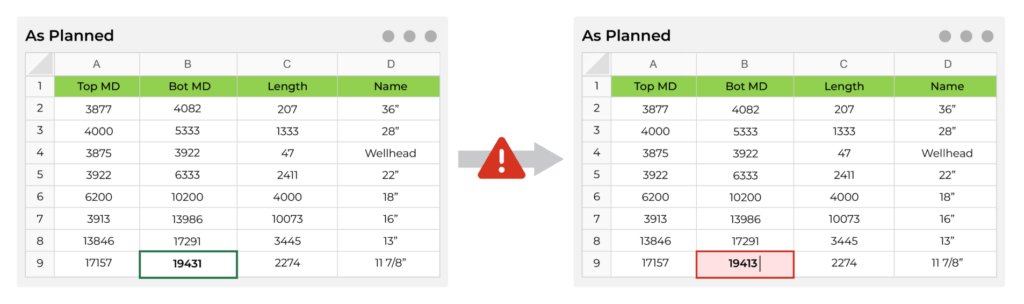
Wellbore data is often used across multiple systems, including well integrity management systems, but is typically entered manually into separate applications. For example, the same data might be used to generate wellbore schematics, barrier diagrams, and test plans—three distinct applications that typically don’t interact with one another. When wellbore data, such as casing, transitions from “as planned” to “as built,” it must be manually updated in one application (e.g., a spreadsheet) and then reentered into another application for the barrier diagram. This process repeats every time the data changes. Similarly, when a well schematic is used to develop a wellbore integrity test plan prior to operations, it must be updated with as-built data, and then the test plan needs to be revised accordingly. Additionally, wellbore data across different systems or regions may have varying structures or Units of Measurement (UoM), which can lead to issues such as calculation errors and data misinterpretation. This creates inefficiencies and increases the risk of inconsistencies when updates occur.
Integrating well integrity data unifies these workflows into a single application, enabling seamless communication of schematic and test plan changes while automating test planning and barrier management processes.
One of the leading causes (as much as 50%) of non-productive time (NPT) is the mechanical failure of equipment like blowout preventers (BOPs), subsea trees, and wellheads. There are more than 100 hydroelectric valves and regulators inside a BOP and, historically, little was known about the fatigue life of these components. This lack of insight resulted in BOP manufacturers arbitrarily replacing as much as 25% of the BOP stack each time it underwent scheduled maintenance; an approach designed to prevent breakdowns but often resulting in excessive and unnecessary part replacements.
One of the most significant advantages of data integration in well integrity management is the ability to leverage predictive analytics for proactive maintenance and risk mitigation. By analyzing historical data and monitoring real-time data from multiple sources, operators can reduce the likelihood of well integrity issues that could lead to costly downtime or safety incidents. For BOPs, condition-based monitoring (CBM) allows potential problems to be predicted based on the remaining service life of individual components. This enables BOPs to remain subsea longer without being retrieved to the rig for premature repairs. CBM also allows operators to schedule maintenance at optimal intervals, minimizing unnecessary NPT while ensuring equipment remains in reliable working condition. As a result, unplanned maintenance and production disruptions are reduced, contributing to improved operational safety and efficiency.

Operators must comply with strict regulatory standards and recommended practices for well integrity monitoring and reporting. Non-compliance can lead to fines, operational delays, or even well shutdowns. Data integration ensures that operators meet regulatory requirements more efficiently and comprehensively. By consolidating production data into a unified system, operators can generate regulatory reports more quickly, reducing the time and effort involved in manual data collection. This automated reporting process minimizes the risk of human error and ensures that all relevant data is captured accurately. Additionally, integrated data systems offer real-time updates on well integrity status, enabling operators to respond swiftly to emergencies and remain compliant.
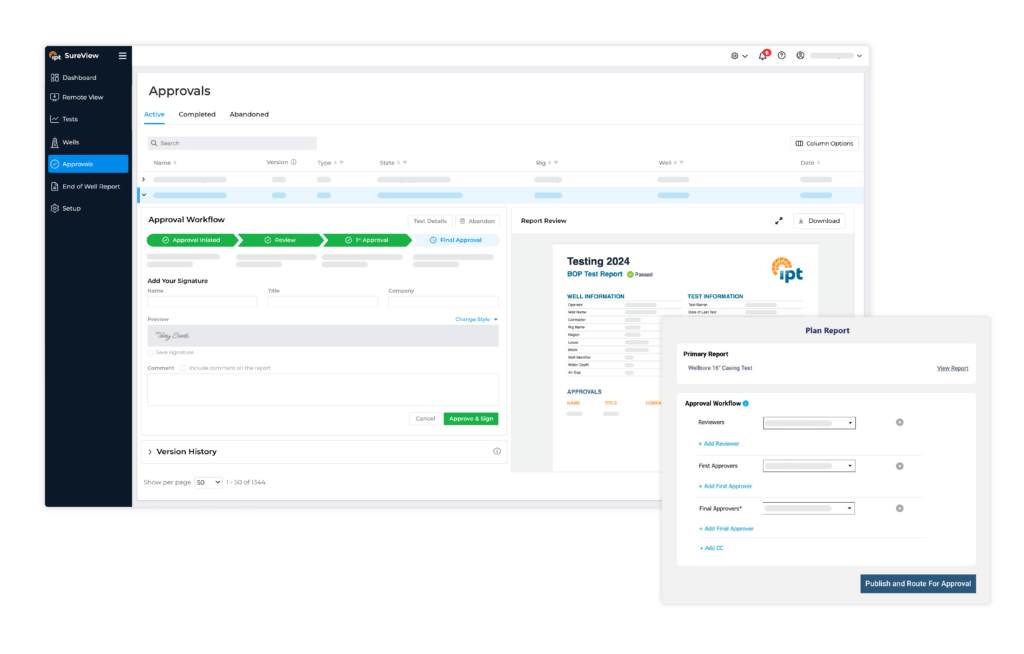
Well integrity management requires close collaboration between various teams, including engineers, operations staff, and safety personnel. Effective communication between these groups is critical for promptly identifying and resolving well integrity issues. When data is spread across multiple applications, teams often rely on phone calls and emails to share updates, which can lead to delays and miscommunication. Data integration addresses this challenge by providing all teams with real-time access to the same information. This unified data view eliminates silos, enabling teams to collaborate more effectively and identify potential issues sooner. Additionally, integrated data systems allow for single updates across platforms, ensuring all teams can make informed decisions using the most current data without needing to switch between multiple sources.
The digital transformation in the oil and gas industry is progressing rapidly, with companies increasingly leveraging technologies such as artificial intelligence (AI), machine learning, and the Internet of Things (IoT) to optimize well operations. Central to this transformation is data integration and the preparation of data for AI analysis, which forms the foundation for applying advanced analytics to well integrity data. For example, AI-powered analytics can process vast amounts of historical well integrity data to uncover trends and anomalies that humans may overlook. These insights can then be used to inform maintenance strategies, optimize well operations, and improve safety.
Data integration is crucial for effective well integrity management. By consolidating information from well design, construction, pressure testing, and continuous monitoring, operators can enhance their understanding of well health, leading to more informed decision-making and improved safety. Data integration enables the use of predictive analytics to anticipate equipment failures, mitigate risks, and reduce downtime. It also supports the development of unified applications that consolidate, integrate, and automate well integrity management workflows. Moreover, data integration simplifies regulatory compliance by enabling faster and more accurate reporting and incident response.
Collaboration among teams is significantly improved as all members gain access to real-time data, breaking down communication barriers. As the oil and gas industry increasingly embraces AI and IoT technologies, data integration will continue to be essential for optimizing operations and ensuring safety.
IPT Global’s SureTec® platform brings this integration to life through its WellSchematic, PressureTesting, and Equipment Health Monitoring solutions, which share data across schematics, test plans, and monitoring workflows in real time rather than requiring manual reentry between systems. This connected approach is what allows operators to catch discrepancies earlier, act on predictive insights faster, and generate compliance reports with data they can trust.
At IPT Global, we are dedicated to helping organizations tackle data integration challenges. Our team of experts is ready to assist you in streamlining your data processes and maximizing your operational potential. Contact us today to discover how we can support your data integration needs!
Well integrity assurance is critical in offshore operations to ensure safety and efficiency in oil and gas production. Pressure tests are vital for confirming that well components can withstand the pressures encountered during operations. Just as important are the reports that document these tests, creating a historical record that tracks the well’s performance over time and supports regulatory compliance. Implementing a digital pressure testing solution like IPT Global’s SureTec® PressureTesting, with integrated reporting capabilities through its ComplianceReport module and adhering to best practices for report generation, ensures the data is accurate, clear, and compliant with industry standards.
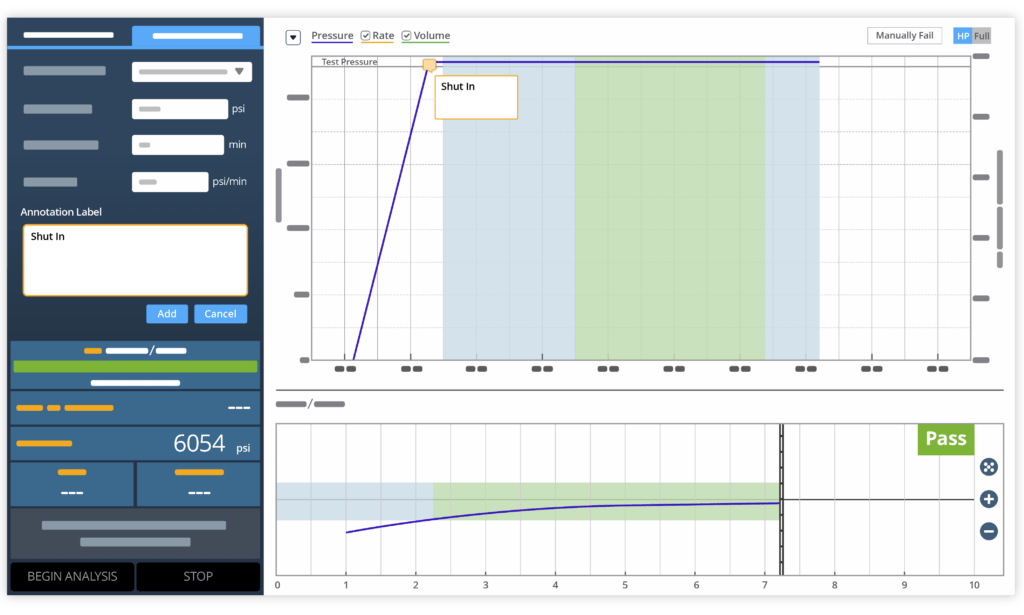
A major challenge in pressure test reporting is ensuring data accuracy, as errors in data collection or transcription can lead to incorrect assessments of well integrity. Digital pressure testing software like PressureTesting addresses this issue by automatically converting test data into reports, ensuring the information is accurate, complete, and consistent.
Well Control Equipment (WCE) and Well Barrier Element (WBE) pressure tests may sometimes provide results that are unclear or on the edge of acceptable limits when readings fluctuate or are close to preset thresholds. To address this, detailed documentation of test conditions and consultation with IPT Global’s Real-Time Operations Center (RTOC) experts are essential to determine if further testing is needed. Clients can monitor tests themselves in real time through PressureTesting’s RemoteView module, and RTOC experts remain available to weigh in on the same live data.
IPT Global’s PressureTesting solution enables detailed notetaking during testing, ensuring clear documentation of uncertainties to support informed decision-making regarding well integrity.
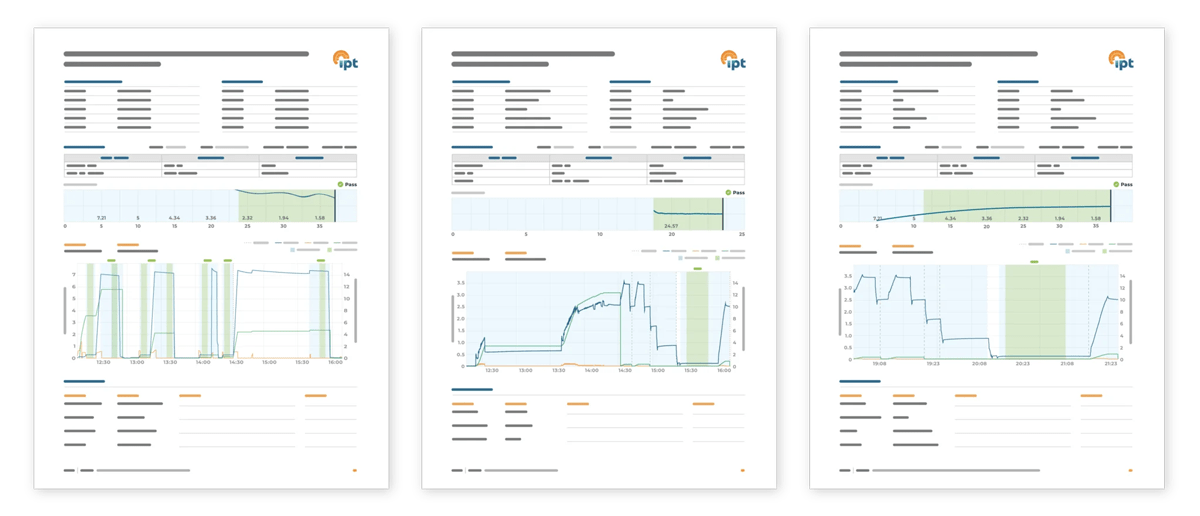
A major challenge is ensuring consistent documentation across various test types and wells. Variations in report formats or terminology can cause confusion and make it hard to compare results. Standardized templates and report structures resolve this issue by ensuring that the same format is used for all tests.
IPT Global’s PressureTesting solution provides standardized test reports, making it easier to interpret and compare results across multiple tests.
Test plan reports and test results must be submitted to key stakeholders for review, approval, and signatures. Traditional manual paper-based processes for approving reports often result in delays, lost documents, and version control issues. Ensuring traceability during report handover and approval is crucial for regulatory compliance, while accountability and transparency also enhance business processes.
Digital approval and handover processes reduce the risk of delays, lost paperwork, and version control issues, ensuring reports are quickly approved and stakeholders have access to the most up-to-date version. IPT Global’s software enables digital distribution of test reports for instant approval through PressureTesting’s DigitalApprovals module, with an audit log tracking all approval activities.
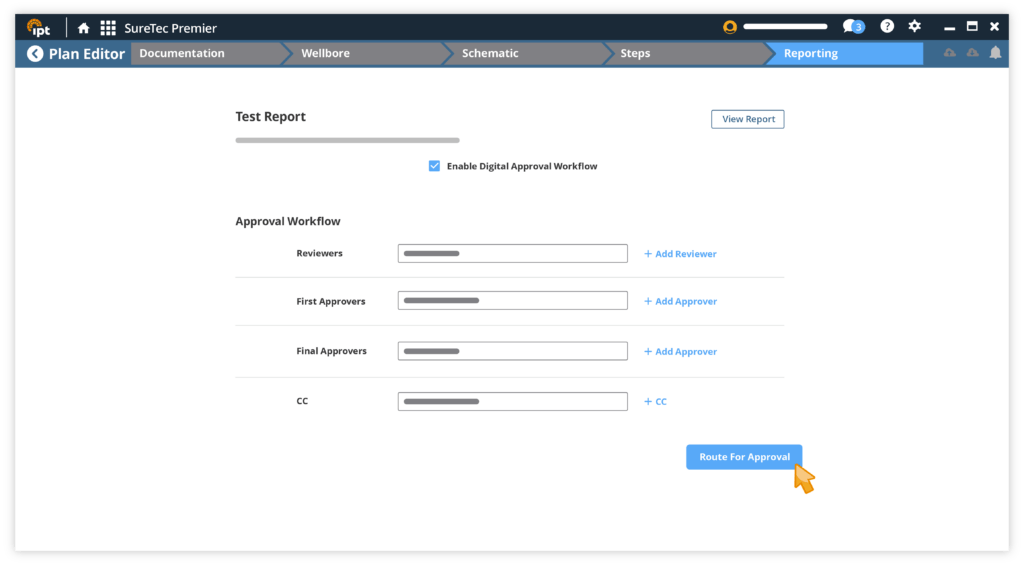
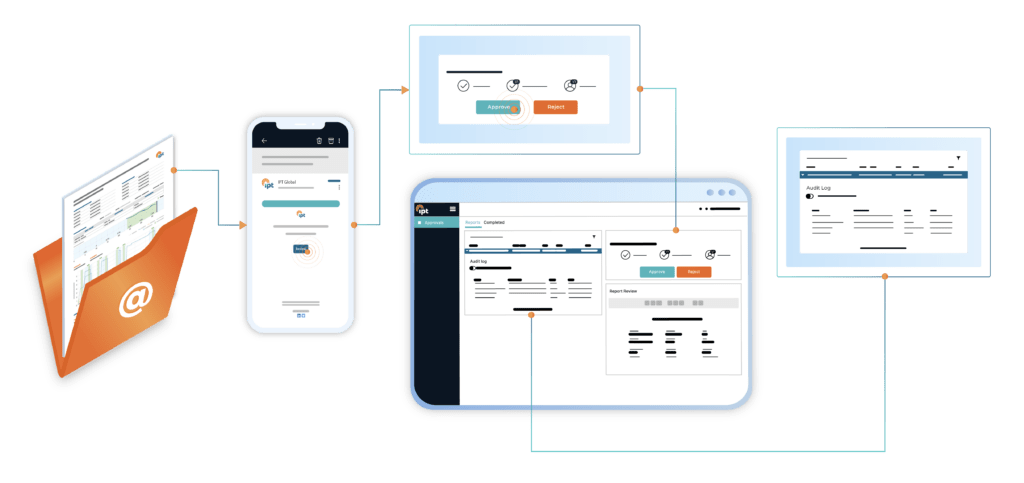
IPT Global’s PressureTesting solution offers significant advantages in generating and managing well integrity test reports. SureTec PressureTesting is a digital solution that facilitates the creation of test plans through its TestPlanner module and executes tests through its TestEngine module. It generates standardized reports, detailing each test step, including pressure graphs, well barrier schematics, and comprehensive documentation of tested components. With built-in compliance features, SureTec PressureTesting ensures that all reports meet industry standards and regulatory requirements. Test plans and test reports can be routed instantly from the platform upon completion of setting up a test plan or running a pressure test.
Testing data, reports, and analytics are stored in IPT Global’s cloud-based application, which also supports RemoteView for watching tests remotely in real time. The SureTec PressureTesting solution includes an audit log for tracking all approval activities and allows digital distribution of reports for handover and approval. It also facilitates long-term data storage and easy retrieval, ensuring seamless access to historical test data.
Effective well barrier element and well control equipment pressure test reporting is crucial for maintaining well integrity and operational safety. Leverage IPT Global’s solutions to streamline the process, enhance data accuracy, ensure documentation consistency, and simplify handover and approval workflows.
For more information on how our digital PressureTesting solution can enhance your well integrity management, contact us today.
In this Drilling Contractor article, IPT Global and Seadrill examine why subsea blowout preventer (BOP) soak testing remains inconsistently executed across rigs and regions, despite its role in pre-deployment assurance. Differences in test duration, pressure levels, and acceptance criteria often stem from legacy practices and varying Original Equipment Manufacturer (OEM) guidance rather than a lack of focus on safety.
The authors propose a framework aligned with API Standard 53 to establish a shared testing baseline, paired with digital pressure data to catch subtle issues, like gradual decay or irregular regulator response, before deployment, when troubleshooting is far more difficult. IPT Global’s SureTec® Equipment Health Monitoring solution and Real-Time Operations Center (RTOC) support this kind of objective, data-driven evaluation during pre-deployment testing.
Read the full article: Standardizing subsea BOP soak testing: overview of value and recommended best practices by Patrick Hillard and Leonard Childers, IPT Global; and Ahmed Omar, Seadrill
IPT Global’s expert advisory services and SureTec® PressureTesting software solution came together to deliver value to all stakeholders during a well intervention program in Angola, off the west coast of Southern Africa. An intervention services company (ISC) took on an extensive program, with the goal of having its own personnel perform the integrity tests while relying on remote support from IPT Global, including our Field Advisors and Real-Time Operations Center (RTOC). The ISC wanted to demonstrate the ability to provide turnkey intervention services for various operators while performing the tests safely and efficiently to avoid costly non-productive time (NPT). IPT Global’s team worked with the ISC to create a custom operational support plan comprising in-house and on-site training, optimization of planning and test execution, and remote support.
IPT Global provided pre-deployment training at its office for the ISC’s engineers and managers. The training focused on using existing test plans to run tests and publish reports. Several variations of the test plans were run using existing schematics. IPT Global provided setup guides for the digital acquisition (DAQ) unit and transducers, along with quick start guides to run various tests in the SureTec platform. The participants were able to experience live data acquisition and testing scenario simulations, allowing them to become familiar with the PressureTesting workflows & procedures.
At the rig site, IPT Global’s Field Advisors trained intervention personnel so they could run SureTec PressureTesting with remote support from our RTOC. The training focused on using PressureTesting’s TestPlanner and TestEngine modules to guide testing efforts, leveraging the RTOC for remote support and publishing tests. IPT Global’s RTOC and engineers helped to manage the testing program with handover and record archival while transitioning between wells.
The operator planned 28 integrity tests, with specific criteria for each of the test types performed. IPT Global engineers created a test matrix for the ISC that included the operator’s criteria and a procedural reference for each test, making review and approval easier. The SureTec TestPlanner matrix also helped ISC personnel manage the testing program by making it easier to locate and run previously built test plans on the testing laptop. This allowed the company to focus on their operations and setting up the hardware rather than having to set up each test plan.
Completed tests and reports were saved in SureTec for archival and traceability. The SureTec Platform is a secure, web-based tool that also provides real-time status of pressure tests, test data organization and retrieval by well and date, advanced data analysis, and remote viewing of active tests.
The ISC received remote support from IPT Global’s RTOC, which is staffed by experienced engineers and advisors who monitor all pressure tests 24/7 and provide global technical support. Remote support ranges from assisting with data connections, networking issues, and basic software issues to advanced support such as:
The intervention program required 28 integrity tests with various operator criteria to be performed over a relatively short period. The ISC successfully executed the intervention program and achieved its primary goal of providing turnkey service with digital software and remote support from IPT Global.
SureTec’s PressureTesting solution provided accuracy, objectivity, and flexibility that assured the integrity of all tested components according to the operator’s criteria. Our engineers performed post-test reviews to ensure all components were tested to the proper pressure as dictated by the operator. And IPT Global field advisors verified that test reports were published properly to assure the traceability of all integrity tests for hand-off to the production team and to provide an auditable trail of compliance for local regulatory bodies.
Most importantly, the ISC was able to deliver the intervention program safely to protect people, the environment, assets, and the reputations of all stakeholders.
To learn more about the SureTec platform and our PressureTesting solution, contact us today.
Oil and gas (O&G) well interventions are typically performed to add or restore production or to fix a well integrity issue. While expected production gains from deep and ultra-deep subsea wells must justify the cost of offshore intervention vessels and crews, light well interventions are more common and cost-effective because they can be performed with minimal shut-in of the well. Light well interventions include, but are not limited to, acid stimulation; sand, scale, or hydrate removal; and gas lift remediation.
In light well interventions, tools or sensors are lowered into a live well using slickline, wireline, or coiled tubing while pressure is contained at the surface. Service companies can perform light well intervention operations through subsea wellheads using riser or riserless methods while using a remotely operated vehicle (ROV) to perform the operation and guide the landing of the well intervention equipment as shown in the stimulation example below (Figure 1).
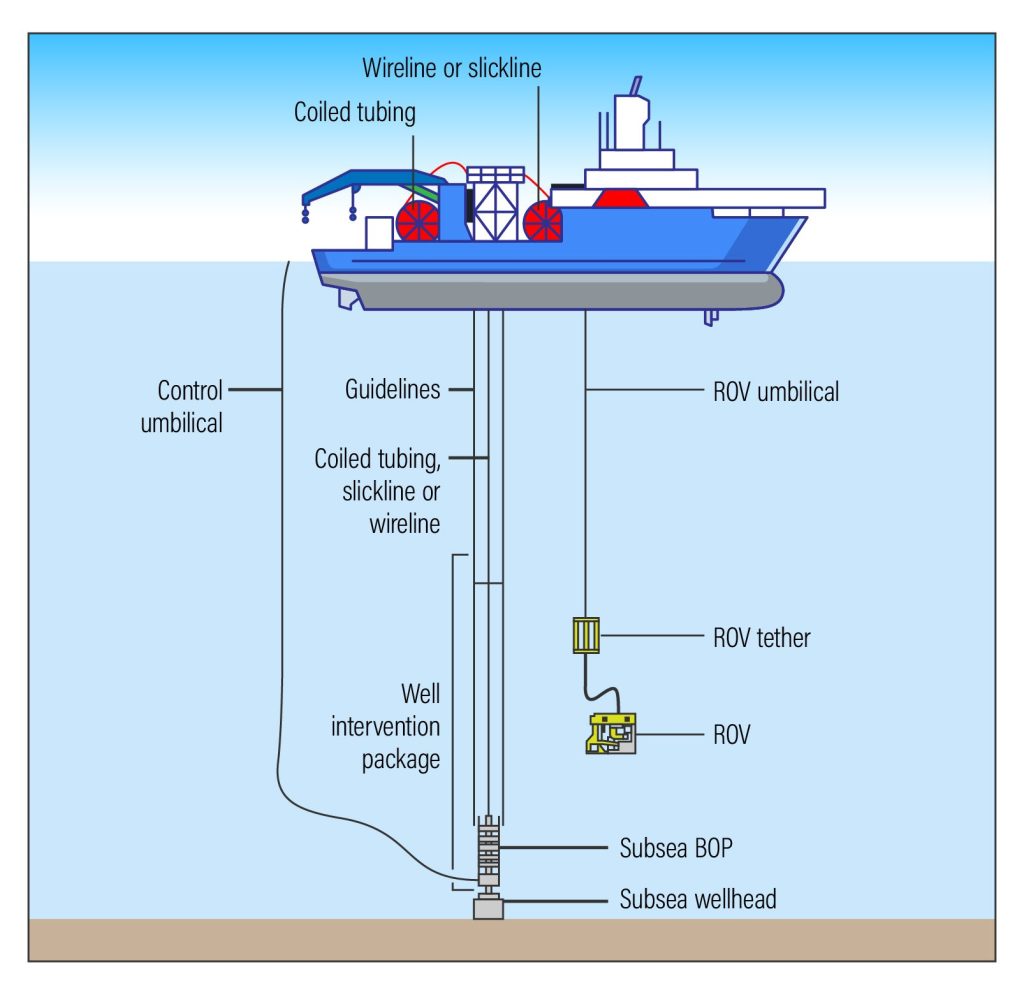
Each intervention program has specific objectives, operational steps, and associated risks. To enhance the safety, reliability, and assurance of the program, IPT Global offers integrity testing and assurance for a wide range of systems and components.
Subsea well interventions involve many challenges and require comprehensive planning to mitigate risk. IPT Global’s SureTec® platform provides advanced digital solutions that handle all facets of integrity test planning for intervention operations. Interventions require numerous integrity tests with varying criteria to be performed over a relatively short period. SureTec improves efficiency and project management, and it reduces risks by allowing operators to use consistent and stringent criteria for validating integrity-critical well barrier elements (WBEs).
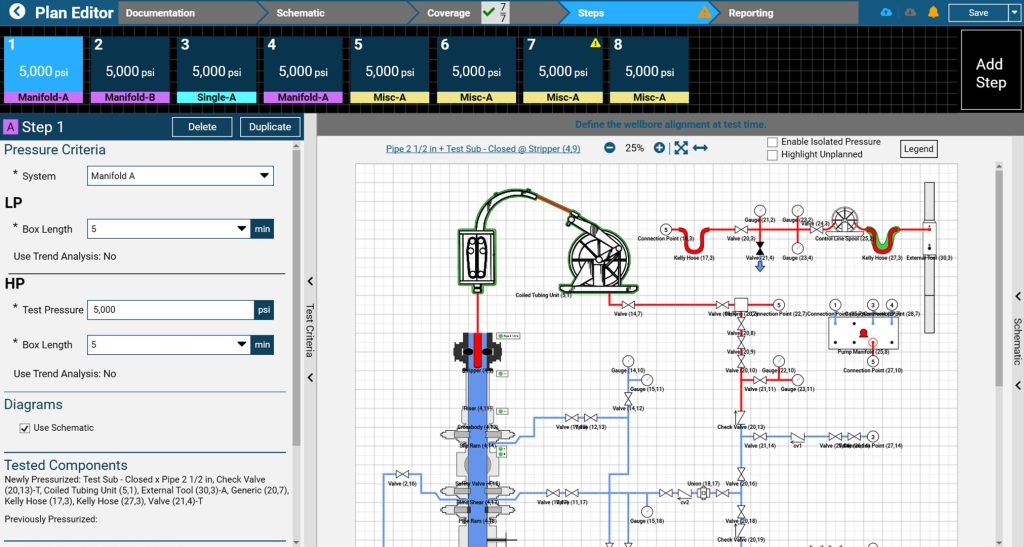
The SureTec PressureTesting solution allows engineers to build interactive schematics, wellbore diagrams, and test plan steps for stump, BOP, deck, coiled tubing, and positive and negative (inflow) test plans. PressureTesting’s TestPlanner module provides drag-and-drop components that accurately depict the operation of surface and subsea equipment. These schematics are integrated seamlessly into test plans that clearly identify test criteria and precisely simulate valve states and pressurized paths as shown below in Figure 2.
Additionally, IPT Global’s Real-Time Operation Center (RTOC), staffed by engineers and experienced Real-Time Operations Advisors assist operators and intervention service companies by building test plans in PressureTesting that accurately represent their testing program. An engineering team member can also create a test matrix that provides a snapshot of all tests, criteria, and guidelines that help the production and intervention crews with hardware setup. Our Real-Time Operations Advisors are responsible for reviewing intervention test plans to ensure all critical components are tested to the appropriate pressure.
Before deployment, our Field Advisors or trained intervention service company personnel use PressureTesting to test the well intervention equipment, the manifold, and other surface iron. This confirms that the intervention tools and well control components are working properly before the equipment leaves the dock. PressureTesting provides component integrity assurance with high digital resolution and stringent test criteria. Digital resolution and sensor accuracy are vital because high measurement sensitivity is required to detect small pressure changes in control lines and small-volume cavities and annular spaces.
Upon the vessel’s arrival at the well, IPT Global field personel or trained rig crew employ SureTec to ensure the integrity of the system that will connect to the well, as this system helps protect people, assets, and the environment during the latch-up phase.
During installation on the seafloor, the tree cap is removed and the well stimulation tool is connected (latched) to the subsea tree. After the well stimulation tool is latched up, IPT Global performs a connector test to verify the integrity of the system.
During intervention operations, integrity tests must be performed thoroughly and efficiently because any avoidable delay in critical path operations can increase risks and be costly for both the intervention service company and the operator. Efficient testing of critical components requires the ability to connect to various sources and run multiple tests simultaneously.
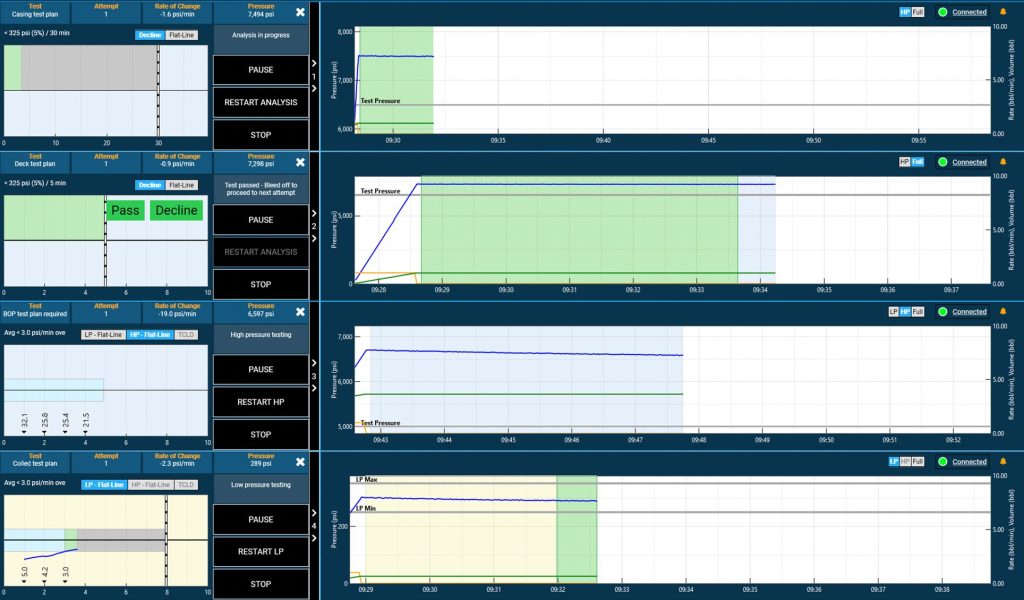
IPT Global’s PressureTesting solution receives data from multiple sources, including the IPT Global transducer, ROV transducer, ROV control system, and Workover Control System. Users can enter Multi-Test mode within PressureTesting to execute up to four test plans simultaneously, each with a different pressure source and test criteria (Figure 3). Users can start, stop, and restart analysis for each test independently.
After the intervention, the operator needs traceability of every integrity test, both for the handover to the production team and as an auditable compliance record for local regulators. When each test is completed or stopped, PressureTesting generates a standardized, detailed report of each test step, including pressure graphs, schematics, and complete documentation of tested components (Figure 4). Our Real-Time Operations Advisors review the test files to ensure all tests passed and all components were tested to proper pressures. They also verify the integrity of barriers before the intervention team departs.
The documented data and lessons learned from each intervention fosters an environment of continuous improvement and delivers the highest-level of integrity assurance to operators, production operations, drilling contractors, and intervention service companies.
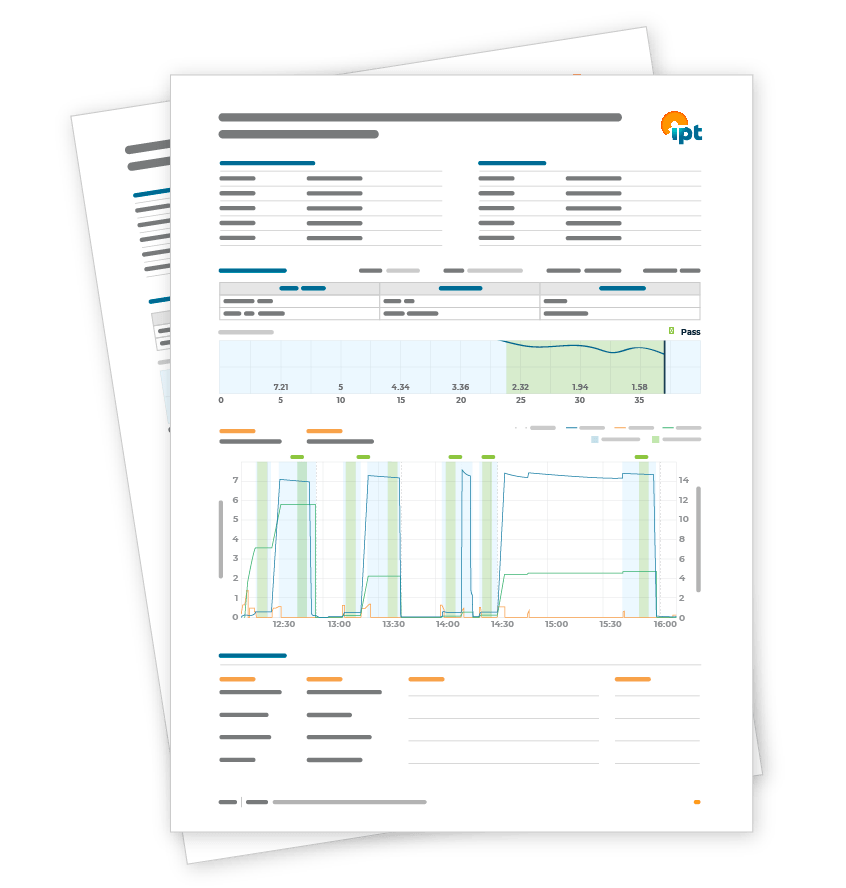
Operator intervention and production teams can use IPT Global’s SureTec platform for report archival and traceability over the entire lifecycle of the well. A secure, web-based software platform, SureTec provides real-time status of pressure tests, test data organization and retrieval by well and date, advanced data analysis, and remote viewing of active tests. Additionally, SureTec’s interactive search features simplify retrieval of historical test data for review and analysis.
SureTec PressureTesting’s planning, test execution, and reporting tools, backed by IPT Global engineers and Field Advisors, help operators and intervention service companies manage risk at every stage of the job and hand over wells with confidence in their integrity.
Contact us to discuss your next well intervention project.