Standardizing Subsea BOP Soak Testing: Reducing Risk Through Data-Driven Assurance
December 17, 2025
Subsea blowout preventer (BOP) soak testingis a long-standing part of pre-deployment programs. However, it remains one of the least consistently executed aspects of BOP control system evaluation. While teams perform the test routinely, they often overlook insight into stabilized pressure behavior.
Once a subsea BOP stack is deployed offshore, limited access significantly increases the cost of uncertainty. In 2023, IPT Global collaborated with Seadrill on an article published by Drilling Contractor examining the operational value of standardizing BOP soak testing and proposing a structured framework aligned with the American Petroleum Institute’s (API) Standard 53.
What Soak Testing Reveals About BOP Control Systems
A subsea BOP soak test is a pressure stabilization procedure. Rigs perform it during pre-deployment testing to evaluate the integrity of the BOP control system under sustained pressure conditions. Unlike dynamic testing, soak testing allows pressures to stabilize and the system to settle into equilibrium.
During this stabilized period is when that behavior often emerges. Gradual pressure decay or inconsistent regulator response become apparent once transient effects dissipate. These conditions are not always obvious but can directly influence stack readiness and long-term system reliability.
Identifying these issues before deployment allows for investigation with limited operational impact. When teams do not identify these behaviors, they often surface during operations. At that stage, troubleshooting options are fewer and consequences are more costly.
Why Subsea BOP Soak Testing Practices Still Vary
Despite the importance of well control assurance, subsea BOP soak testing still varies across rigs, fleets, and regions. Common differences include test duration, applied pressure, acceptance criteria, and documentation practices.
In practice, this variability rarely reflects a lack of focus on safety. In IPT Global’s experience supporting pre-deployment testing, variability most often reflects legacy practices, differing OEM guidance, and misaligned acceptance thresholds. Over time, these inconsistencies make results difficult to compare and increase reliance on interpretation rather than data-driven evidence.
Standardization as a Baseline for Consistent Decisions
Standardizing subsea BOP soak testing does not mean removing operational judgment or imposing rigid procedures across all systems. Instead, it establishes a shared baseline that supports clearer execution and more consistent interpretation of results.
In the article, we discussed the operational value of more structured subsea BOP soak testing, aligned with API Standard 53. The intent was to reduce unnecessary variability while preserving flexibility across different BOP configurations.
Soak testing offers a rare opportunity to observe control system behavior once transient pressure effects have stabilized. When teams miss or inconsistently execute that opportunity, they overlook meaningful indicators of system health. API Standard 53 already serves as the foundation for subsea BOP equipment system requirements. Expanding guidance to clearly address soak testing would strengthen consistency while preserving flexibility across different system designs and operating environments.
Data as the Difference Between Confirmation and Insight
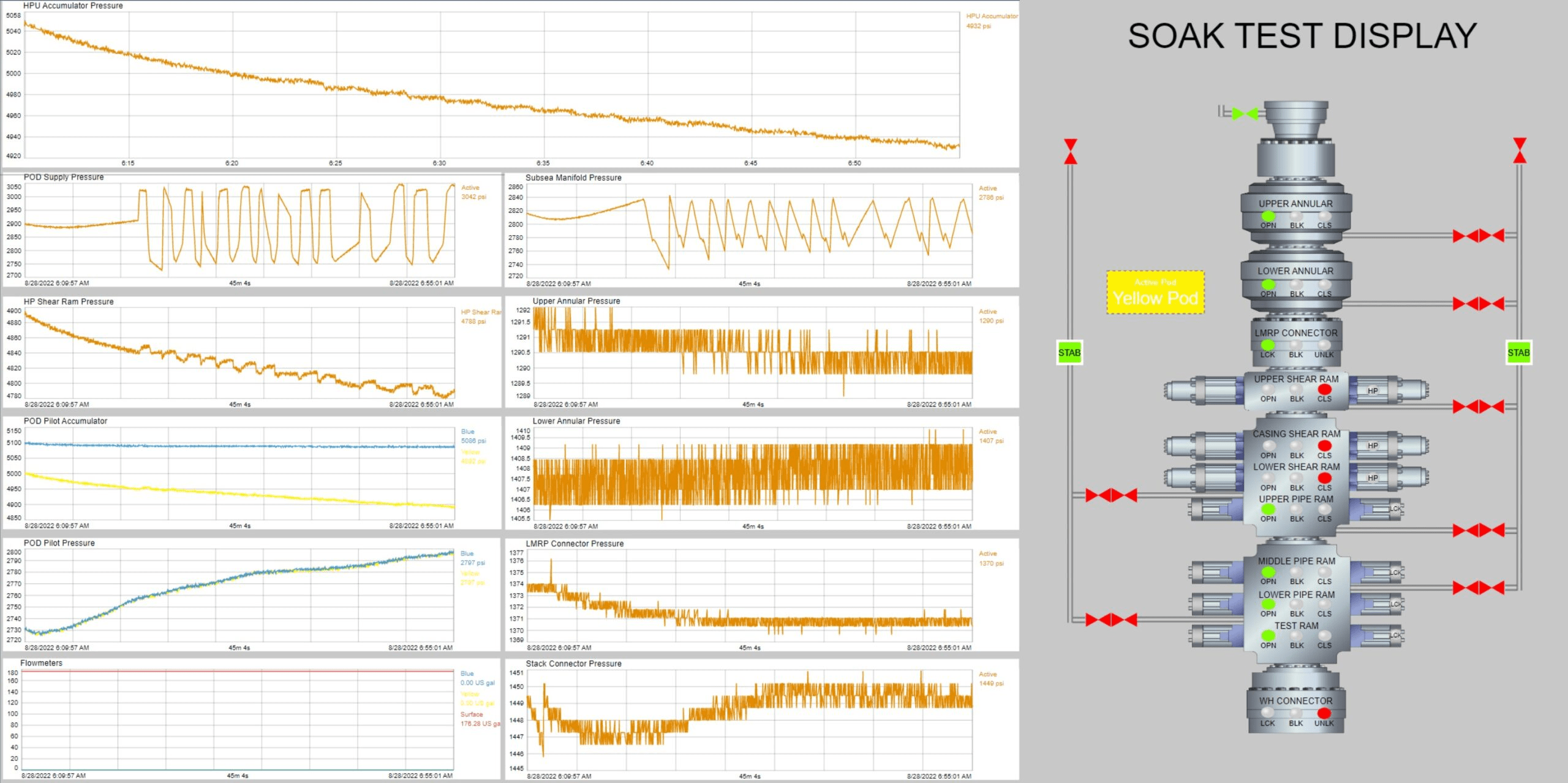
Figure 1. Subsea BOP soak test pressure trends showing control system pressure behavior across multiple channels following function actuation during pre-deployment testing.
Digital pressure data enables teams to review stabilization trends directly, revealing gradual decay, irregular stabilization, and repeatable anomalies across tests.
At IPT Global, digital diagnostics capture high-resolution pressure behavior during soak testing, enabling objective, contextual evaluation of subtle trends. Engineers in IPT Global’s Real-Time Operations Centre (RTOC) monitor test data in real time and support decision-making during pre-deployment activities.
Together, digital diagnostics, real-time oversight, and data analysis strengthen engineering judgment rather than replace it. Objective data provides a common reference point, improves alignment between operators, drilling contractors, and OEMs, and supports more confident decisions related to deployment readiness and pre-deployment assurance.
From Testing to Deployment Readiness
Subsea BOP soak testing delivers value through how teams evaluate results and act on them. Programs that consistently derive data-driven insight approach soak testing as part of a broader assurance process.
As subsea systems continue to increase in complexity, the ability to reduce uncertainty before deployment becomes increasingly important. Subsea BOP soak testing remains one of the few opportunities to observe control system behavior under stabilized pressure conditions.
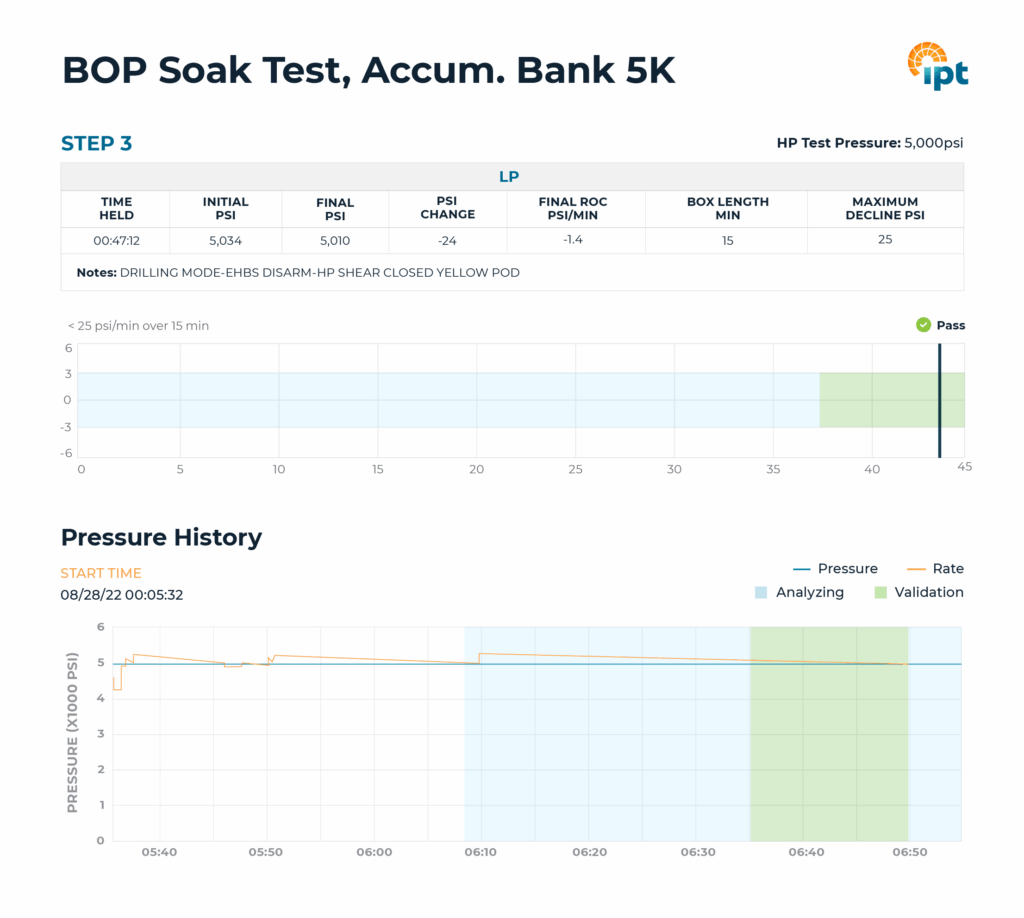
Figure 2. Subsea BOP soak test pressure evaluation showing pressure history, leak-off rate, and acceptance criteria applied over a sustained hold period during pre-deployment testing.
IPT Global applies a consistent, data-driven approach to subsea BOP soak testing during pre-deployment operations. By focusing on how control systems behave under stabilized pressure conditions, teams gain clearer insight into system performance before deployment decisions are made.
As subsea systems continue to grow in complexity, the way soak testing is executed and interpreted matters more than ever. Aligning practices with API Standard 53 provides a common framework for evaluating control system behavior, reducing unnecessary variability, and strengthening well control assurance across fleets. When teams pair that framework with objective pressure data and structured evaluation, soak testing becomes less about confirming pressure holds and more about understanding what the system is communicating before it goes offshore.
Looking ahead, IPT Global continues to advance digital software integrations that support consistent application of subsea BOP testing practices and ongoing improvement across the testing lifecycle.
How well does your soak testing explain control system behavior?
With deep subsea experience, IPT Global supports data-driven BOP testing using digital diagnostics, real-time oversight, and API Standard 53–aligned execution.
IPT is committed to providing best-in-class customer service and support. If you need help choosing a solution that’s right for you, or if you need a hand from a pro in our 24/7 Real-Time Operations Center, we’re ready to serve you.