
A single event involving the malfunction or failure of a blowout preventer (BOP) component can result in unplanned downtime on a drilling rig, costing millions of dollars. These events can add up throughout the equipment’s lifecycle to a significant amount of cost and lost time. Due to uncertainty about the lifecycle of BOP stack components, drilling contractors may arbitrarily replace components during scheduled maintenance to try to mitigate unplanned downtime.
Additionally, history has proven that a malfunctioning BOP component can result in a loss of well control, threatening the safety of people and the environment. As a result of the significant safety risks, the Bureau of Safety and Environmental Enforcement (BSEE) established regulations, described below, that require operators to develop and implement BOP real-time monitoring (RTM).
This article describes how IPT’s BOP Reliability System (BRS) helped a customer to identify a malfunctioning BOP control system component so it could be replaced during scheduled maintenance before it caused an interruption in drilling operations or a loss of well control.
IPT provides full monitoring services of well control equipment (WCE) data, downhole drilling data and tools. Specifically for BOPs, we offer a suite of services to ensure BOP reliability and efficiency. These services include WCE surveying and verification, monitoring by highly skilled experts, advanced data analytics for maintenance planning and compliance consulting.
This approach of monitoring and the application of advanced data analytics move the maintenance program from schedule-based approach toward a condition-based system, improving efficiency and reducing risk.
Historically failures have driven BOP maintenance response, the RTM move toward pro-active maintenance increases awareness of equipment condition (and therefore risk) using monitoring, alarms and alerts.
In early 2022, an IPT BOP analyst was monitoring a surface BOP control system on a jack-up rig in the Gulf of Mexico. The experienced and trained analyst was able to identify a possible failure ahead of an event, ensuring the rig avoided unplanned downtime.
In this example, the issue was with the BOP manifold regulator, which was supplied with 3000 psi from the accumulator bank. The manifold regulator reduces the supply pressure to 1500 psi for operation of the BOP pipe rams, blind shear rams (BSRs), and choke and kill valves. While monitoring the accumulator, the BOP analyst noticed that the manifold regulator showed an increased leak off rate after the BSRs were functioned closed (see graph below). In this case, the 1,500 psi manifold regulator pressure was deviating by more than 25 percent. Although it is not uncommon for a regulator’s pressure to vary, the BOP analyst knew that the level of deviation likely indicated an eminent component failure or a leak in the hydraulic circuit.
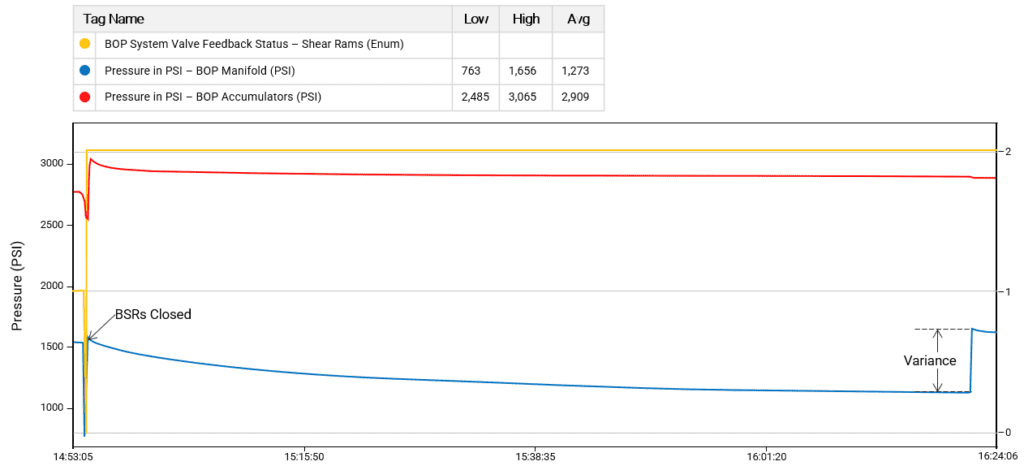
After our BOP analyst logged the event, the customer was notified of anomalous regulator behavior. When IPT provided comparative trends from other regulators, the drilling supervisor determined that the regulator should be replaced during scheduled maintenance to avoid disrupting future drilling operations.
The customer replaced the regulator before commencing drilling operations on a sister well. Subsequent BOP monitoring showed that the new regulator was operating normally. Notably, the customer also provided the new regulator’s certification for documentation in IPT’s database for future lifecycle tracking.
IPT’s RTM service and the customer’s proactiveness to replace the manifold regulator potentially avoided a very expensive BOP failure during drilling operations, as well as reduced risk to people and the environment. The outcome also shows how drilling contractors can reduce expenses by focusing on components that need to be replaced during scheduled maintenance rather than arbitrarily replacing components.
The BSEE Code of Federal Regulations (CFR) requires operators to provide real-time monitoring (RTM) for BOPs in the Gulf of Mexico. BSEE CFR Chapter II – Subchapter B – §250.724 (a) describes the RTM requirements as follows.
(a) When conducting well operations with a subsea BOP or with a surface BOP on a floating facility, or when operating in a high-pressure, high-temperature (HPHT) environment, you must gather and monitor real-time well data using an independent, automatic, and continuous monitoring system capable of recording, storing, and transmitting data regarding the following:
(1) The BOP control system;
(2) The well’s active fluid circulating system; and
(3) The well’s downhole conditions with the bottom hole assembly tools (if any tools are installed).
Our BRS is helping operators and drilling contractors to gain knowledge about the lifecycle of critical BOP components so they can increase BOP reliability and decrease costs through targeted preventative maintenance. For more information about our BOP Reliability System, contact us.
Effective BOP Stump Testing is a critical to eliminating unplanned stack pulls. A significant portion of the industry still uses very loose testing criteria during these tests that can result in components lacking integrity to be deployed.
This article describes how IPT’s patented advanced algorithms called, Trend Analysis were able to identify previously undetectable leaks. We present two examples that demonstrate its ability to identify subtle leaks that alternative digital pressure testing products would not be able to identify during critical BOP Stump tests.
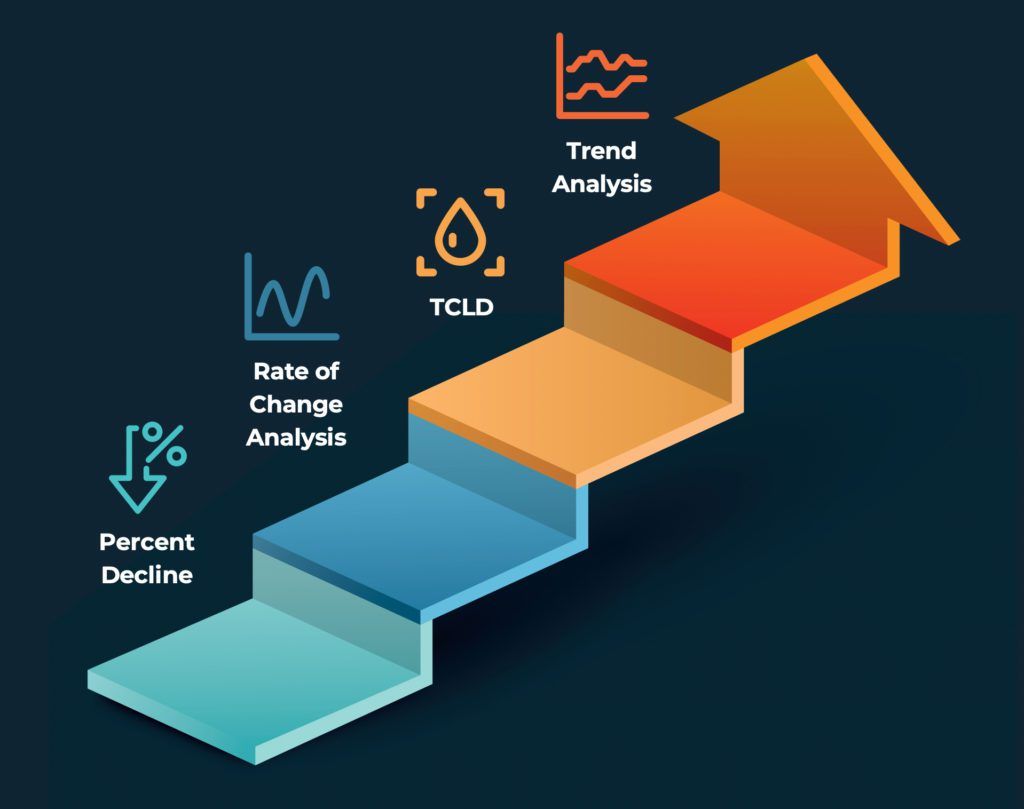
To further enhance the leak detection capability of SureTec, IPT developed the patented Trend Analysis algorithms to eliminate the scenario where a low rate of change in the pressures can have a degrading trend indicative of a small and subtle leak. IPT’s layered and advanced algorithms are customizable and configurable to meet client’s objectives (Figure 1).
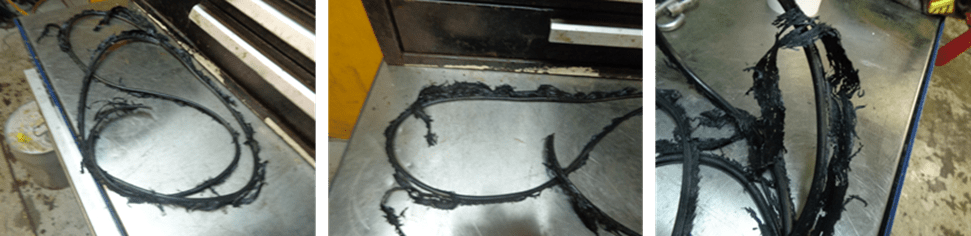
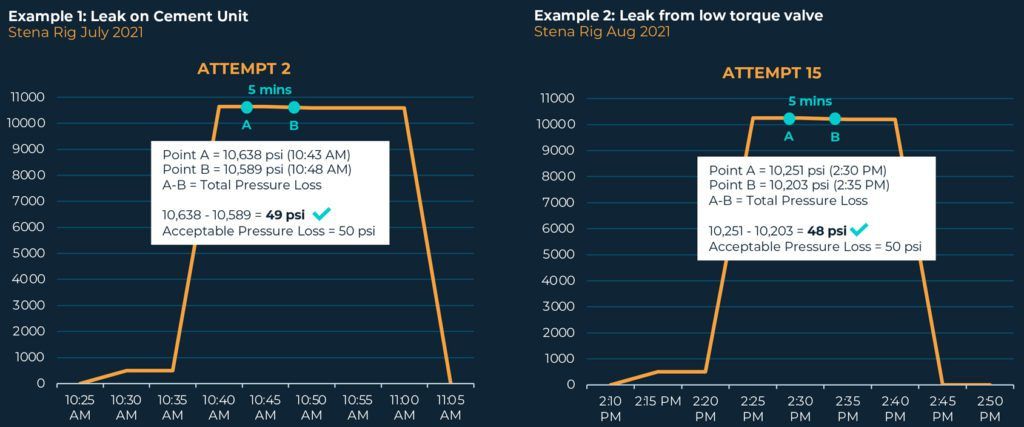
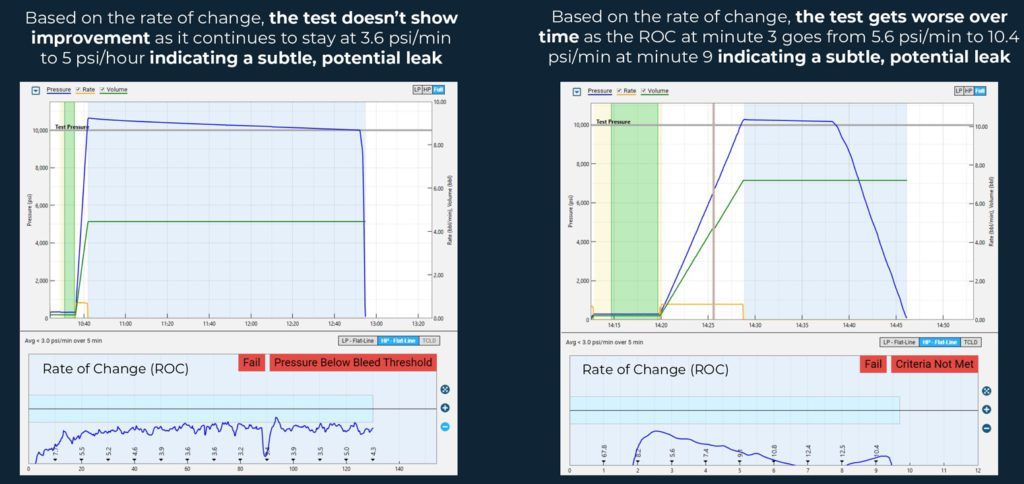
SureTec’s Trend Analysis can find small leaks during BOP Stump tests so they can be fixed on the rig to avoid an unplanned BOP stack pull from the seafloor potentially costing millions of dollars. In one example, IPT’s Field Advisors ran a Stump test using SureTec on a rig in the Gulf of Mexico. Trend Analysis failed the test because the ROC values were not improving. At first, the operator and contractor thought that Trend Analysis needlessly failed the test. After inspecting the BOP, the rig crew found the leak on the Lower Pipe Ram’s outer door face seal (Figure 6).
In another example, an IPT Field Advisor and a subsea engineer (SSE) were witnessing a Stump test using Trend Analysis. When testing the Upper Pipe Ram (UPR) against 7” drillpipe, it became apparent to the Field Advisor that Trend Analysis was not improving, indicating a leak. The SSE was not convinced there was a leak; however, IPT’s Field Advisor was adamant that the UPR had a leak or a valve had been left open. Upon inspection of the BOP, the subsea crew found a leak in the UPR. Parts were flown out the next morning to repair the UPR. After the seals were replaced, the UPR was retested against 7″ and 4.5″ drillpipe and it subsequently passed Trend Analysis.
The results of the tests were gathered by the operator and presented to both parties (Figure 3). According to the major operator, tests performed using SureTec were 20% faster than the competitor’s tests. In addition to faster test validation, IPT provided a high level of integrity assurance using SureTec’s patented algorithms.
Trend Analysis can prevent costly and potentially catastrophic events by detecting leaks during critical pressure tests on BOP components. IPT’s Advanced Leak Detection Algorithms are available in the Standard, Advanced, and Premier tiers of SureTec. Contact us today to learn how our advanced analysis can improve your safety and operational efficiency.
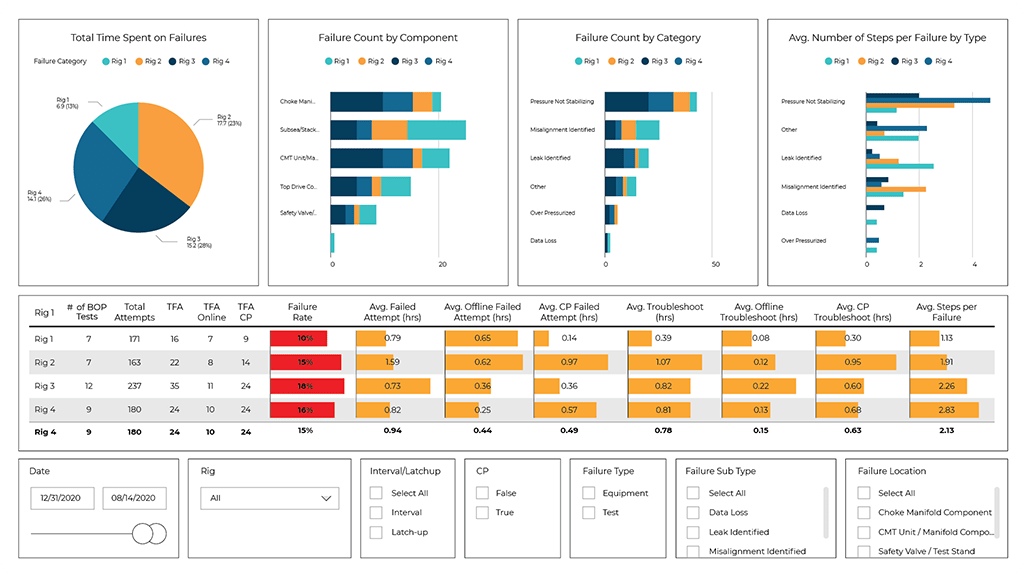
IPT’s SureView ties well integrity management, awareness, activities, and information together in a seamless and easy to navigate, web-based and mobile friendly solution. SureView gathers and manages data from all IPT solutions and displays it in specialized views to support testing and monitoring activities. From designing test plans, monitoring BOP performance, streamlining collaboration, to identifying performance opportunities, SureView enables team members around the world to securely view and manage operations in real time.
SureView communicates in real time with IPT’s SureTec application to monitor, archive, and inspect the results of wellbore element (WBE) tests. Personnel can review specific details of each test and identify opportunities to drive performance enhancements through KPIs that are created for tests and rig operations.
Remote View allows personnel to monitor real-time pressure activities from anywhere on any device. If a problem or failure occurs, real-time monitoring reduces communication lag and improves troubleshooting techniques through collaboration.
SureView also offers our BOP Reliability System (BRS) to provide Live Monitoring Dashboards, Event and Alarm Monitoring, and historical data retrieval to ensure BOP Reliability during all phases of BOP operations. BRS, along with the rest of IPT’s ecosystem, provides compliance for 21-day testing in the Gulf of Mexico, and supports our Condition-Based Monitoring initiative.
SureView’s Approval Workflow manages plan versions and allows personnel to review and approve test plans prior to beginning a test. It can also be used to review and approve test results upon successful completion. Personnel have the option to approve or request changes to a test plan or completed report. If any changes are needed, an email alerts users for updating. An audit log of all approved plans, tests, and approval activity is maintained for accurate record keeping and compliance.
Finally, SureView allows for integration with your data lakes and verification management systems through secure, industry-standard interfaces, automating manual processes and increasing your data quality.
Keep all your documentation in one secure location with SureView. Contact us today to learn how IPT can help maximize record keeping efficiency in operations.
Managed Pressure Drilling is a process that uses a closed-loop circulation system for more accurate bottom hole pressure control, resulting in higher drilling efficiency and the prevention of drilling hazards. More operators are turning to IPT to validate the integrity of critical equipment and ensure that the benefits of Managed Pressure Drilling are realized.
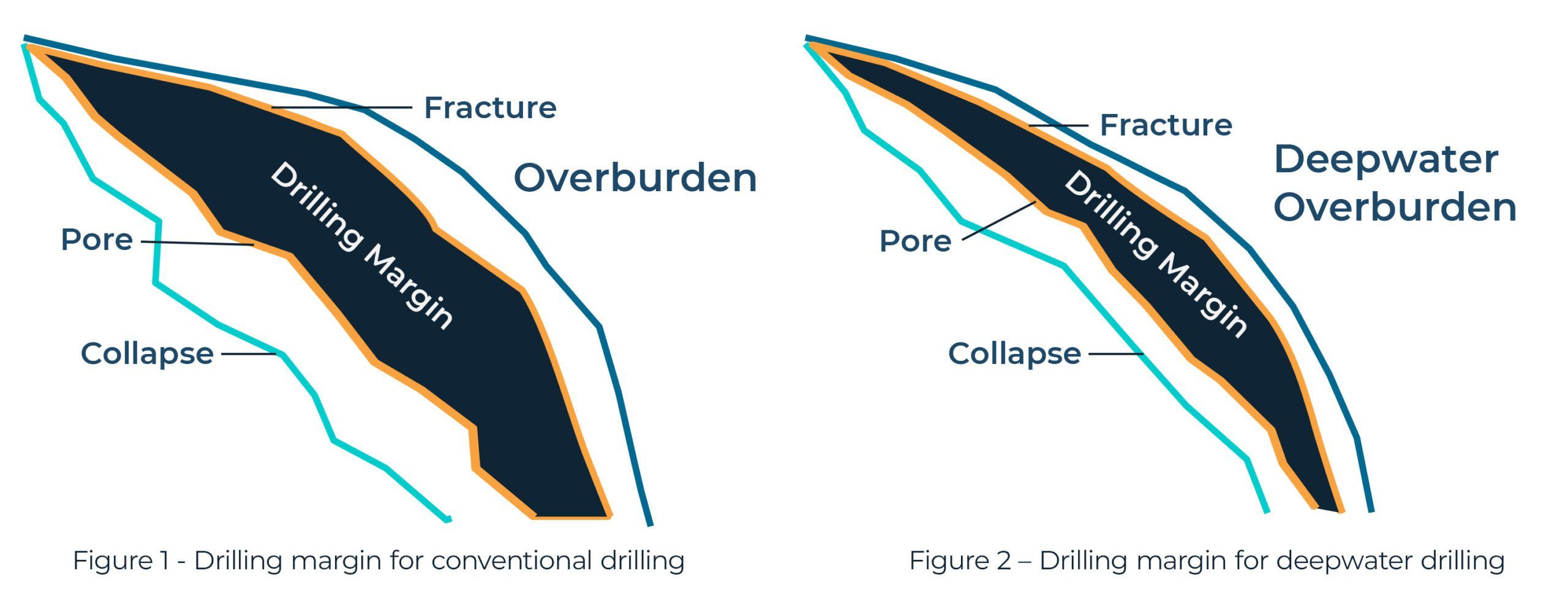
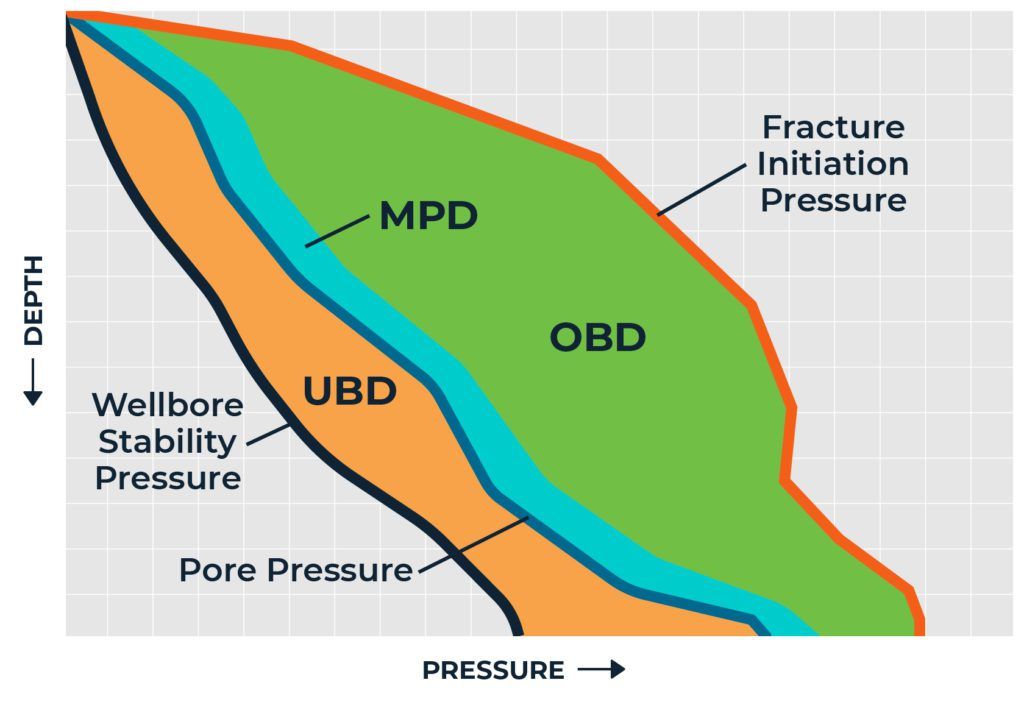
In conventional (onshore) drilling, the circulating system operates in a flow path that is open to the atmosphere. To control the well, drilling engineers adjust the mud density and may also use the equivalent circulating density (ECD) to maintain the bottom hole pressure (BHP) within a drilling margin determined by the formation’s pore pressure and fracture pressure (Figure 1). After the mud exits the top of the wellbore, it goes through a flowline to mud-gas separation and solids control equipment before being recirculated in the well. When the pumps are circulating mud in the hole, the BHP is a function of the hydrostatic pressure plus the annular friction pressure of the mud. When the pumps are turned off to make connections, the BHP is controlled solely by the hydrostatic pressure of the mud in the hole.
Drilling using an open circulating system presents challenges to control BHP in deep wells. First, small changes in mud density have a large impact on the hydrostatic pressure. Also, deep wells have high annular friction losses, resulting in large changes in BHP when the pumps are turned off. If the BHP becomes greater than the hydrostatic pressure of the mud, an influx of formation fluids can create a kick. The driller tries to control a kick by adjusting the mud density and shutting in the well to monitor the pressure. Then the driller circulates the kick out of the hole at a slow pump rate. The repeated cycles to kill the well and circulate out the kick significantly increases non-productive time (NPT) and safety risks.
Drilling margins are narrower in deepwater where the overburden pressure of seawater is less than that of rock and the formation strength is lower (Figure 2). As a result, it is standard practice in deepwater to set numerous casing strings at shallow depths to avoid extensive lost circulation.
Managed Pressure Drilling (MPD) is a closed circulation system that allows drillers to monitor the wellbore’s annular hydraulic pressure profile more accurately and react in real time to precisely control BHP. The annular hydraulic pressure is maintained slightly above the pore pressure to prevent the influx of formation fluids and also well below the fracture pressure to avoid loss of circulation. Preventing these hazards improves safety and greatly reduces NPT in complex wells by increasing operational drilling efficiencies. MPD makes access to older depleted reservoirs possible and allows operators to drill previously “undrillable” wells. MPD can also reduce the number of casing strings required, thereby reducing trips and saving time, in addition to allowing a well to be completed in a larger hole size.
IPT provides the highest level of Managed Pressure Drilling component integrity assurance with our experienced Industry Experts and our applications, SureTec and SureView.
IPT works closely with operators, rig contractors, and Managed Pressure Drilling contractors to develop strategies that optimize test planning and execution. Typically, Managed Pressure Drilling component validation can be accomplished with relatively few additional tests during commissioning and BOP testing. IPT ensures that the required number, frequency, and types of tests are run to validate component integrity, avoid equipment-related NPT, and comply with local regulatory bodies.
SureTec allows existing BOP schematics to be used or modified for MPD test plans. SureTec’s Schematic Editor validates all connections and component names, making it easier to detect and correct errors compared to using complex rig piping and instrumentation diagrams (P&IDs). SureTec’s Plan Editor clearly identifies the test criteria, valve alignment, pressure path, and MPD components that will be validated in each test step.
SureTec uses proprietary algorithms and stringent criteria capable of validating MPD component integrity at low pressure to significantly reduce pressurized time and increase integrity assurance. SureTec’s advanced validation algorithms, such as Thermally Compensated Leak Detection (TCLD) are available in the Advanced and Premier tiers of SureTec.
SureTec generates standardized, detailed planning and test reports with complete documentation of test steps including pressure graphs, analysis charts, schematics, and tested components. IPT’s SureView Portal lets organizations archive and retrieve tests and analyze test results to share best practices and drive performance across teams.
Contact us today to find out how our team and applications can help you design, execute, and optimize your MPD program.
IPT offers operations support with our Industry Experts. Our industry-leading experts partner with clients both on-site and remotely to improve operational efficiency and well integrity. Our team consists of remote assurance and support, Field Advisors, Performance Advisors, and BOP Compliance Surveyors.
Remote assurance and support are available 24/7 for test plan generation and optimization, performance analysis, and remote workflow consulting. Our real-time operations center is easily accessible by email or phone to assist with troubleshooting and answer any questions that might arise during operations. We also provide an extra set of eyes to monitor all testing activities to identify and reduce the chance of misalignments.
Our Field Advisors work in collaboration with the client for on-site test coordination. Our clients enjoy these services, especially to ensure success in high-volume test applications such as completions projects. Advisors provide optimization and efficiency consultation to continuously improve test performance and ensure our testing and monitoring software platform, SureTec, is being utilized to its full potential. Having an advisor onboard delivers an additional layer of assurance to make sure all tests are conducted properly and removes the workload from rig personnel to finalize reports. IPT field personnel also act as champions in health, safety, and environmental leadership to produce the perfect balance of safety and efficiency in well integrity and assurance. They enthusiastically participate in all rig-based safety programs along with an internally shared safety network to emphasize lessons learned and help reduce the chance of incidents.
Performance Advisors provide expert advice to streamline application across operations. Our continuous improvements and testing insights drive process standardization, which leads to increased efficiency and sustainability. We utilize big data to customize performance reports and convert results into actionable outcomes. KPI metrics are generated and tailored for the customer along with after-action reviews to present growth opportunities through applied learning. Our performance advisors also work closely with stakeholders to achieve workflow regimens and continuous improvement by performing after action reviews and streamlining test plans. This collaborative effort drives optimized assurance, performance, and compliance.
BOP Compliance Surveyors provide third-party equipment inspection and auditing by utilizing objective documentation, which allows IPT to provide consistent results to customers. Recommended survey and inspection practices are derived from OEMs, operations and maintenance manuals, regulatory guidance, and API standards. In accordance with all regulatory compliance, our detailed inspection checks the BOP stack, and associated well control equipment and documentation. Surveyors ensure integrity critical equipment compliance and track meaningful equipment data throughout its lifecycle for condition-based maintenance.
IPT’s Industry Experts support your well integrity management program throughout the well’s lifecycle. No matter what level of support you require, IPT has you covered. To learn more about how we can help make your job easier, contact us today!
IPT Global is the industry leader for well integrity testing and monitoring through our preeminent software applications, SureTec and SureView. Before our software applications are released, they go through rigorous automated and manual testing processes to ensure accuracy. IPT understands that efficient and precise pressure testing and monitoring of integrity critical equipment and well barrier elements is vital, so we put our software through the ultimate tests.
Using Ranorex software and virtual machines, our software team has developed a suite of over two hundred automated test cases which are run every night and guarantee that nothing in the software is broken. This tests everything from running a basic pressure record, to the most complicated monitoring and assurance workflow scenarios.
The Quality Assurance Engineering team collaborates with the developers and product owners to write test cases and verify all development changes prior to being built into our software. Once changes have been developed, product owners verify the changes are accurate and complete before revisions are deployed into our applications.
IPT engineers have created a custom library of over four hundred manual test cases which are run through a number of iterations prior to any release deployment of the software. These iterations ensure that the software still performs as intended after changes to the code base.
IPT maintains a comprehensive list of the latest browsers and devices for testing compatibility. We ensure that SureView is responsive across a wide range of mobile devices such as iPhones and Androids. The team uses BrowserStack to test that Apple’s iOS and Safari browser are supported. The verification of text and email notifications from Twilio are also included in the testing.
IPT Global uses sophisticated application programming interface (API) testing tools such as Postman and JMeter to simulate several users working on our SureView product at the same time to guarantee SureView will be available for all users and perform to specifications when there is a significant number of active users.
IPT receives feedback from customers and reviews and prioritizes this feedback every week for potential inclusion in future releases. Any severe bugs are addressed with a high priority by the development team and a root cause analysis is performed if needed.
In addition, IPT conducts quarterly benchmark reviews to assure that our code and product quality standards are being met. IPT has held the ISO 9001 certification for over 7 years and counting.
When you trust IPT with your testing with SureTec or BOP monitoring needs, you are getting a software that has been thoroughly verified by IPT’s Quality Assurance Engineering team and does not contain critical defects. Why risk your Integrity Critical Equipment to another provider or “become the software tester” when you go with a competitor? You can have the peace of mind that your software has been thoroughly tested before it is ever used for your operations with IPT. Do you have any questions about our software testing and assurance? Contact us to learn more.
IPT Global believes that innovative technology is born out of collaboration with subject matter experts and a focus on delivering world-class solutions. Our in-house software development team proudly developes our SureTec® Equipment Health Monitoring technology for BOP and MPD systems. This was a natural segue from our BOP digital pressure testing solution, SureTec PressureTesting.
IPT Global provides holistic BOP integrity management solutions through leading technology that allows for continuous monitoring and robust pressure testing. We support clients with superior first-rate service including 24/7 real-time monitoring, remote and onsite compatibility verification, failure tracking and root cause analysis, along with permitting and planning support.
Our in-house experts and developers craft this technology with a level of quality and excellence beyond our competitors, for future innovation and development ease. Unlike our competition, we have built a scalable and sustainable tool to enhance reliability. IPT Global’s Equipment Health Monitoring solution allows for live data and test streaming through its Monitoring module, trend analysis and through the HealthAnalytics module, and failure tracking and , event, and alarm monitoring with the FaultTree module, and historical data retrieval. These tools aim to ensure BOP reliability during different phases of BOP operations and provide preventive information to operators and engineers.
Equipment Health Monitoring is architected with industry standards and best practices:
Equipment Health Monitoring is engineered to scale:
IPT Global’s Equipment Health Monitoring solution also includes 24/7 monitoring from our Real-Time Operations Center (RTOC), manned by BOP expert who closely monitor your operations data for alerts and other anomalies.
The solution is accessible through a mobile-responsive, web-based visualization tool. Through the Cloud, users can access their information quickly and reliably, with a user interface that is highly customizable and built to meet client specifications.
IPT Global’s SureTec Equipment Health Monitoring solution provides continuous visibility into the condition and performance of critical well control equipment across the full well lifecycle. Contact us today to learn how Equipment Health Monitoring can support your well assurance goals.
Well barriers consist of one or more well barrier elements (WBEs), and the failure of a single WBE can cause the well barrier to fail. If well integrity is compromised by the failure of a well barrier, it can result in loss of production and harm people, the environment, assets, and the operator’s reputation. The lack of validation criteria and the subjective interpretation of test results for critical WBEs are root causes of well integrity issues in the industry. IPT’s software, SureTec, uses proprietary algorithms and stringent criteria to significantly reduce pressurized time for testing WBEs and remove validation subjectivity, saving rig time and reducing risks.
If your organization uses circular chart recorders (CCRs) to verify the integrity of WBEs, a BSEE report cited the following problems associated with using CCRs.
There are several important advantages in going from using CCRs to SureTec for verifying well barrier integrity.
Digital validation with SureTec is more accurate than CCRs and uses transparent and objective criteria for validating pressure tests. SureTec uses proprietary algorithms to provide enhanced analysis for the most rigorous and effective testing in the industry. Our algorithms use transparent criteria that has been validated against a database of over 10,000 successful tests. The subjective interpretation of CCR tests is prone to human error.
SureTec provides a 30% reduction in test time versus CCRs by eliminating subjectivity and unnecessary pressurized time. Due to the accuracy of the testing with SureTec, the need to retest is eliminated. This improves safety by removing unnecessary pressurized time, which puts people, the environment, assets and reputation at risk.
SureTec provides comprehensive test reports to assure reliable handover with complete documentation. SureTec consists of tools that allow users to create custom schematics, visualize pressure paths and compare tests. Tests can be overlayed to show rate of change differences, pressure paths, and barriers throughout each step of a well’s lifecycle.
SureTec reduces costs by decreasing test time and increasing accuracy. This lowers risks, workforce hours, transportation, expenses from incidents, and reputation devaluation.
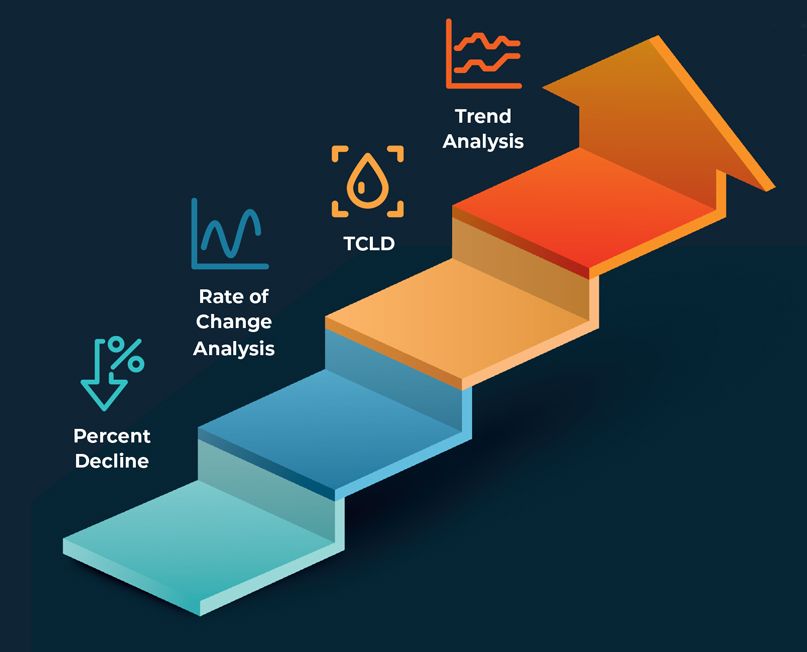
Our competitors primarily offer a testing method known as “Percent Decline” analysis, which is the minimum requirement by industry regulators. Percent Decline is a simple math calculation that divides the system pressure drop by a fixed time interval (e.g., 30 minutes). The validation criteria are based on a percentage of required test pressure. This means that the validation criteria fluctuate with the test pressure, making this analysis method incapable of consistently detecting a leak or differentiating between a leak and thermal influences on the test fluid.
In general, digital testing solutions are more accurate, safe, and efficient than CCRs; however, the level of integrity assurance they provide depends on their analysis method and validation criteria. Percent Decline offers the lowest level of integrity assurance, so it should not be used alone to validate WBE integrity. SureTec surpasses Percent Decline with “multi-dimensional verification” of WBE integrity using advanced validation algorithms—Rate of Change analysis, Thermally Compensated Leak Detection, and Trend Analysis.
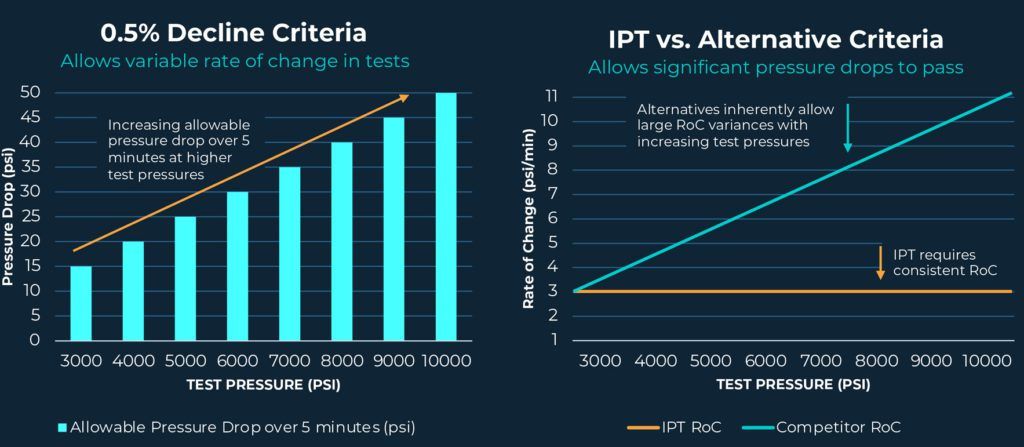
IPT’s pressure Rate of Change (ROC) analysis improves assurance by quantifying pressure stabilization over time. In other words, it determines the instantaneous rate of pressure change and will only pass a test if the pressure ROC is less than strict validation criteria, such as 3 psi/min over 5 minutes. In contrast, CCRs validate pressure tests at approximately 8-12 psi/min over 5 min.
Thermally Compensated Leak Detection (TCLD) uses ROC analysis to create a benchmark profile for each system tested. Then for subsequent test steps with a similar component grouping, test pressure, and type and volume of test fluid pumped, TCLD compares the pressure ROC to the benchmark profile. This allows TCLD to detect the smallest of deviations from the benchmark, similar to facial recognition, and thereby reduce test time with accurate leak detection and component verification.
Trend Analysis increases integrity assurance to the highest level by ensuring that the pressure ROC is improving over the validation interval. It can detect subtle leaks based on a non-improving or constant rate of change in pressure. This level of assurance is particularly applicable for stump testing where it is critically important to detect small leaks before splashing the BOP stack.
ROC, TCLD and Trend Analysis are available in the Advanced and Premier tiers of SureTec. For more information, request our white paper “Advanced Well Integrity Management with SureTec®”.
IPT’s products and services lead the way in innovating well integrity management in the oil and gas industry. With more than a decade of experience and collaboration with the oil and gas industry, we have developed unmatched technology to offer asset integrity management software and service for pressure testing and BOP reliability needs.
Our ecosystem of solutions for assuring well integrity throughout the well’s lifecycle include our applications, SureTec and SureView, and our Industry Experts. SureTec, our desktop application provides schematic building, test planning, execution, and reporting. SureView, our web-based, mobile-friendly application stores historical reports and data for easy access. Our Industry Experts work with your team 24/7 to assure operational safety and efficiency.
IPT’s state-of-the-art software application, SureTec, provides well integrity confidence through a rigorous approach to analyzing pressure and function tests. SureTec also provides a flexible workflow that allows the user to design, plan, test, and generate reports all in one integrated platform for total assurance throughout the well’s lifecycle. We offer efficiency improvements through our advanced algorithms and simultaneous testing from pre-deployment to decommissioning of wells, and our trusted test visualizations improve communication throughout operations and handover.
SureTec utilizes proprietary analytics to improve test times and certainty. Thermally Compensated Leak Detection (TCLD) and Trend Analysis are part of our layered criteria for true assurance. The criteria are customizable based on user needs and can be adapted to handle all aspects of pressure testing including BOP, Completions, Inflow, P&A, and simultaneous BOP/Casing Tests. SureTec is also capable of testing up to four different tests simultaneously for maximum efficiency during critical operations.
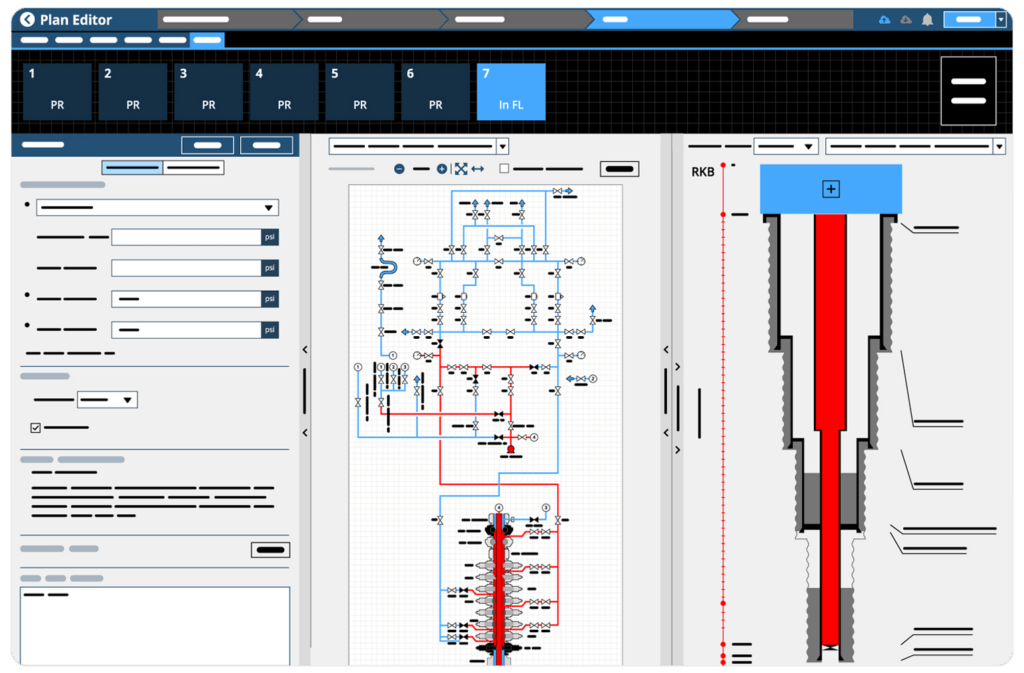
IPT’s web-based, mobile-friendly application, SureView, provides connected, transparent data that identifies opportunities and streamlines collaboration. Assurance workflow is available to enable collaboration, version control and provide historical records of activities involved in planning, conducting, and approving tests. Also included is big data analytics with a KPI dashboard for performance improvement, live test streaming for awareness and monitoring, data integration services for automating information systems, and data archival access.
SureView’s collaborative environment allows teams to review programs, performance, and results while also connecting geographically scattered team members and SMEs. This allows all team members to see in real-time the operations occurring on a rig.
IPT also offers our BOP Reliability System (BRS) which provides blow-out preventor real-time monitoring, live test streaming, event and alarm monitoring, and historical data retrieval to ensure BOP reliability at all phases of BOP operations.
Our customer-focused advisors and industry-leading experts work with your team as trusted partners to provide relevant solutions and sustain the perfect balance of safety and efficiency in well integrity and assurance. IPT experts include Field Advisors, Remote Support, Performance Advisors, and BOP Compliance Surveyors that will be there from the planning phase through execution and after-action reviews to support your well integrity management program.
Our Industry Experts provide collaborative on-site test coordination to improve test planning and execution. Our operations personnel are experts in SureTec and will be there to provide consultation to continuously improve test performance.
Remote support provides 24/7 assurance to monitor for any testing anomalies. They are also available to help with troubleshooting for operations without Field Advisors.

IPT offers a fully integrated suite for well integrity management throughout the lifecycle of a well consisting of our advanced software, SureTec and SureView, and our Industry Experts. These offerings have been developed and improved on over the past twelve years to enhance assurance, efficiency, and sustainability for well integrity. To learn more about our well integrity solutions, contact us today!
Condition-Based Maintenance (CBM) is preventive maintenance performed at a frequency based on the assessment of the actual physical condition of components or assemblies. CBM provides an alternative to schedule-based maintenance frequencies, which are commonly used for BOPs. CBM can reduce the risk of equipment failure by triggering maintenance earlier than would be performed by a standard schedule, if necessary. CBM can further reduce risk and lower overall maintenance costs by eliminating unnecessary preventive maintenance. The need for CBM is discovered using IPT’s proprietary algorithm that detects, extracts, and analyzes real-time operational and performance data from the rig. This data is displayed on IPT’s SureView dashboard. IPT’s team uses the data to implement a condition-based maintenance program.
Subsea blowout preventers (BOPs) attach to the wellhead and serve as an important barrier element that prevents formation fluids and gases from flowing uncontrolled to the rig floor and causing a kick or blowout. BOPs consist of redundant control pods and electronically and hydraulically powered components such as hydraulic connectors, upper and lower annular preventers, casing and blind shear rams, and pipe rams. BOP accumulators provide sufficient pressure to operate these components when hydraulic and electric connectivity has been interrupted. BOP components must be periodically tested to ensure proper operation in an emergency.
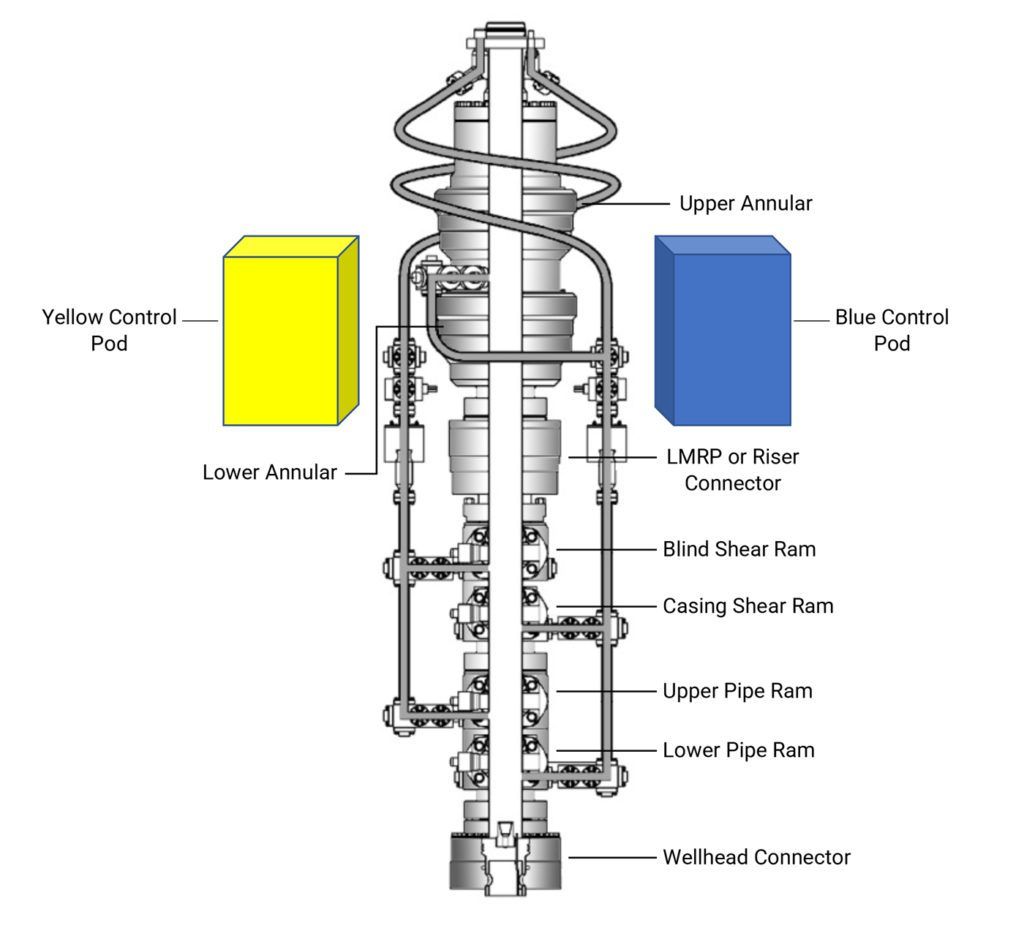
Operators must periodically pressure test and function test BOP stack components, which decreases efficiency of drilling operations. BOP pressure tests are performed at regular intervals typically ranging from 14 to 30 days as set by local regulatory bodies. A single BOP pressure test consists of several steps that are performed at low or high pressure to detect a leak in the piping, manifold, or BOP components. Each step involves isolating a system, pressurizing it, shutting it in, and analyzing the pressure change. BOP stack components may be pressure tested a dozen times or more during drilling operations for a single well. The total time for each complete BOP pressure test may take from 12 to 24 hours and increase the length of operations significantly.
BOPs components must also be function tested weekly by actuating (opening and closing) the annular preventers and rams to ensure they will operate properly in an emergency. Function tests are designed to monitor the time (seconds) and volume of fluid (gallons) it takes to actuate individual components, which are important parameters for CBM. The test procedure may vary by rig, but typically, a member of the subsea crew opens or closes individual BOP components from the control panel and manually records the actuation duration and fluid volume from analog or digital gauges.
The actuation duration and the volume of fluid are important indicators of the health of critical BOP components. If test measurements are analyzed over time along with equipment maintenance and failure tracking, the data can be used to spots trends that identify needed maintenance or indicate the imminent failure of a critical component.
The challenge is to analyze BOP test, maintenance, and failure data analyses so that operators can gain insight into when and why failures are happening. This will allow contractors to perform maintenance on BOP components when necessary, rather than on an arbitrary schedule as is commonly used.
IPT developed an automated physics-based algorithm that detects and extracts function test data from the real-time data on the rig in real time. IPT’s team of well control and BOP SMEs assisted with the algorithms development to ensure that the function test data are detected correctly, objectively, and consistently. The algorithms can detect parameters such as an increase in test duration, unusual hydraulic fluid flow volumes, or specific regulator pressure signatures. This information is extracted for all function tests performed and displayed on IPT’s analytics web app, SureView.
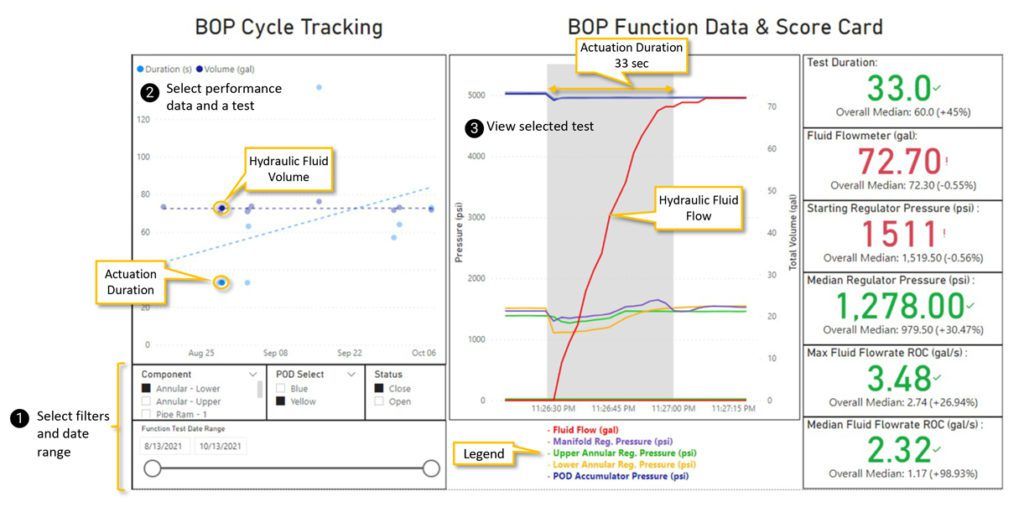
The figure below is a screenshot of IPT’s SureView dashboard for reviewing performance and function test data extracted by the algorithm. The steps to use the SureView dashboard are as follows:
The Function Test Data chart below shows that after the signal to close was initiated, the fluid flow steeply increased, and the valve started to actuate. The upper and lower annular regulator pressure dropped quickly and then returned gradually to their starting pressure. The Score Card shows that the function test compared well to other tests results because four values (in green) were better than their respective median values and two values (in red) were slightly above their median values.
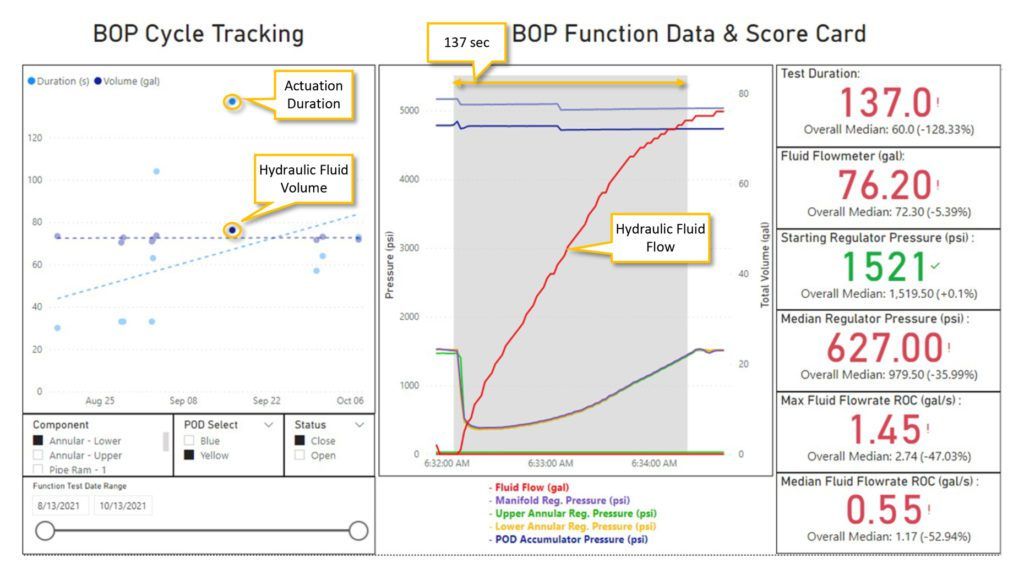
The next screenshot is an example of a function test that did not perform as well compared to other tests. Using the same filters as the previous example, the user selected the largest outlier in the BOP Cycle Tracking chart. The Score Card quickly shows that five parameters were worse than their median values. The Test Duration is more than twice the median value. The Median Regulator Pressure and Max Fluid Flowrate ROC are significantly less than their median values.
The BOP Function Data chart shows the details behind the values in the Score Card. The Regulator Pressure quickly declined and stayed low until it finally recovered to its initial levels over two minutes later. The Fluid Flow shows a slower rate compared to previous tests, less than half of our previous test. Both of these factors contributed to the longer test duration and can be used in failure analysis and investigation.
This last function test was also recorded by the rig crew using the traditional process of monitoring readback pressures and manual time keeping. The time to close was recorded as 58s, which accounted for less than half of the real overall closing time. Using algorithmic detection removes any inconsistencies in reporting from processes that were previously done manually. This also improves transparency into rig operations with onshore teams and ensures adherence to regulatory and policies for safer operations.
The previous example demonstrates how IPT’s automated function test algorithm, SureView web app and support team can help your BOP reliability team identify problematic components or procedures to improve safety, efficiency, and compliance with regulatory and operator requirements. Using our algorithms to identify the underlying factors of BOP component degradation, we will partner with you to build a Condition-Based Maintenance program that can:
IPT is directly involved in crafting industry best practices and procedures for CBM with the API SC16 technical committee in partnership with super-majors and global operators. For over a decade, IPT’s SureView platform has given customers the ability to store BOP test data, equipment reports, and failure reports that can now be used for CBM. Customers can also use SureView to store any information from sensors or other asset data sources connected to programmable logic controllers (PLCs). From this data, we use our proprietary algorithm to detect and extract function test data to gain insight into the current health trends of BOP components. Our automated algorithm and team will identify problematic components or processes to help keep your operations safe and accountable to regulatory or operator requirements.