
In a controlled offshore field trial, a major operator evaluated two competing approaches to BOP pressure testing and well barrier verification on sister drillships in the Gulf of America. The objective: determine which solution delivered faster, more accurate validation of well control equipment performance.
Traditional predictive analysis methods, commonly used in pressure decline analysis, rely on assumed coefficients rather than actual test data. This introduces uncertainty in well barrier testing, especially in complex subsea environments.
Operators required a solution that could:
IPT Global deployed its SureTec® PressureTesting Solution, a digital pressure testing software with a patented advanced analysis engine that leverages thermally compensated leak detection (TCLD).
Unlike conventional methods, TCLD:
This approach aligns with modern barrier management software strategies and supports BOP real-time monitoring across offshore operations.
Field trial results confirmed a clear performance advantage:
The operator concluded that SureTec PressureTesting provided superior efficiency and assurance in subsea BOP testing and overall well control equipment performance. This resulted in the operator changing their digital pressure testing provider from a competing company to IPT Global across all offshore operations.
As the oil and gas industry moves toward digital transformation, relying on assumption-based models is no longer sufficient. Advanced analytics provided through IPT Global’s SureTec platform deliver:
For operators seeking to optimize bop testing, well barrier element pressure tests, and inflow pressure testing, adopting real-time, data-driven analysis is critical.
Predictive models estimate. IPT Global validates.
During a routine offshore BOP stump test, standard validation indicated acceptable results with no clear signs of failure. Pressure readings were stable, no alarms were triggered, and the system met conventional pass criteria.
However, traditional BOP pressure testing is designed to detect leaks, not subtle emerging issues. In this case, the system would likely have been cleared for deployment with an undetected integrity risk.
SureTec® PressureTesting TestEngine utilizing advanced leak detection analysis. Rather than relying solely on pass/fail thresholds, this approach evaluates:
This deeper analysis identified a subtle but consistent degradation in pressure trend; behavior inconsistent with a fully sealed system and easily overlooked using conventional methods.
Following the analysis:
By shifting the focus from “Did the test pass?” to “Does the data behave like a truly sealed system?”, the TestEngine analysis uncovered a developing leak that would have otherwise gone unnoticed. Early leak detection enabled proactive intervention, delivering measurable value:
This case reinforces a critical insight into traditional well control operations: passing a BOP pressure test does not guarantee system integrity. Subtle leaks can evade standard validation methods, progress under real operating conditions, and lead to high-impact offshore failures if left undetected.
By moving beyond pass/fail testing and understanding how pressure behaves over time, operators can detect what others miss, protecting both operations and the bottom line.
When the operator introduced a new rig into the region, they quickly identified a performance gap in Blowout Preventer (BOP) testing. Rigs with several years of experience using IPT Global’s SureTec® PressureTesting solution consistently delivered faster and more reliable results. The new rig had not yet adopted the standardized digital pressure testing workflow required to achieve comparable performance.
The operator’s objective was to bring the new rig up to mature BOP testing performance as quickly as possible while maintaining verifiable well barrier integrity. Achieving this required shifting from variable manual processes to a consistent, documented digital pressure testing approach that reduced risk, minimized inefficiencies, and supported better operational decisions across the fleet.
IPT Global partnered with the operator to implement its PressureTesting solution, provide hands-on coaching, and establish standardized workflows. The result was a rapid improvement in safety and efficiency, with 210 documented pressure tests over the course of 14 months and significant reductions in critical path time early in the campaign.
Each well is unique, making direct comparisons in well barrier testing difficult. BOP testing provided the most practical benchmark because of its central role in safety and operational efficiency. The operator sought two outcomes: absolute confidence in barrier integrity and a reduction in high-pressure test times to minimize operational exposure and risk.
In addition, they wanted a consistent, documented pressure testing practice across the fleet, along with improved transparency between onshore support engineers and offshore execution teams. This was essential to minimize invisible lost communication time during a compressed drilling program.
IPT Global’s leading digital pressure testing software delivers accuracy, efficiency, and consistent assurance across every pressure test.
Adopting new technology requires the right expertise and support. IPT Global ensures customers maximize the value of our solutions through a unique blend of operational experience and data science. Our team combines direct rig experience with specialized software and analytics knowledge, applying technical excellence with practical execution.
IPT Global deployed field coaches to train crews in real operating conditions and ensure consistent, effective use of the software. Once training was complete, our 24/7 Real-Time Operations Center (RTOC) provided continuous support for planning, execution and oversight. IPT Global also supported the operator by embedding advisors within the wells team and providing real-time visibility across rigs, shore bases, and headquarters.
A key component of the solution was IPT Global’s PressureTesting TestPlanner module – a verification matrix developed alongside drilling engineers as they designed the test plan. TestPlanner provides assurance that every valve and component is tested to the correct pressure. Presented in a clear matrix format, it enables easy identification of optimization opportunities, such as removing unnecessary test steps and ensuring each barrier element is tested in the most efficient sequence.
All 210 pressure tests executed through the wells campaign were documented in standardized format, inclusive of all formation integrity tests (FIT) / Leak off tests (LOT), BOP tests, inflow tests, and completions testing.
Within the PressureTesting solution, pressure data can be captured from existing infrastructure such as cement units, IWOCS, or ROV systems and automatically integrated into the SureTec platform. The PressureTesting DigitalApprovals module removes the inefficiencies of chasing post-test wet signatures or waiting for email confirmations. Our RemoteView module bridges the gap between offshore execution and onshore approval, giving onshore teams real-time transparency into critical wellbore barrier verification. And with the ComplianceReporting module, each test is compiled into an auditable documentation report that can be shared with regulators and incorporated into end-of-well reporting.
A function that sets IPT Global’s SureTec platform apart is its WellSchematic solution, which provides the ability to generate wellbore and barrier schematics, providing offshore teams with clear, visual representations of the well configuration. For years, describing well configurations relied on complex plans and written instructions. IPT Global streamlines this by automatically importing data from industry-standard well planning software and offering drag-and-drop options. Through the BarrierManagement module, primary and secondary barriers can be assigned, making it easy to visualize which barrier envelope is being tested at each stage, reducing confusion and enhancing operational efficiency offshore.

Figure 1. Reduction in total BOP test duration across the campaign, from 14 hours to six hours achieved early and sustained through subsequent tests.
The most significant achievement was the reduction of the overall BOP test sequence from approximately 14 hours to just six hours, and this was achieved after only three BOP tests out of the 14 completed during the campaign. These improvements were driven by a combination of IPT Global’s technology, coaching, and the visual clarity provided by our software solutions.
At the core of this success was our Thermally Compensated Leak Detection, which reduced individual BOP test steps from 17 minutes to eight minutes, delivering more than a 50 percent saving per step. These gains were further supported by TestPlanner, which optimized test planning through our verification matrix, WellSchematic, and BarrierManagement, as well as efficiency improvements achieved through crew training and real-time operational support.
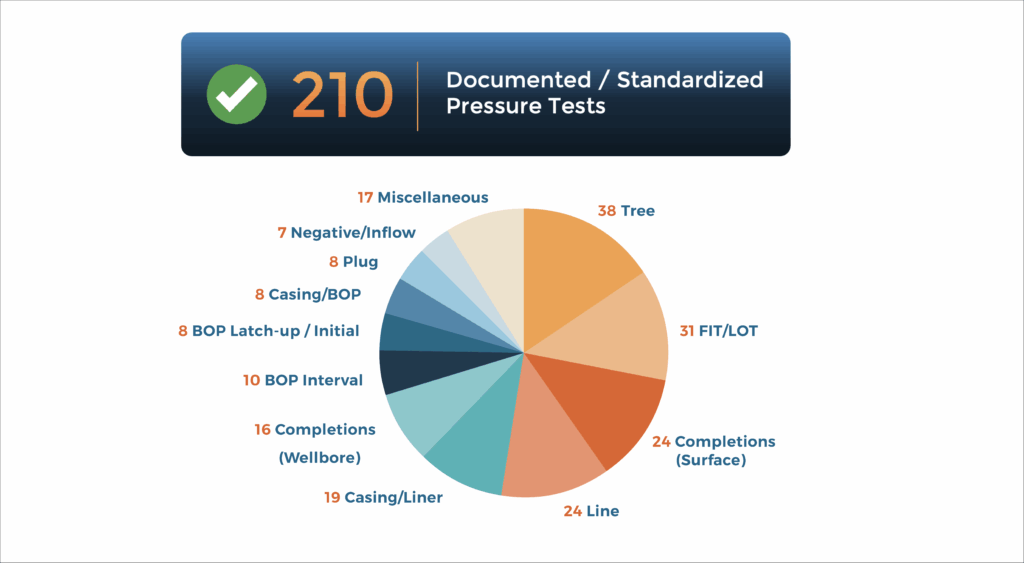
Figure 2. Breakdown of 210 documented pressure tests across the drilling and completion lifecycle, illustrating range of tests captured in standardized reports.
All tests were documented in easy-to-audit reports, ensuring compliance and transparency. While the time savings highlighted here focuses on BOP digital pressure testing, the campaign included 210 documented pressure tests covering the full cycle of drilling and completing these wells.
Importantly, IPT Global’s field coaches were removed from the rig after initial training, with the offshore crew fully supported remotely by our 24-7 Real-Time Operations Center (RTOC). This demonstrated that solution adoption and consistent high performance were embedded in the crew and sustained throughout the campaign.
IPT Global provides confidence in every test for every well by applying stringent in-house criteria, delivering faster results than traditional methods, and working collaboratively with customers to drive operational safety and efficiency. Our software ensures information flows seamlessly to the right people at the right time, while WellSchematic and BarrierManagement allow safe planning and execution ahead of operations. All of this is supported by real-time oversight from our RTOC.
Looking ahead, IPT Global will continue to advance well assurance intelligence and software integrations to make our solutions even more accessible and valuable for end users.
Blowout preventer (BOP) testing is a critical path operation in drilling programs, but it is often time-consuming. For this major onshore operator, critical path test times stretched beyond 6 hours per BOP test.
Beyond timing, the operator’s legacy methods including circular chart recorders and outdated digital systems made improving BOP testing efficiency difficult. Key assurance data was missing, quality issues went undetected, and maintaining API Standard 53 BOP testing compliance became increasingly challenging.
The operator needed a solution capable of reducing BOP test time, increasing BOP testing efficiency, and providing accurate digital records across its fleet, while supporting safer and more reliable well operations.
To address these challenges, the operator implemented IPT’s SureTec, a digital pressure testing platform designed to improve BOP testing across its onshore rig fleet.
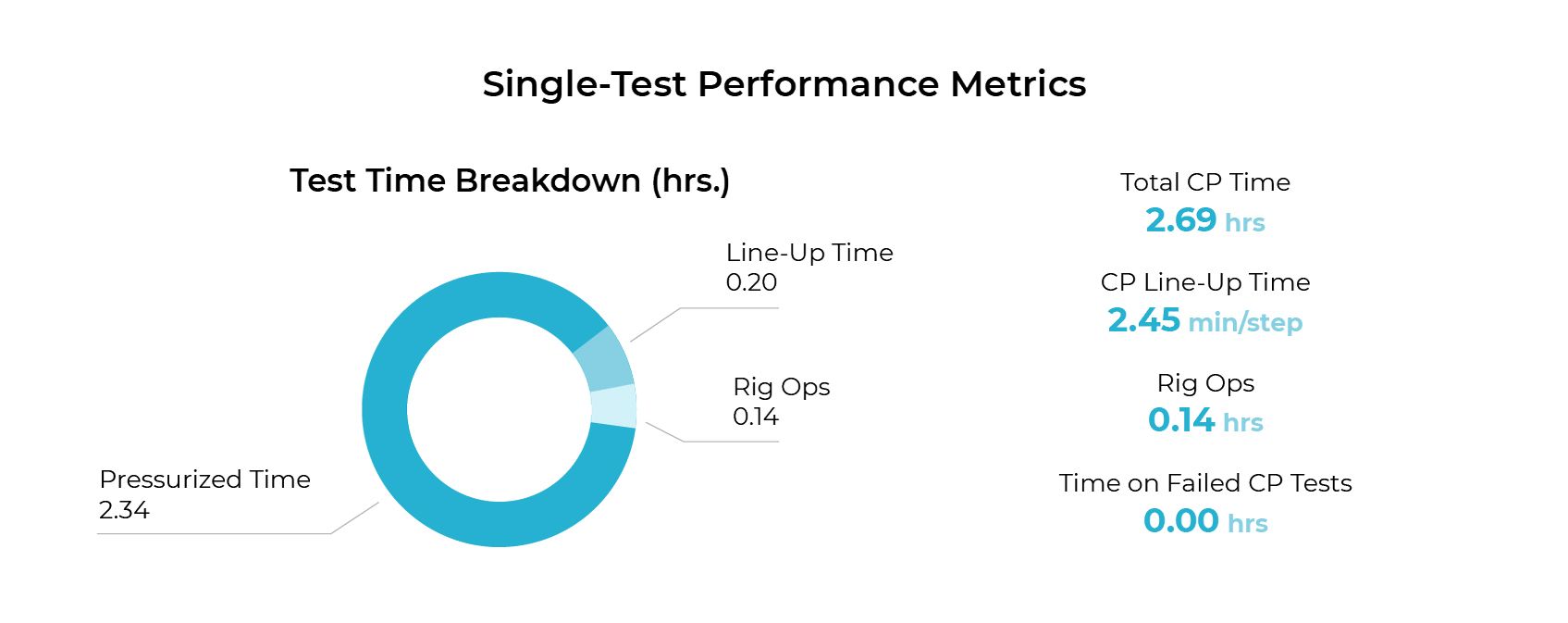
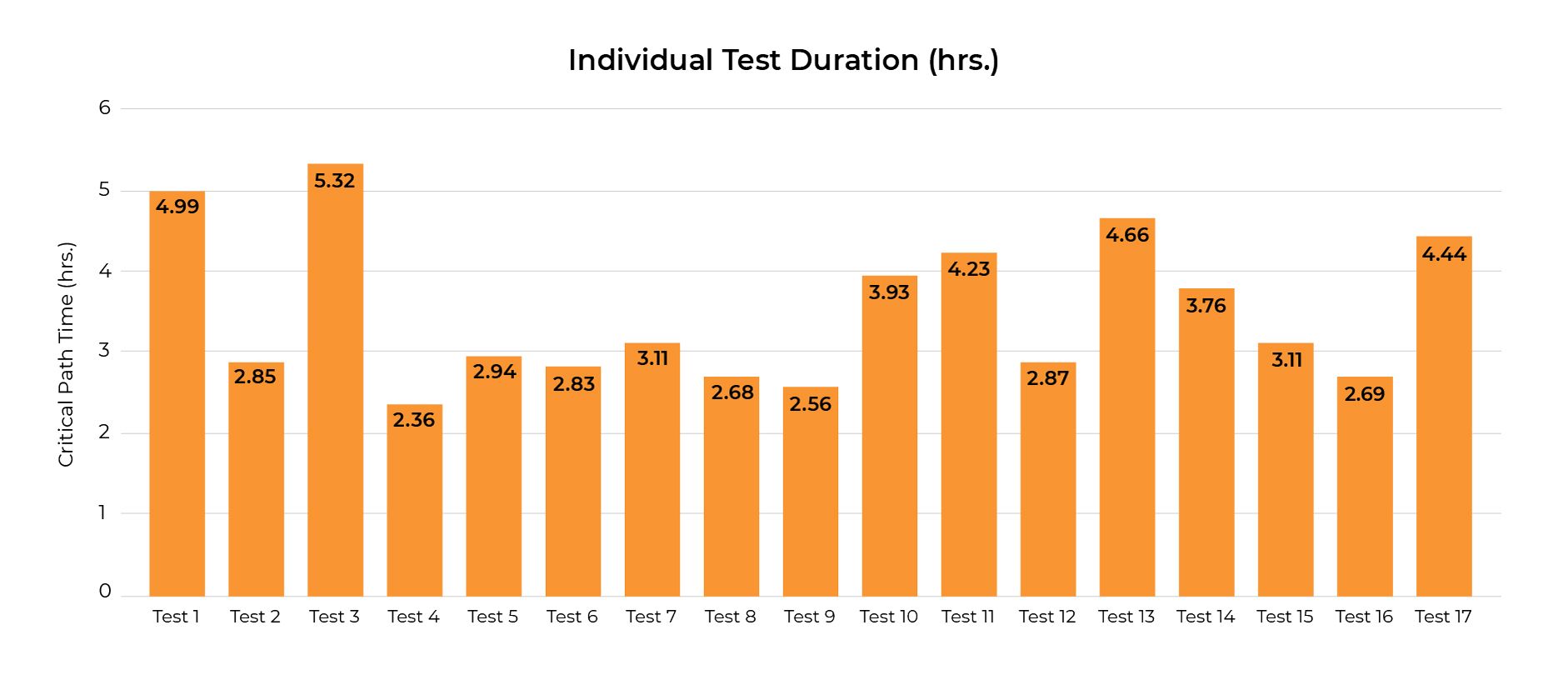
This performance represents a best-in-class reduction in test duration, significantly cutting overall BOP testing duration and improving rig uptime.
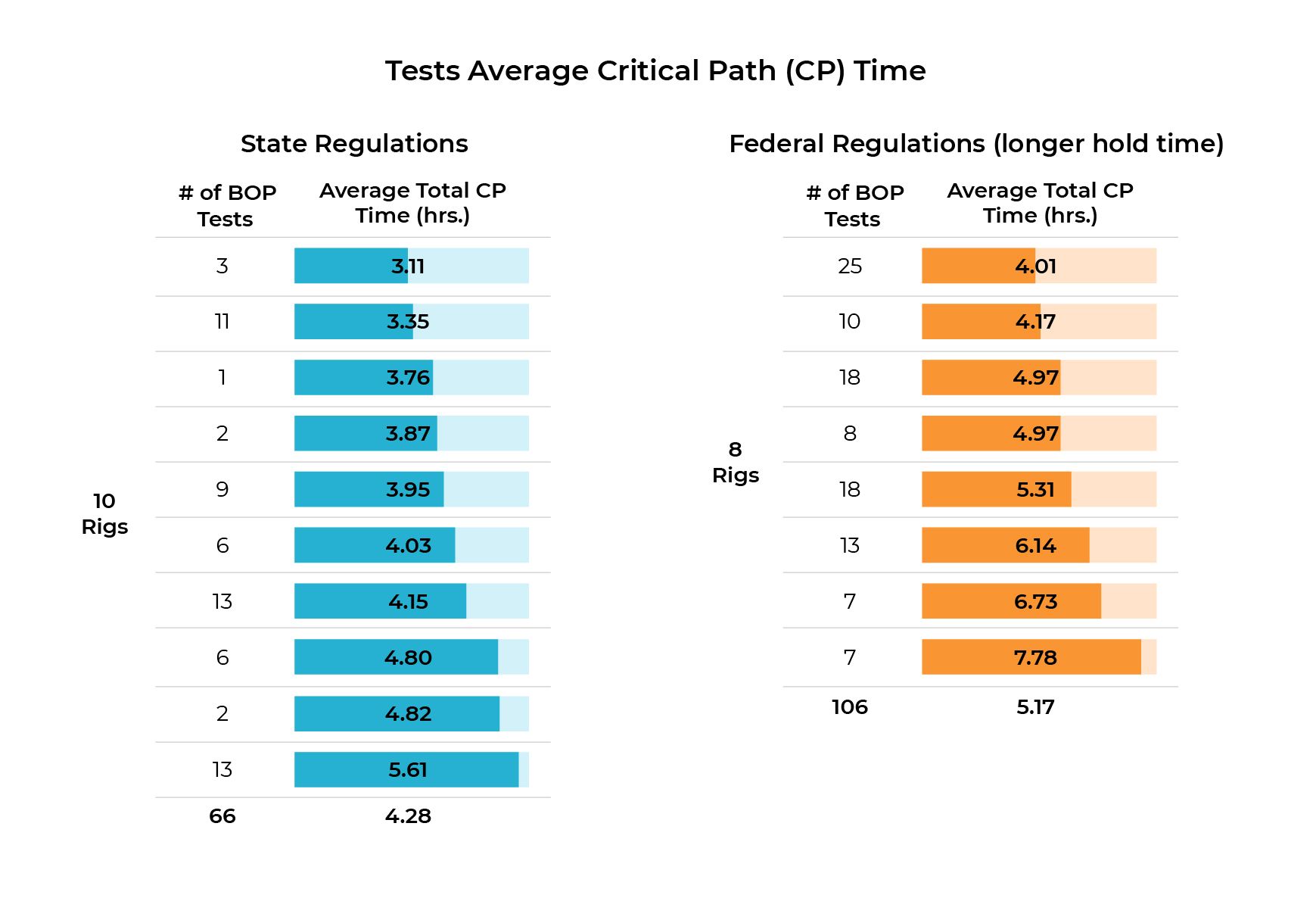
| Before IPT SureTec | After IPT SureTec | |
|---|---|---|
| CP BOP Test Time | > 6 hours | ~ 3 hours (best in class) |
| Average Test Time (State Regulations) | ~ 6 hours | ~ 4 hours |
| Average Test Time (Federal Regulations) | ~ 6 hours | ~ 5 hours (longer hold) |
| Compliance & Assurance | Inconsistent, blind spots | Verified API Standard 53 compliance, enhanced assurance |
What began as an effort to reduce BOP test time resulted in a transformation of the operator’s BOP testing workflow. With IPT SureTec, the operator not only achieved faster testing but also improved quality control, regulatory compliance, and data visibility which improved well integrity management across its entire rig fleet.
IPT SureTec is now setting the benchmark for improving BOP testing efficiency and helping operators reduce BOP test time across both onshore and offshore environments. The platform continues to set the benchmark for BOP testing accuracy and assurance, helping operators worldwide increase efficiency in BOP testing operations.
Looking to cut BOP test time and improve testing assurance? IPT SureTec delivers the tools and insights needed to achieve faster, more efficient, and compliant BOP testing operations.
In this Drilling Contractor article, IPT Global and Seadrill examine why subsea blowout preventer (BOP) soak testing remains inconsistently executed across rigs and regions, despite its role in pre-deployment assurance. Differences in test duration, pressure levels, and acceptance criteria often stem from legacy practices and varying OEM guidance rather than a lack of focus on safety.
The authors propose a framework aligned with API Standard 53 to establish a shared testing baseline, paired with digital pressure data to catch subtle issues, like gradual decay or irregular regulator response, before deployment, when troubleshooting is far more difficult. IPT Global’s SureTec® Equipment Health Monitoring solution and Real-Time Operations Center (RTOC) support this kind of objective, data-driven evaluation during pre-deployment testing.
Read the full article: Standardizing subsea BOP soak testing: overview of value and recommended best practices by Patrick Hillard and Leonard Childers, IPT Global; and Ahmed Omar, Seadrill
IPT’s real-time BOP monitoring (RTM) allows for improved data transparency, analysis and data-driven decision making. This data also bolsters rig safety by providing instant access to real-time and historical BOP data. Ultimately, data streamed from the BOP control systems will enable predictive and condition-based maintenance.
IPT’s RTM solution product shows clear, BOP visualizations to ensure close correlation between the panels and gauges that rig personnel are accustomed to seeing.
Live BOP Stack: Real-time view shows the status of the BOP stack by displaying the components along with color indicators showing the state of each component. In this view, the user can also see key pressure, temperature and flowmeter values.
Live Pressures: Real-time view provides an easy-to-read visual of key pressures during operations. The user has the option to view the indicators in radial or linear gauge form.
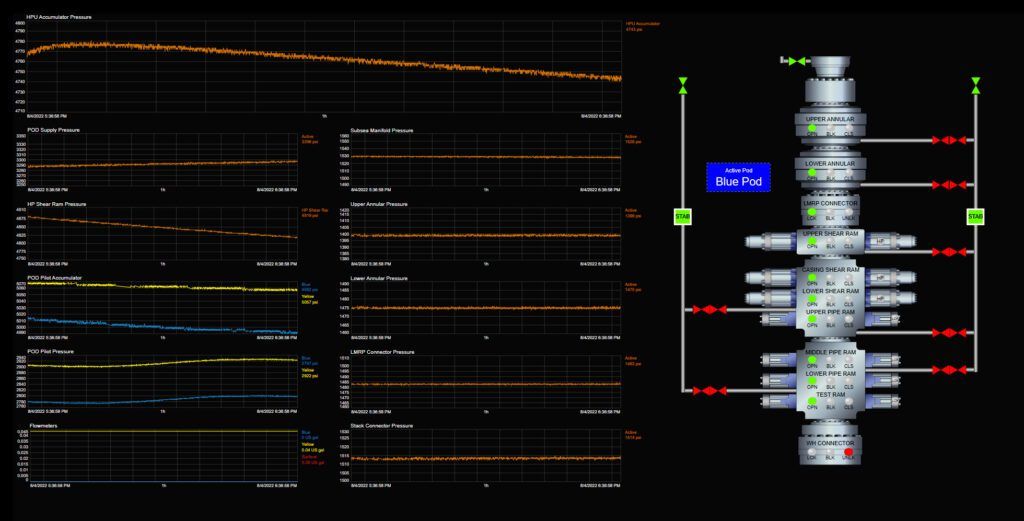
Live Database and Visualizations: Real-time view gives complete access to all data recorded on the data logger located on a rig. It allows the user to graph and trend up to 10 values in a live view as well as go back to evaluate historical data.
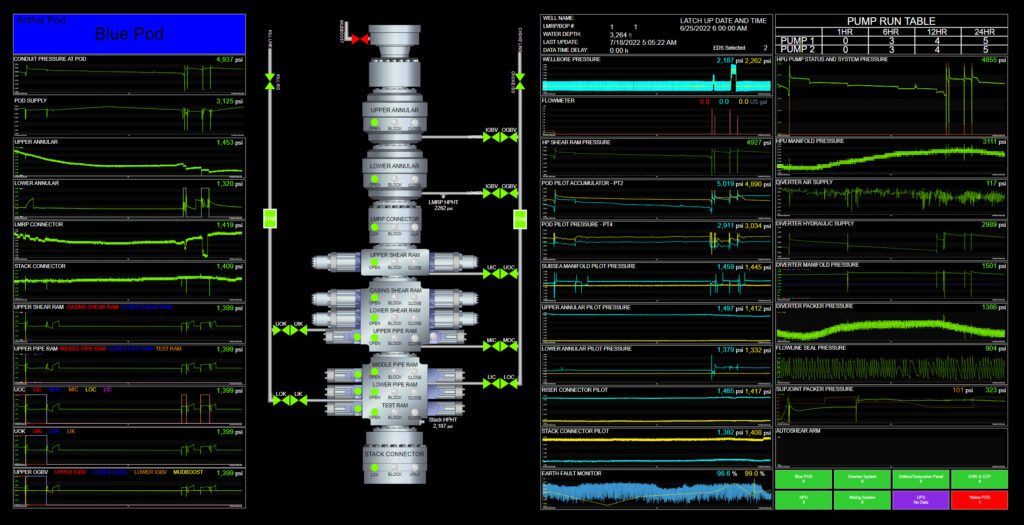
Rig-Side Function Test Management: This digital solution tracks rams and annular function testing. It provides real-time assurance of component states and control systems in a user-friendly interface. Clients can utilize function test management with our digital approval management platform.
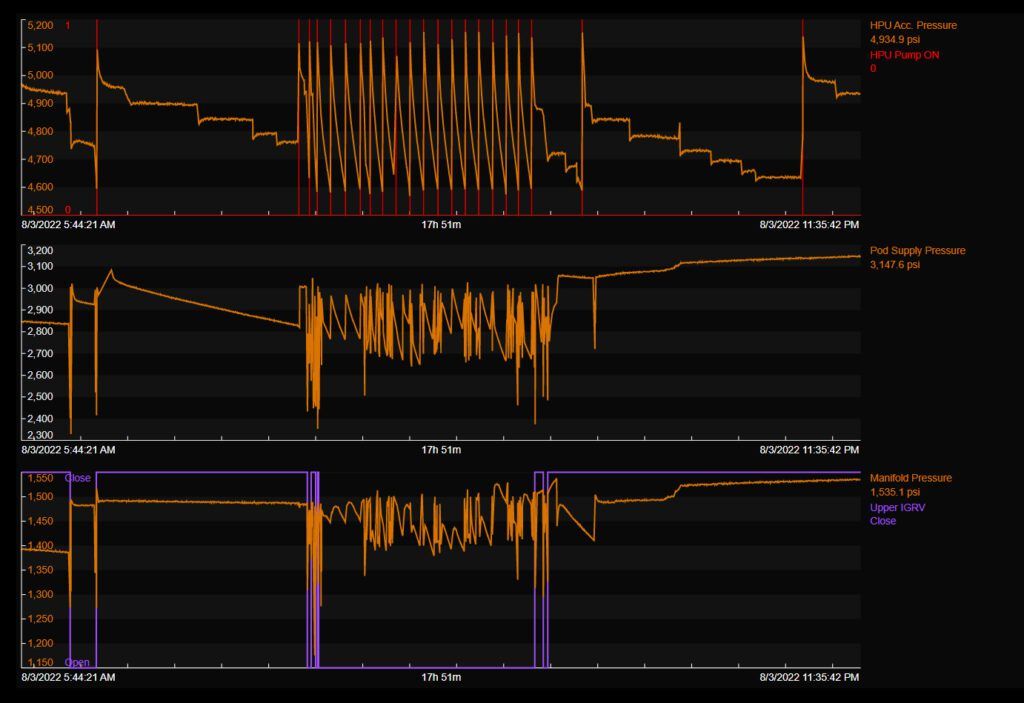
Data integrations (APIs): We also offer the ability to send data directly to our client’s enterprise data system via our secure API connector, allowing our clients to integrate our data within their decision-making matrix.
Experienced and trained subject matter experts are the foundation of our real-time monitoring service. Our BOP Analysts have extensive hands-on subsea backgrounds and are rigorously training in monitoring and analysis techniques. Our BOP Analysts communicate and collaborate with the rigs in real-time, providing recommendations, troubleshooting, assistance and remote assurance. Our team works hand-in-hand with clients support total compliance and permitting processes.
IPT BOP Analysts collaborate with our in-house data science team to create custom algorithms that automate anomaly detection. Our in-house software and data science teams collaborate with major operators across the globe to continuously improve products that enhance rig safety. For 12 years, IPT has paved the path for in data acquisition and advanced data analysis from rigs and well control equipment.

IPT’s RTM solution allows data to be monitored (e.g., pressure, temperature, BOP status, trends, etc.) from the BOP control panel (OEM specific). Data monitoring is performed remotely and in real time. Monitoring includes live visualizations of the BOP status and pressures.
Data will be transmitted from the rig to the cloud. If connectivity issues prevent data from being sent to the cloud, data will also be preserved on the rig in a local database.
Labeling of data is defined per the OEM nomenclature and specific to each control panel. Monitoring is performed by RTM and subsea SMEs and trained field personnel with BOP monitoring experience. OEM nomenclature is mapped to accepted industry terminology at the remote monitoring site if required.
To learn more about how IPT’S BOP Real-time monitoring can help provide you more efficient and assured BOP integrity or to inquire about a pilot, contact us.
A single event involving the malfunction or failure of a blowout preventer (BOP) component can result in unplanned downtime on a drilling rig, costing millions of dollars. These events can add up throughout the equipment’s lifecycle to a significant amount of cost and lost time. Due to uncertainty about the lifecycle of BOP stack components, drilling contractors may arbitrarily replace components during scheduled maintenance to try to mitigate unplanned downtime.
Additionally, history has proven that a malfunctioning BOP component can result in a loss of well control, threatening the safety of people and the environment. As a result of the significant safety risks, the Bureau of Safety and Environmental Enforcement (BSEE) established regulations, described below, that require operators to develop and implement BOP real-time monitoring (RTM).
This article describes how IPT’s BOP Reliability System (BRS) helped a customer to identify a malfunctioning BOP control system component so it could be replaced during scheduled maintenance before it caused an interruption in drilling operations or a loss of well control.
IPT provides full monitoring services of well control equipment (WCE) data, downhole drilling data and tools. Specifically for BOPs, we offer a suite of services to ensure BOP reliability and efficiency. These services include WCE surveying and verification, monitoring by highly skilled experts, advanced data analytics for maintenance planning and compliance consulting.
This approach of monitoring and the application of advanced data analytics move the maintenance program from schedule-based approach toward a condition-based system, improving efficiency and reducing risk.
Historically failures have driven BOP maintenance response, the RTM move toward pro-active maintenance increases awareness of equipment condition (and therefore risk) using monitoring, alarms and alerts.
In early 2022, an IPT BOP analyst was monitoring a surface BOP control system on a jack-up rig in the Gulf of Mexico. The experienced and trained analyst was able to identify a possible failure ahead of an event, ensuring the rig avoided unplanned downtime.
In this example, the issue was with the BOP manifold regulator, which was supplied with 3000 psi from the accumulator bank. The manifold regulator reduces the supply pressure to 1500 psi for operation of the BOP pipe rams, blind shear rams (BSRs), and choke and kill valves. While monitoring the accumulator, the BOP analyst noticed that the manifold regulator showed an increased leak off rate after the BSRs were functioned closed (see graph below). In this case, the 1,500 psi manifold regulator pressure was deviating by more than 25 percent. Although it is not uncommon for a regulator’s pressure to vary, the BOP analyst knew that the level of deviation likely indicated an eminent component failure or a leak in the hydraulic circuit.
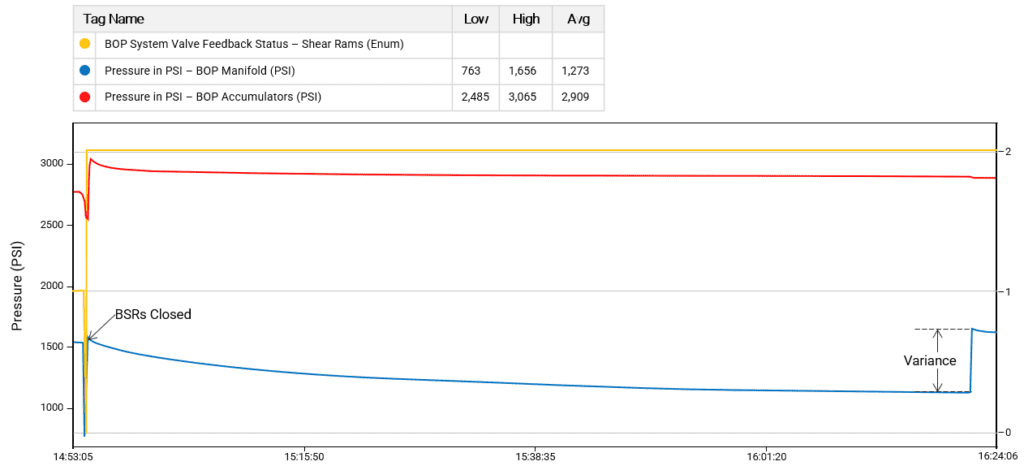
After our BOP analyst logged the event, the customer was notified of anomalous regulator behavior. When IPT provided comparative trends from other regulators, the drilling supervisor determined that the regulator should be replaced during scheduled maintenance to avoid disrupting future drilling operations.
The customer replaced the regulator before commencing drilling operations on a sister well. Subsequent BOP monitoring showed that the new regulator was operating normally. Notably, the customer also provided the new regulator’s certification for documentation in IPT’s database for future lifecycle tracking.
IPT’s RTM service and the customer’s proactiveness to replace the manifold regulator potentially avoided a very expensive BOP failure during drilling operations, as well as reduced risk to people and the environment. The outcome also shows how drilling contractors can reduce expenses by focusing on components that need to be replaced during scheduled maintenance rather than arbitrarily replacing components.
The BSEE Code of Federal Regulations (CFR) requires operators to provide real-time monitoring (RTM) for BOPs in the Gulf of Mexico. BSEE CFR Chapter II – Subchapter B – §250.724 (a) describes the RTM requirements as follows.
(a) When conducting well operations with a subsea BOP or with a surface BOP on a floating facility, or when operating in a high-pressure, high-temperature (HPHT) environment, you must gather and monitor real-time well data using an independent, automatic, and continuous monitoring system capable of recording, storing, and transmitting data regarding the following:
(1) The BOP control system;
(2) The well’s active fluid circulating system; and
(3) The well’s downhole conditions with the bottom hole assembly tools (if any tools are installed).
Our BRS is helping operators and drilling contractors to gain knowledge about the lifecycle of critical BOP components so they can increase BOP reliability and decrease costs through targeted preventative maintenance. For more information about our BOP Reliability System, contact us.
Effective BOP Stump Testing is a critical to eliminating unplanned stack pulls. A significant portion of the industry still uses very loose testing criteria during these tests that can result in components lacking integrity to be deployed.
This article describes how IPT’s patented advanced algorithms called, Trend Analysis were able to identify previously undetectable leaks. We present two examples that demonstrate its ability to identify subtle leaks that alternative digital pressure testing products would not be able to identify during critical BOP Stump tests.
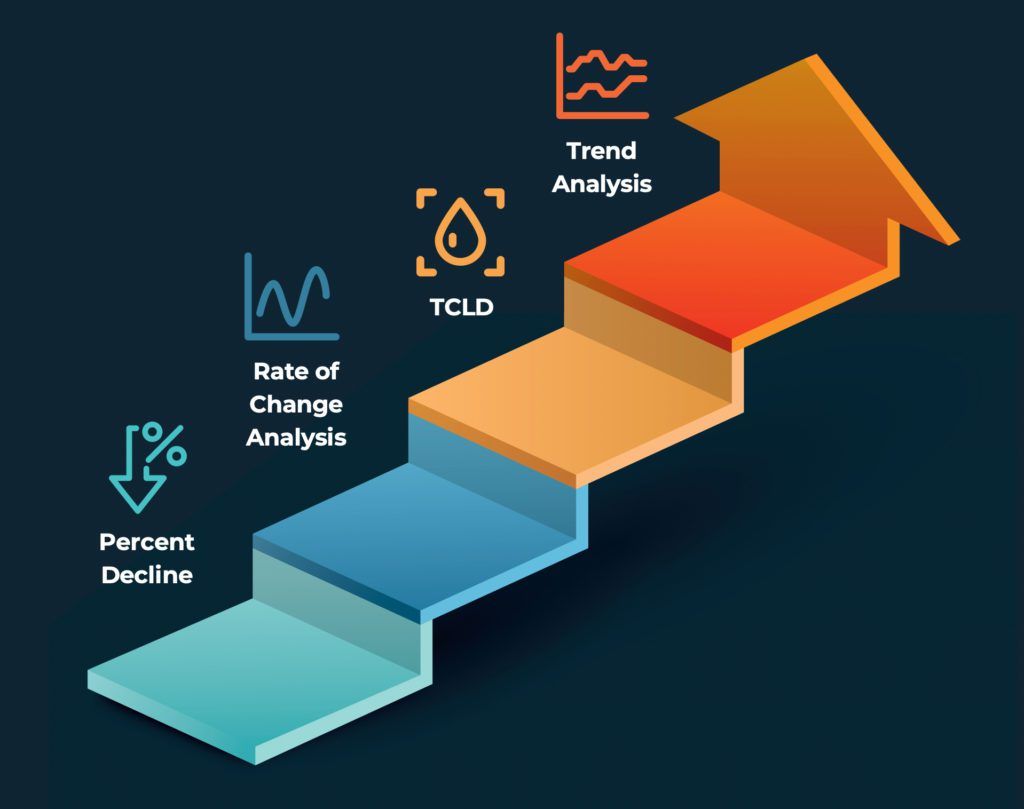
To further enhance the leak detection capability of SureTec, IPT developed the patented Trend Analysis algorithms to eliminate the scenario where a low rate of change in the pressures can have a degrading trend indicative of a small and subtle leak. IPT’s layered and advanced algorithms are customizable and configurable to meet client’s objectives (Figure 1).
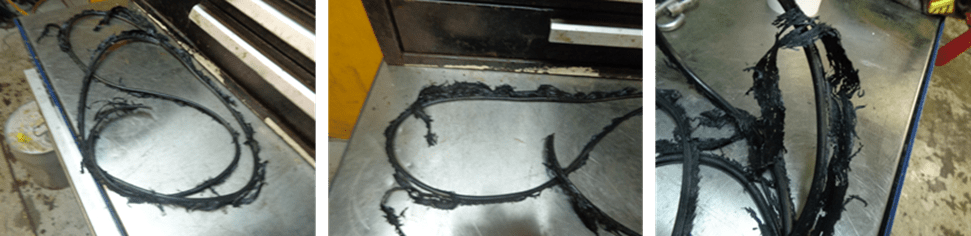
SureTec’s Trend Analysis can find small leaks during BOP Stump tests so they can be fixed on the rig to avoid an unplanned BOP stack pull from the seafloor potentially costing millions of dollars. In one example, IPT’s Field Advisors ran a Stump test using SureTec on a rig in the Gulf of Mexico. Trend Analysis failed the test because the ROC values were not improving. At first, the operator and contractor thought that Trend Analysis needlessly failed the test. After inspecting the BOP, the rig crew found the leak on the Lower Pipe Ram’s outer door face seal (Figure 6).
In another example, an IPT Field Advisor and a subsea engineer (SSE) were witnessing a Stump test using Trend Analysis. When testing the Upper Pipe Ram (UPR) against 7” drillpipe, it became apparent to the Field Advisor that Trend Analysis was not improving, indicating a leak. The SSE was not convinced there was a leak; however, IPT’s Field Advisor was adamant that the UPR had a leak or a valve had been left open. Upon inspection of the BOP, the subsea crew found a leak in the UPR. Parts were flown out the next morning to repair the UPR. After the seals were replaced, the UPR was retested against 7″ and 4.5″ drillpipe and it subsequently passed Trend Analysis.
The results of the tests were gathered by the operator and presented to both parties (Figure 3). According to the major operator, tests performed using SureTec were 20% faster than the competitor’s tests. In addition to faster test validation, IPT provided a high level of integrity assurance using SureTec’s patented algorithms.
Trend Analysis can prevent costly and potentially catastrophic events by detecting leaks during critical pressure tests on BOP components. IPT’s Advanced Leak Detection Algorithms are available in the Standard, Advanced, and Premier tiers of SureTec. Contact us today to learn how our advanced analysis can improve your safety and operational efficiency.
IPT Global believes that innovative technology is born out of collaboration with subject matter experts and a focus on delivering world-class solutions. Our in-house software development team proudly developes our SureTec® Equipment Health Monitoring technology for BOP and MPD systems. This was a natural segue from our BOP digital pressure testing solution, SureTec PressureTesting.
IPT Global provides holistic BOP integrity management solutions through leading technology that allows for continuous monitoring and robust pressure testing. We support clients with superior first-rate service including 24/7 real-time monitoring, remote and onsite compatibility verification, failure tracking and root cause analysis, along with permitting and planning support.
Our in-house experts and developers craft this technology with a level of quality and excellence beyond our competitors, for future innovation and development ease. Unlike our competition, we have built a scalable and sustainable tool to enhance reliability. IPT Global’s Equipment Health Monitoring solution allows for live data and test streaming through its Monitoring module, trend analysis and through the HealthAnalytics module, and failure tracking and , event, and alarm monitoring with the FaultTree module, and historical data retrieval. These tools aim to ensure BOP reliability during different phases of BOP operations and provide preventive information to operators and engineers.
Equipment Health Monitoring is architected with industry standards and best practices:
Equipment Health Monitoring is engineered to scale:
IPT Global’s Equipment Health Monitoring solution also includes 24/7 monitoring from our Real-Time Operations Center (RTOC), manned by BOP expert who closely monitor your operations data for alerts and other anomalies.
The solution is accessible through a mobile-responsive, web-based visualization tool. Through the Cloud, users can access their information quickly and reliably, with a user interface that is highly customizable and built to meet client specifications.
IPT Global’s SureTec Equipment Health Monitoring solution provides continuous visibility into the condition and performance of critical well control equipment across the full well lifecycle. Contact us today to learn how Equipment Health Monitoring can support your well assurance goals.